The Daily Mint, Saturday, October 10, 2026: The 1792 Half Disme’s Famous Pedigree Gets Complicated, a $10 Dollar Coin Now Worth Six Figures, and a Saturday No-PVC Check
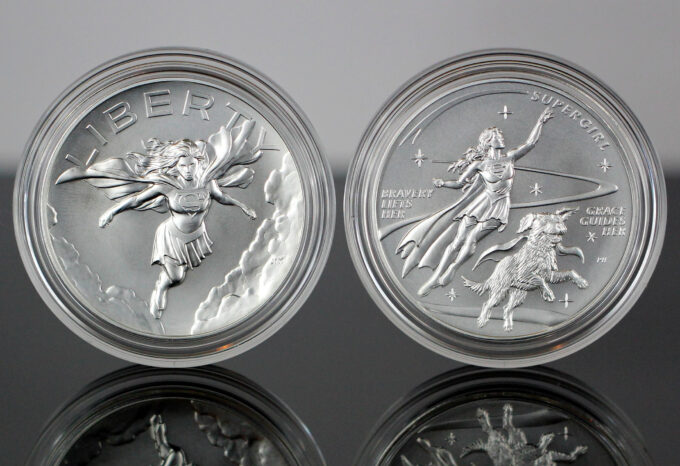
Photo: CoinNews. The 2026 Supergirl medals are among this week’s U.S. Mint sales news.
A historic pedigree is under fresh scrutiny, a bargain-bin Ike prototype returns to auction, and we have a few practical checks for your Saturday.
The 1792 half disme: a famous pedigree gets complicated
Heritage offered the finest certified 1792 half disme, PCGS MS-68, as Lot 3414 in its GACC U.S. Coins Signature Auction. Cataloged LM-1, Judd-7, Pollock-7, Rarity-4, the coin came from the Ronald Firman Collection and closed October 8.
Reported bidding passed $1.4 million including the buyer’s premium, after an interim hammer figure of $1.225 million. Confirm the final posted result on Heritage’s site before quoting a final price.
The half disme was the first silver coin struck under the authority of the U.S. Constitution. Congress passed the Mint Act on April 2, 1792, and George Washington appointed David Rittenhouse to lead the Mint; his commission is dated April 14. Before the permanent Mint building was ready, early coinage work likely took place at sawmaker John Harper’s Philadelphia premises near Sixth and Cherry Streets.
On July 11, Thomas Jefferson delivered $75 in silver for coinage. Two days later, he received 1,500 half dismes. Jefferson spent them as he traveled, including a 30-cent payment that evening in Chester, Pennsylvania. In his November 6 address to Congress, Washington called the issue a “small beginning in the coinage of half dismes.”
The coin is about 17.5 mm across and weighs roughly 1.35 grams, with about 89.2% silver. Its obverse legend reads LIB. PAR. OF SCIENCE & INDUSTRY (“Liberty, Parent of Science and Industry”) and its reverse shows a small flying eagle.
Some familiar stories about the coin are less certain. There is no reliable contemporary evidence that Washington supplied the silver, that it came from Martha Washington’s table service, or that Martha posed as Liberty. The Washington-silver story traces to a recollection Mint official Adam Eckfeldt gave in an 1844 conversation recorded by John A. McAllister Jr., decades after the coinage.
Research by Pete Smith, Joel J. Orosz and Leonard Augsburger suggests that another 200 to 500 half dismes may have been struck around October 9, based on changes to the reverse die. The total may therefore be closer to 1,700–2,000 than 1,500, though PCGS still lists 1,500.
The pedigree is the new wrinkle. PCGS CoinFacts continues to show a direct David Rittenhouse pedigree, through his family to Henry Chapman’s October 1919 sale and then George L. Tilden. Heritage is more cautious: Chapman published no photograph of the 1919 coin, and Heritage found that a 1921 Elder catalog photo of the Tilden coin does not match the present MS-68 example. It removed Tilden from the secure chain and says there is no proof that this coin is the Chapman/Rittenhouse specimen. Of 48 confirmed AU and Mint State half dismes Heritage reviewed, seven fit parts of Chapman’s description, but none is a conclusive match.
The secure provenance begins in October 1988, when Stack’s offered the coin as “Property of a New England Museum.” It later passed through dealer Jay Parrino, the Knoxville Collection, Steve Contursi and the Cardinal Collection, which paid $1.5 million. Stack’s Bowers sold it for $1,145,625 in January 2013; Classic Coin Company sold it privately for $1,985,000 in May 2018. It was displayed at ANA shows and the ANA Money Museum from 2018 to 2024. PCGS estimates about 275 survivors in all grades, 35 in Mint State and seven at MS-65 or higher.
Provenance research is not an attack on a great coin. When a pedigree cannot be verified, the coin, its grade and its physical characteristics have to carry the story.
A $10 tube find that became a six-figure rarity
The 1971-S Eisenhower dollar prototype, Judd-2147, returns to auction at GreatCollections on Sunday, October 18. Item 2233773 is scheduled to close around 6:36 p.m. Pacific. Only three examples are known, representing two die pairs.
In February 2008, collector Lee C. Lydston found the discovery coin in a dealer’s tube of ordinary Eisenhower silver dollars at the Long Beach Coin Expo. He paid less than $10. A second example turned up at an Alabama pawn shop in 2010 for about $5; a third surfaced on eBay in 2013 for roughly $22.
The discovery coin is PCGS Specimen-67 with CAC Green approval, the only known Judd-2147 with CAC approval. It sold at Heritage in January 2022 for $264,000.
Its reverse preserves extra lunar craters matching an earlier version of Frank Gasparro’s design, tied to his original 1970 models, including a galvano at the Dwight D. Eisenhower Presidential Library and Museum. The prototype has satiny surfaces with prooflike areas, sharp details, die-polishing lines, unfinished metal around some lettering and evidence of device doubling. Metallurgical analysis found the planchets consistent with ordinary 40% silver Eisenhower dollars.
The coin’s history is still partly a mystery. The Mint required trial strikes to be destroyed, but three survived. Eisenhower died in March 1969; Apollo 11 landed four months later, and Nixon signed the coin’s authorizing legislation on December 31, 1970. The prototypes are now listed as Judd-2147 and recognized as a major variety in the Red Book.
Short news notes
- The U.S. Mint opens orders for the 2026 American Innovation $1 Coin Reverse Proof Set Tuesday, October 13, at noon Eastern. It costs $60 and includes four San Francisco reverse proof dollars (for Iowa, Wisconsin, California and Minnesota) plus a certificate of authenticity. Household limit: two.
- In the Mint’s latest sales report, the 2026 Supergirl one-ounce silver medal ranked first at 11,323 sold; the 2.5-ounce medal ranked third at 1,297; and the half-ounce gold coin ranked 12th at 394. The gold coin’s price dropped $40 to $3,350. The 2026 Semiquincentennial Proof Set, launched October 6 for $107 with a 480,000 product limit, showed 240,259 sets sold, about half the limit, much of it subscription orders placed before launch. A product limit is not a final mintage.
- The 1907 Saint-Gaudens High Relief $20 Gold Coin and Silver Medal Set added 661 in its first full week, reaching 8,852 of a 15,000 mintage limit. Its price has been cut twice, from $5,490 to $5,340.
- Heritage opened bidding around October 9 on the Steve Starlust Collection: 209 pieces of 1893 World’s Columbian Exposition medals, badges, tickets, elongated coins and souvenirs. The sale closes November 9 (Auction 63365), with a 22% buyer’s premium and $29 minimum per lot. Highlights include an 1892 Ferris Wheel dollar token, HK-170, Eglit-157, in an NGC MS-62 Deep Prooflike holder, and an 1893 View on Globe medal graded NGC MS-67, the sole finest certified as of September 2026. NGC created its first limited-edition certification label for the collection. Starlust’s Referencing Columbiana won the Numismatic Literary Guild’s 2025 Best Book: Tokens & Medals award. Many of these are medals and souvenirs, not coins; they have their own market and their own research.

Historical image: CoinWeek.
Counterfeit coin detection: a short weekend checklist
- Weigh and measure against official specifications.
- Inspect the edge for seams, filing or weak reeding.
- Look for grainy or porous surfaces that may suggest casting.
- Tilt the coin under good light. Unnatural luster or missing flow lines can be warning signs.
- Check the certification number on the ANACS, NGC, PCGS or CACG website.
- Treat any QR code on a holder as unverified until you confirm the number independently.
Authentication is not grading, and a familiar holder does not prove the coin inside is genuine. See NGC’s counterfeit detection resources.
ANA grading standards in plain groups
Here’s a quick overview of ANA grading standards:
- MS-60 to MS-70: Uncirculated, with no wear from circulation.
- AU-50 to AU-58: Light wear on the highest points.
- EF-40 to EF-45: Light overall wear with strong detail.
- VF-20 to VF-35: Moderate wear, with major details clear.
- F-12 to F-15: Noticeable wear; main design and lettering remain visible.
- VG, G and AG: Progressively heavier wear and less detail.
For the full descriptions, visit the ANA’s official grading standards. Grade is only part of value; rarity, demand, originality, eye appeal and provenance matter too.
The Saturday no-PVC check
Soft plastic flips can contain polyvinyl chloride, or PVC. As it breaks down, it can leave a sticky green film. What collectors call coin PVC damage. The residue may stain or permanently etch a surface.
For coin storage for collectors, choose holders clearly marked PVC-free. Mylar, polyethylene, polypropylene and hard acrylic are common inert materials. Keep your collection cool, dry and stable, and handle coins by their edges. Remove any flip that feels tacky, looks cloudy or smells strongly of plastic. Check cardboard holders and albums for moisture or mildew.
If you find green film, isolate the coin and seek professional advice. Don’t clean it yourself. Our guide on how to store your coin collection has more tips. For new Mint products, leaving the original packaging intact is usually the safest choice.
What is a coin show?
A coin show is a temporary marketplace and classroom. You can compare coins in person, ask dealers questions, buy supplies and practice grading. You do not have to buy from every table.
Weekend listings include Walnut Creek, California (October 10); Clearwater, Florida (October 10); Florence, South Carolina (October 10); Milton, Florida, for the Pensacola show (October 10–11); Wilkes-Barre, Pennsylvania (October 10–11); Countryside, Illinois (October 11); and Telford, Pennsylvania (October 11). Confirm hours, admission and venue details with organizers before traveling. Check Find Coin Shows and CoinShows.us.
Standing Liberty quarter 1916 reminder
The standing liberty quarter 1916 is both the key date and the first year of the series, making it a target for alterations. A worked-over 1917 Type 1 quarter can sometimes be presented as a 1916. Study the date and surrounding fields for tooling, unnatural surfaces or mismatched wear. When real money is involved, a certified example from a reputable grading service is usually the safer choice.
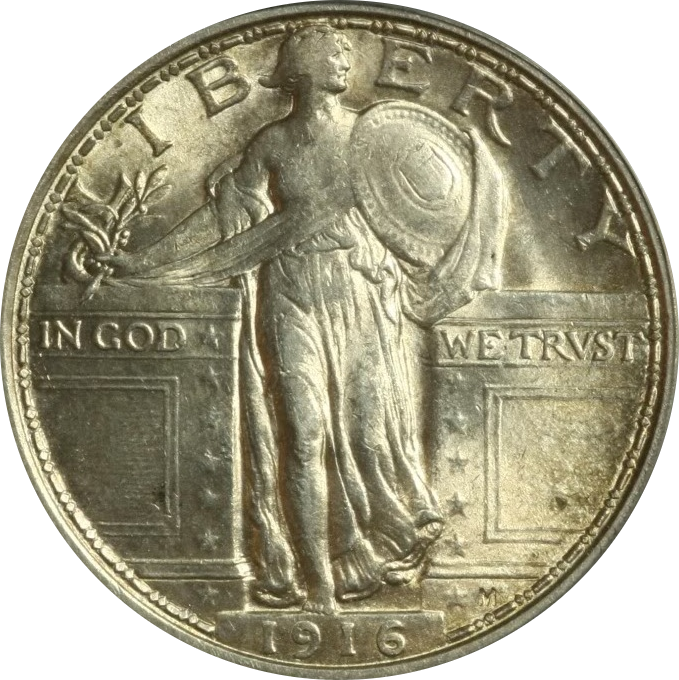
Photo: The Coin Show media library.
Thanks for reading. Listen to The Coin Show, our coin collecting podcast and numismatic podcast, for more coin collecting tips. Enjoy the hunt.
Sources
- CoinWeek: The Finest 1792 Half Disme Is Back And Its Rittenhouse Pedigree Is No Longer Certain
- Currency Information: Rittenhouse Specimen Half Disme Draws Million-Dollar Bids at Auction
- Heritage Auctions, Lot 3414
- CoinWeek: The $10 Eisenhower Dollar That Became a $264,000 Rarity Returns to Auction
- GreatCollections, Item 2233773
- CoinNews: US Mint Sales: Supergirl Debuts, 2026 Proof Set Tops 240,000
- CoinNews: U.S. Mint Launches Proof Set With Exclusive 1776-2026 Clad Coins
- 2026 American Innovation $1 Coin Reverse Proof Set release information
- CoinWeek: 209 Rare Treasures From the 1893 Chicago World’s Fair Head to Heritage Auctions
- ANA Official Grading Standards
- NGC Counterfeit Detection Resources
- The Coin Show: Storing Your Coin Collection
- Find Coin Shows
- CoinShows.us