
The Daily Mint : July 30, 2026: Essential Coin Collecting Tips, Storage Safety, and the 1916 Standing Liberty Quarter
Welcome to today’s edition of The Daily Mint for July 30, 2026. Whether you are checking pocket change for rare dates or hunting down key-date gold and silver at a local bourse, coin collecting remains one of the most rewarding hobbies in the world.
At The Coin Show, we love exploring every corner of numismatics. Today, we are diving into essential collecting tips, mastering ANA grading standards, protecting your collection with a strict NO-PVC storage policy, and shining a spotlight on one of the most iconic twentieth-century U.S. coins: the 1916 Standing Liberty Quarter.
Essential Coin Collecting Tips for Every Collector
Numismatics is a vast field. It can feel intimidating when you look at multi-million-dollar rarities, but every serious collector starts with simple curiosity. Here are a few practical tips to keep your collection growing and your focus sharp:
- Focus on a Series: Trying to collect every U.S. coin ever minted can get overwhelming. Pick a specific series: like Washington quarters, Buffalo nickels, or Mercury dimes: and learn its history inside and out.
- Invest in a Good Loupe: A 5x or 10x magnifying glass is your best friend. Always examine mint marks, strike details, and surface wear before buying.
- Handle Coins Properly: Hold raw coins by their edges only. The natural oils and acids on human skin can permanently etch sensitive metal surfaces, lowering a coin's grade and value.
- Tune Into the Community: Surrounding yourself with fellow enthusiasts speeds up your learning curve. That is why listening to a dedicated numismatic podcast like The Coin Show is such a great way to stay up to date on market trends, mint releases, and hobby news.
Spotlight on the Legend: The 1916 Standing Liberty Quarter
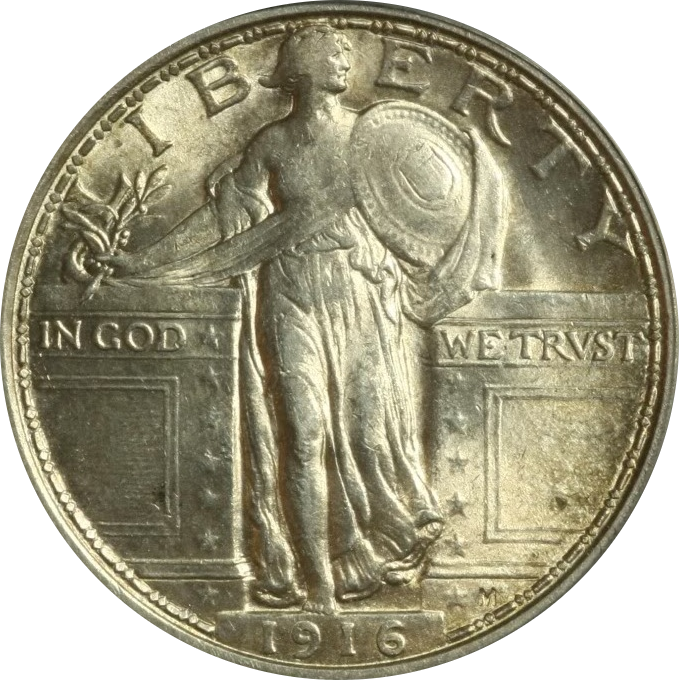
Few coins capture the artistic ambition of the U.S. Mint quite like the Standing Liberty quarter. Introduced in 1916, this design by sculptor Hermon A. MacNeil replaced the Barber quarter and instantly transformed American coinage into miniature art.
Why the 1916 is a Holy Grail
The 1916 Standing Liberty quarter is a classic key date. The Mint produced only 52,000 pieces that first year: an extremely low mintage for a circulating denomination. Because production didn't begin until late December 1916, very few found their way into actual circulation before the design was tweaked in 1917 to add chainmail over Liberty's bare right breast (partly due to public modesty concerns).
Finding a genuine, problem-free 1916 quarter is a milestone for any advanced collector. Depending on its condition, circulated specimens routinely command thousands of dollars, while pristine mint-state examples fetch tens of thousands at major auctions.
Understanding ANA Grading Standards and Full Head Criteria
Grading is the universal language of coin collecting. The American Numismatic Association (ANA) utilizes the Sheldon Scale, which runs from Poor-1 (barely identifiable) to Mint State-70 (absolute perfection).
When evaluating a Standing Liberty quarter: especially a 1916 key date: expert graders look closely at specific wear points:
- The Date: Because the date pedestal on the 1916 design was slightly raised, it was prone to rapid wear. A clear, readable date instantly separates a Good (G-4) coin from an About Good (AG-3) specimen.
- The Full Head (FH) Designation: To qualify for the coveted "FH" designation from services like PCGS or NGC, a Standing Liberty quarter must display three distinct leaves in Liberty’s hair, an unbroken hairline, and a clear ear indentation.
Understanding these standards helps you evaluate whether a raw coin is worth the investment of third-party authentication and grading.
Coin Care and Storage Safety: The Strict NO-PVC Policy
When you invest in valuable coins, how you store them matters just as much as how you buy them. One of the most important rules in modern numismatics is maintaining a strict NO-PVC policy.
What is PVC and Why Is It Dangerous?
Polyvinyl chloride (PVC) is a chemical added to soft, flexible plastics to make them pliable. Unfortunately, over time, PVC breaks down and releases hydrochloric acid. This creates a sticky, greenish film on the surface of your coins. Left unchecked, this residue can permanently pit and corrode metal, destroying both the eye appeal and the numismatic value.
What You Should Use Instead
- Mylar Flips: These are stiff, clear, crinkly holders made of polyester film (PET). They do not contain plasticizers and are completely safe for long-term storage.
- Hard Plastic Capsules: Brands like Air-Tite offer durable, inert acrylic capsules that snap shut to protect coins from physical impact and environmental moisture.
- Environmental Controls: Store your collection in a cool, dry place. Extreme humidity fluctuations can accelerate toning and corrosion. For high-value key dates, consider a secure bank safe deposit box or a heavy-duty home safe with silica gel desiccant packs.
Navigating Your First Coin Show and Counterfeit Detection
A coin show is an incredible experience. Walking into a room filled with rows of tables displaying centuries of history is enough to give any collector a thrill. However, busy convention floors require both excitement and caution.
Tips for Shopping at a Coin Show
- Do Your Homework: Know the current market values of the specific coins you want to buy before stepping onto the floor.
- Inspect Under Neutral Lighting: Ask dealers to lay the coin on a dark pad under good lighting so you can check for cleaning, hairline scratches, or unnatural polishing.
- Beware of Counterfeits: Counterfeiters target high-value key dates like the 1916 Standing Liberty quarter or early gold issues. Always check weights, dimensions, and edge reeding. If a deal sounds too good to be true, it almost certainly is.
Keep Learning With The Coin Show Podcast
Coin collecting is a journey that never truly ends. There is always a new mint release to discover, a historical mystery to uncover, or a helpful tip to learn from fellow enthusiasts.
If you enjoyed today's deep dive, make sure to check out our coin collecting podcast and numismatic podcast over at The Coin Show. We release engaging episodes covering rare coin discoveries, storage strategies, market insights, and plenty of hobby fun.
Happy collecting, and may your next pocket change check yield a hidden treasure!