
The Daily Mint : July 19, 2026: Safe Storage, Grading Secrets & Pocket Change Gems
Welcome back to The Daily Mint. It’s July 19, 2026, and the summer sun is hitting our collections just right. Yesterday, we touched on the history of the standing liberty quarter 1916. Today, we’re going deeper. We’re talking about the "Full Head" designation that makes auction bidders go wild, how to keep your coins from turning green, and how to spot a fake just by listening to it.
Whether you’re a veteran or just started listening to a numismatic podcast to kill time during your commute, there’s something here for you. Let's dive in.
The 1916 Standing Liberty: The "Full Head" Grail
The 1916 Standing Liberty is already the "holy grail" for many. But in the world of high-end auctions, the date is only half the story. If you’re looking at a 1916 at a show or online, you’ll see the letters "FH" on the slab. This stands for Full Head.
Because these coins were often weakly struck, finding one where Liberty’s head shows a full hairline, three distinct leaves in her hair, and a clear ear indentation is rare. In the 2026 market, a 1916 FH in Mint State can easily command between $10,000 and $40,000.
Remember, the 1916 is strictly a Type 1 design. That means Liberty has a partially exposed right breast and there are no stars under the eagle on the back. By mid-1917, the Mint switched to Type 2, adding chain mail for modesty and moving those stars. If you find a 1917 with those same "Full Head" details, it’s still a beautiful coin, but the price drops into the low thousands: proving just how much that 1916 date matters.
How to Store Your Coin Collection (The Right Way)
You’ve spent time and money building your set. The last thing you want is for environmental damage to eat your investment. Here are some essential coin collecting tips for keeping your treasures pristine.
Say No to PVC
If your coins are in soft, flexible plastic flips, check them immediately. These are often made with PVC (polyvinyl chloride). Over time, the chemicals leach out and create coin pvc damage: a sticky green slime that eats into the metal. If you see a green haze, it's time to act. Move your coins into Mylar (polyester) flips or hard plastic capsules. Mylar is inert and won't react with the metal.
Climate Control
Humidity is the enemy. Aim for a "dry zone" of 35–50% relative humidity. If you store your coins in a safe, toss in some color-indicating silica gel packets. When they change color, bake them dry and reuse them. Keep your collection in a room with stable temperatures, ideally between 60–75°F. Avoid the attic or the basement: those temperature swings are a recipe for disaster.
Handling Etiquette
Always handle coins by their edges. Even clean hands have oils that can leave permanent fingerprints on copper and silver. If you want to go the extra mile, use lint-free cotton gloves.
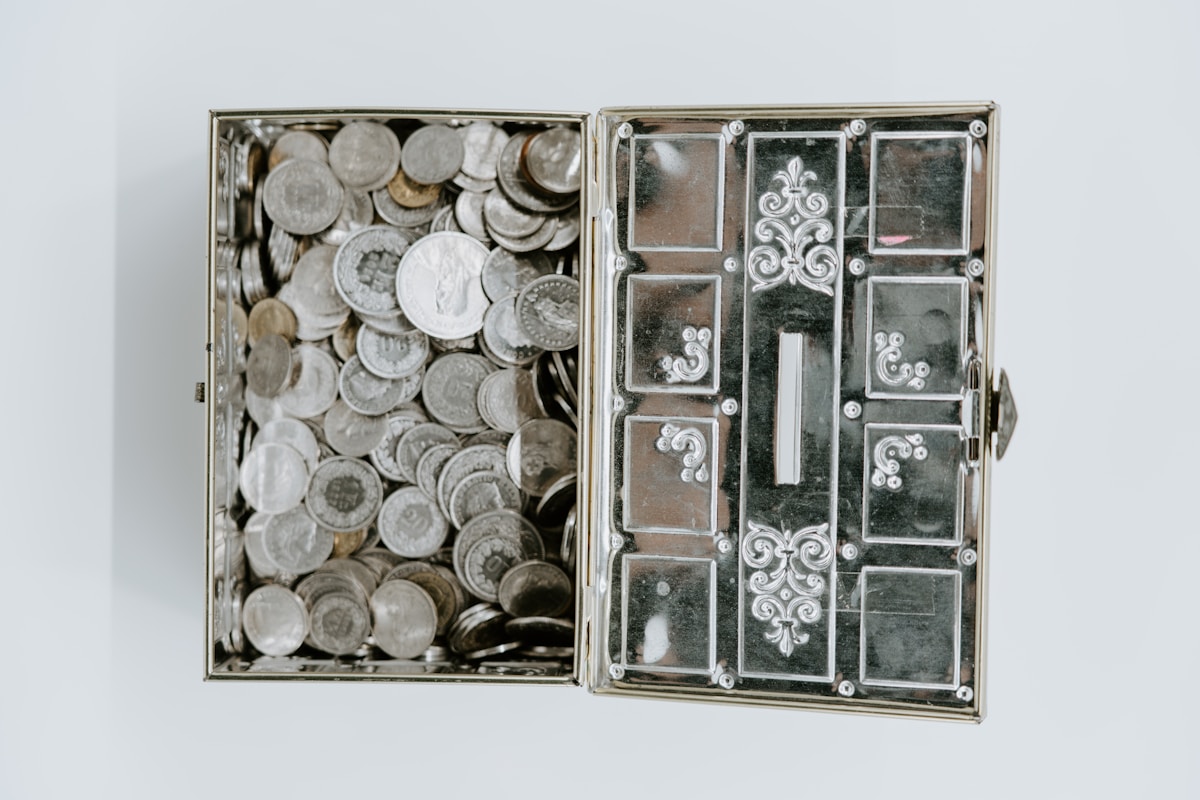
A real coin collection — proper storage keeps them looking this good. Photo: Claudio Schwarz / Unsplash
Counterfeit Detection: The Sound of Truth
As values rise, so do the fakes. While a magnet and a scale are your first line of defense, experienced collectors use a few more "old school" tricks for counterfeit coin detection.
1. The Ping Test
Silver and gold have a unique resonance. If you balance a genuine silver coin on your fingertip and tap the edge gently with another coin, it should produce a clear, bell-like ring that lasts for a second or two. Most fakes made of base metals like lead or zinc will produce a dull "thud."
2. The Edge Inspection
Counterfeiters often focus on the faces of the coin and neglect the edges. Use your loupe to check the reeding (the ridges on the edge). On a real coin, these should be crisp and evenly spaced. If they look "mushy," wavy, or if you see a faint seam running along the center of the edge, you’re likely looking at a cast fake.
3. Die Markers
Every genuine coin was struck by a specific pair of dies. These dies often have tiny "fingerprints": a specific scratch, a tiny crack, or a dot. Experts study these die markers to verify authenticity. If a rare coin doesn't have the markers it's supposed to have, walk away.
Submitting for Grading: Putting ANA Standards to Work
Once you've verified your coin is real and high-quality, you might want it "slabbed." If you are a member of the American Numismatic Association (ANA), you can submit coins directly to NGC.
Following ana grading standards doesn't mean the ANA grades them themselves; it means you're using the industry-standard Sheldon 1–70 scale they helped popularize. To submit:
- Join the ANA: This gives you direct submission privileges.
- Prep your flips: Use new, non-PVC Mylar flips. Don't use staples or tape.
- Fill out the form: Be honest about the "declared value" for insurance purposes.
- Ship securely: Double-box your coins and send them via Registered Mail. It’s slow, but it’s the safest way to move high-value items.
Your First Trip: What is a Coin Show?
If you've only ever bought coins on eBay, you're missing out. So, what is a coin show exactly? It’s a room filled with dealers, collectors, and thousands of years of history.
For a beginner, it can be overwhelming. Here’s how to survive:
- Bring a loupe: A 10x triplet loupe is the standard. Don't be afraid to use it.
- Talk to dealers: Most are happy to share their knowledge. Ask them why a certain coin is graded a certain way.
- Have a budget: It’s easy to get "coin fever." Stick to your plan.
- Look for "raw" coins: While slabs are safe, you can often find great deals in "raw" (un-graded) bins if you’ve practiced your grading skills.
Wallet-Friendly Finds
You don't need $40,000 to enjoy this hobby. There are gems hiding in plain sight.
- Silver Dimes: Any Roosevelt or Mercury dime from 1964 or earlier is 90% silver. They’re a great way to "stack" precious metals.
- Wheat Pennies: These were minted from 1909–1958. They’re common enough to be cheap but rare enough to feel like a find.
- Error Coins: Keep an eye out for "broadstrikes" (coins struck outside the collar) or doubled dies. Even modern coins can have these, and they can turn a boring cent into a $50 bill.
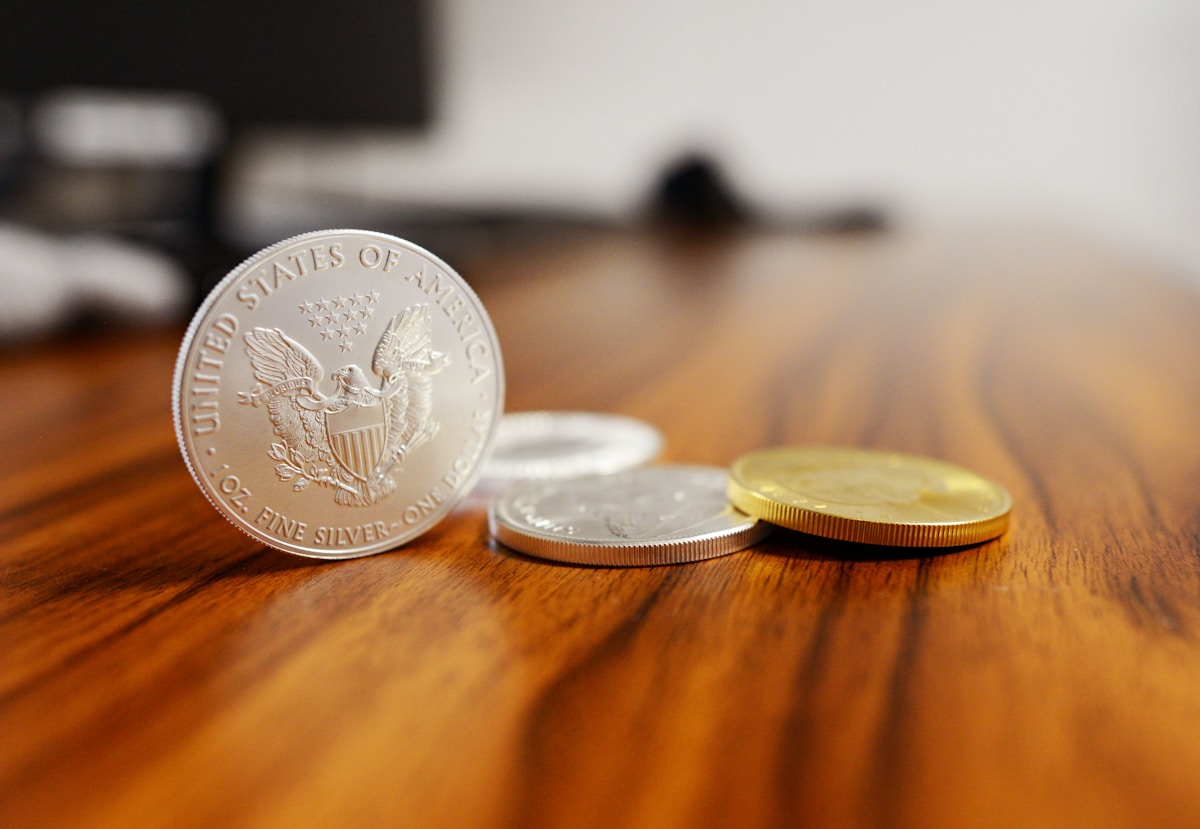
Silver coins on display — a collector's treasure. Photo: Unsplash
Tune In to The Coin Show
If you’re looking for more tips and deep dives into the market, don't forget to check out our coin collecting podcast. We break down the latest news, interview the experts, and try to make sense of this crazy hobby we all love. You can find us at www.coinshowradio.com.
Whether you’re hunting for a standing liberty quarter 1916 or just organizing your coin storage for collectors, remember: it's about the history as much as the value.
Keep hunting.