The Daily Mint, Friday, October 9, 2026: A 403-Mintage Silver Eagle Heads to Auction, the Mint’s War on a Platinum-Filled Counterfeit, and a Friday No-PVC Check
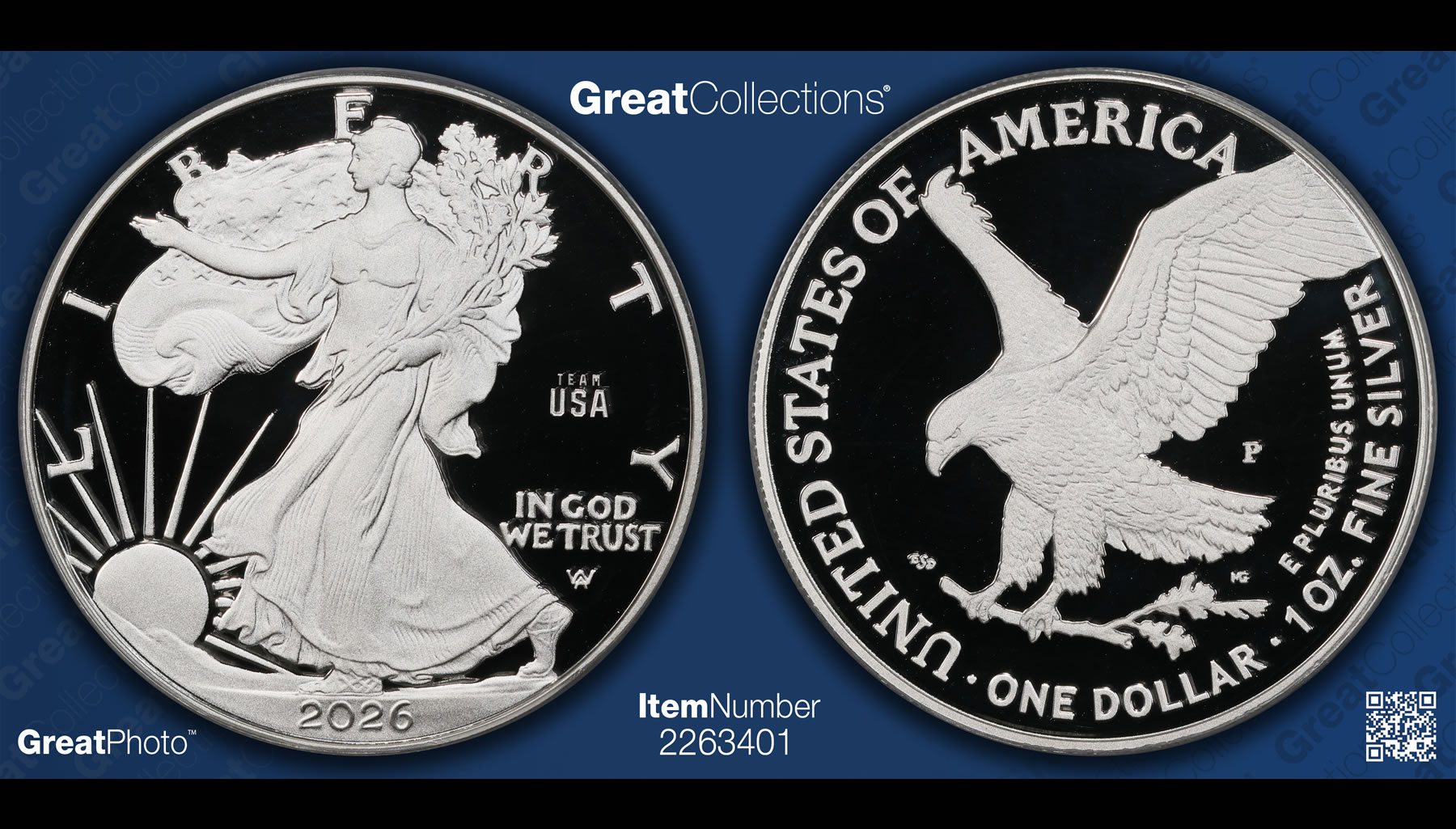
Photo: PCGS / GreatCollections, via CoinNews.
The 403-mintage Silver Eagle that was never for sale
A 2026-P Proof American Silver Eagle with a TEAM USA privy mark is now listed at GreatCollections as Item 2263401. The no-reserve auction closes Sunday, October 18, 2026.
PCGS graded the coin Proof-70 Deep Cameo and labeled it “First Example.” That designation means it was the first example certified by a major grading service. It does not mean the first coin struck by the Mint.
Only 403 were struck in Philadelphia:
- 400 were prepared for an August 6 White House event honoring U.S. Winter Olympic and Paralympic athletes from the Milano Cortina Games.
- Three were retained as United States Heritage Assets.
The coins were never offered through the U.S. Mint’s public catalog. The coin in the auction carries a P mint mark on the reverse. The TEAM USA privy appears in the right obverse field above IN GOD WE TRUST. It comes with original government packaging and a Certificate of Authenticity separately encapsulated by PCGS.
For context, the 2019-S Enhanced Reverse Proof Silver Eagle had a mintage of 30,000, while the 1995-W proof had a mintage of 30,125. The 403-piece TEAM USA issue is roughly one seventy-fifth the size of either release.
GreatCollections President Ian Russell said the consignor initially asked whether the coin was a regular Silver Eagle or something special. That is a useful reminder for collectors: unusual distribution can matter as much as the design.
When evaluating a coin like this, separate:
- Metal value
- Grade
- Provenance
- Distribution history
- Current market interest
Also, a live bid is not a realized price. The final result will not be known until the auction closes.
The TEAM USA issue also followed a different path from the 2024 Flowing Hair High Relief gold coin. The Mint produced 230 of those coins with a “230” privy mark and auctioned them together in December 2024 for $8.23 million. The TEAM USA Silver Eagles were distributed individually, so secondary-market supply depends on recipients deciding to sell.
The Mint’s answer to a platinum-filled counterfeit
In the 1860s, counterfeiters found a way to hide inexpensive metal inside genuine gold coins.
They hollowed out genuine $10 gold eagles, inserted a platinum disk and soldered the gold shells back together. Platinum was far cheaper than gold at the time, but its density helped the altered coin remain close to the correct weight.
In July 1860, New York Assay Office assayer Dr. John Torrey described one altered eagle with the correct size and weight. The seams were difficult to locate. Only a nitric-acid test exposed the silver solder.
Dr. J.T. Barclay proposed a physical solution. He suggested making gold coins wider and thinner, leaving counterfeiters less room to hollow out the planchet.
The Mint tested the idea in 1860 with the Judd-271 large-planchet half eagle. It measured about 27 millimeters across and was roughly one millimeter thick. The experiment was revived in 1878 with the Judd-1566 quarter eagle pattern, struck on a 20.5-millimeter planchet instead of the usual 18-millimeter planchet.
Thin gold planchets created their own problems. The dies did not strike the designs consistently, so the format was abandoned both times.
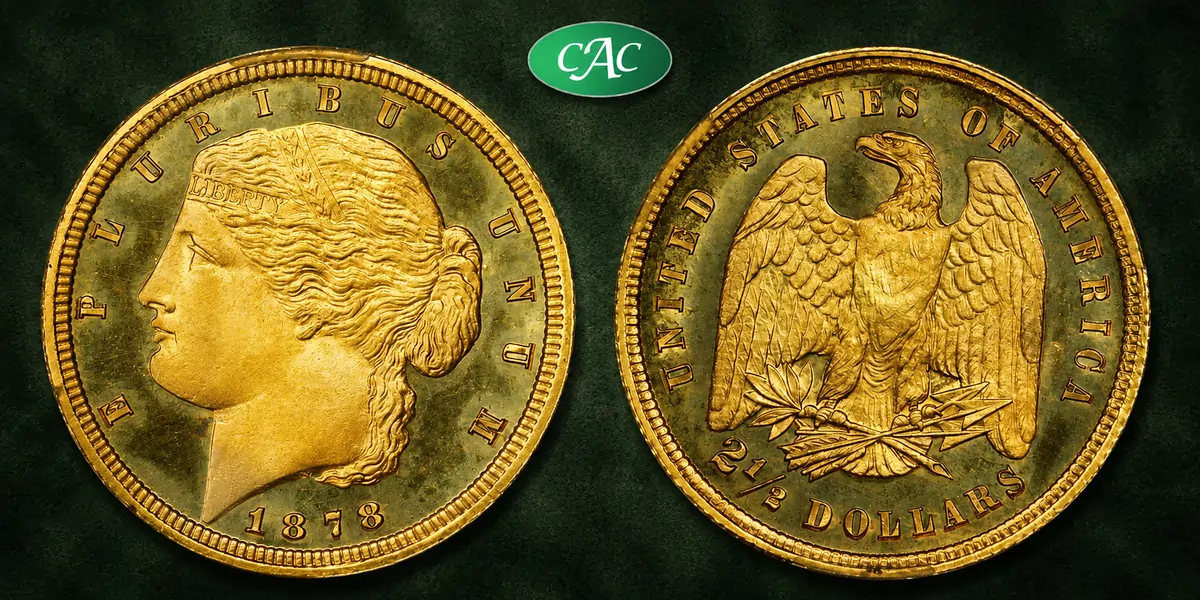
Photo: Stack's Bowers Galleries, via CoinWeek.
Only one gold Judd-1566 is confirmed to survive. Stack’s Bowers sold it on June 16, 2026, for $439,200 including the buyer’s premium. That was a new auction record for the pattern.
The coin was in a CAC Grading Proof-66 Cameo holder. In 2022, the same coin brought $432,000 in a PCGS Proof-67 Cameo holder. The 2026 result was about 2 percent higher.
Its provenance includes Waldo C. Newcomer, Colonel Edward H.R. Green, F.C.C. Boyd, King Farouk, Dr. J. Hewitt Judd, Dr. John E. Wilkison and Bob R. Simpson.
One unique coin does not establish a general grading premium. In this case, absolute rarity, eye appeal, provenance and historical importance can matter more than a one-point difference on the label.
The lesson also applies to modern counterfeit coin detection. Hollowed-out gold coins with tungsten cores still appear today. A familiar design does not guarantee a genuine coin.
Supergirl debuts at the top of the sales chart
The Mint’s latest sales report covers the period ending October 4. The 2026 Supergirl 1-ounce silver medal ranked first with 11,323 sold. The 2.5-ounce silver medal ranked third with 1,297, and the half-ounce gold coin ranked 12th with 394.
Launch prices were:
- 1-ounce silver medal: $200
- 2.5-ounce silver medal: $400
- Half-ounce gold coin: $3,390
The gold coin has since been reduced by $40 to $3,350.
Supergirl’s 1-ounce medal had the strongest opening among the four releases in that size. Superman’s 2025 medal opened at 30,228, while Batman and Wonder Woman opened at 6,718 and 5,078. Supergirl’s 2.5-ounce medal and gold coin had the weakest opening sales in their respective categories.
Product limits match the earlier Comic Art releases:
- No mintage cap on the 1-ounce silver medal
- 25,000 for the 2.5-ounce silver medal
- 10,000 for the gold coin
Early Proof Set numbers, and a Saint-Gaudens note
The 2026 Semiquincentennial Proof Set launched October 6 at $107. The Mint report recorded 240,259 sets against a 480,000 product limit, or about 50 percent.
Much of that total likely reflects subscription orders placed before the official launch. Remember that a product limit is not the same as a final mintage.
The 1907 Saint-Gaudens High Relief $20 Gold Coin and Silver Medal Set added 661 units in its first full week. Its total reached 8,852 against a 15,000 mintage limit.
The set launched at $5,490 and now lists at $5,340, a $150 reduction. The 2026 proof set also includes the new Emerging Liberty dime.
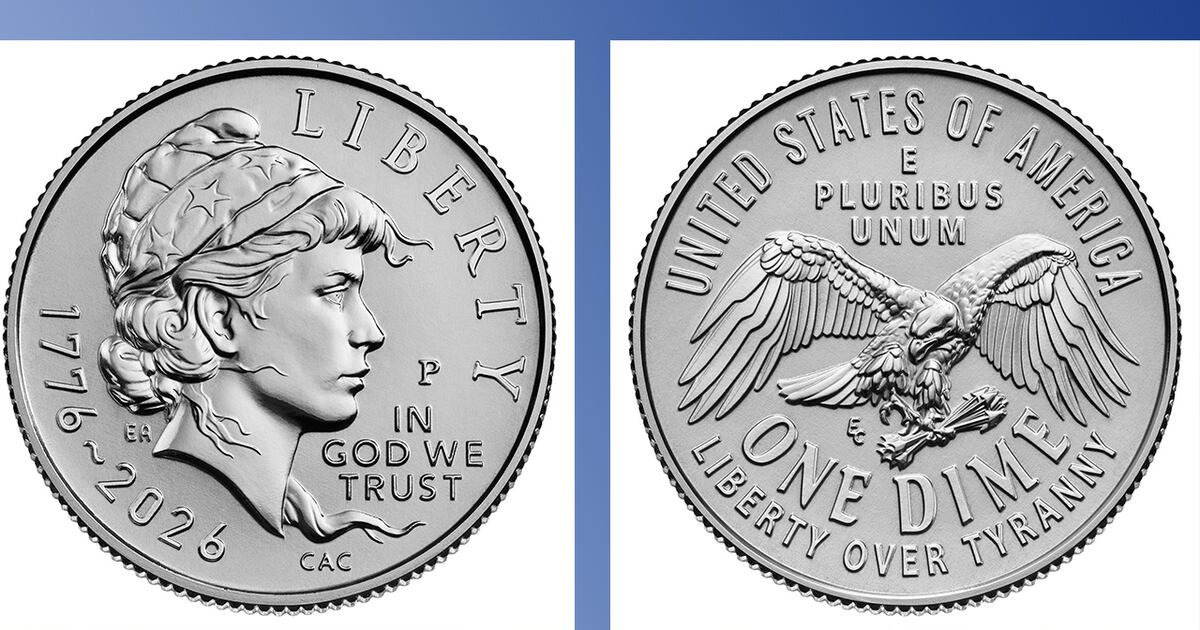
Official U.S. Mint image, via The Coin Show media library.
2028 American Innovation dollars take shape
Candidate designs are now available for the 2028 American Innovation $1 coins. The proposed themes are:
- Nebraska: Center-pivot irrigation, developed by Frank Zybach
- Colorado: Pueblo Chile, connected to Dr. Michael Bartolo and the Arkansas Valley Research Center
- North Dakota: Unmanned aircraft systems, including the Northern Plains UAS Test Site, the University of North Dakota and the Vantis network
- South Dakota: Frederick Dupree, Mary Good Elk Woman and their family’s work to save the American buffalo
The Commission of Fine Arts reviewed the portfolios on September 17. The Citizens Coinage Advisory Committee considered them October 6. Both groups provide advice. The Secretary of the Treasury selects the final designs.
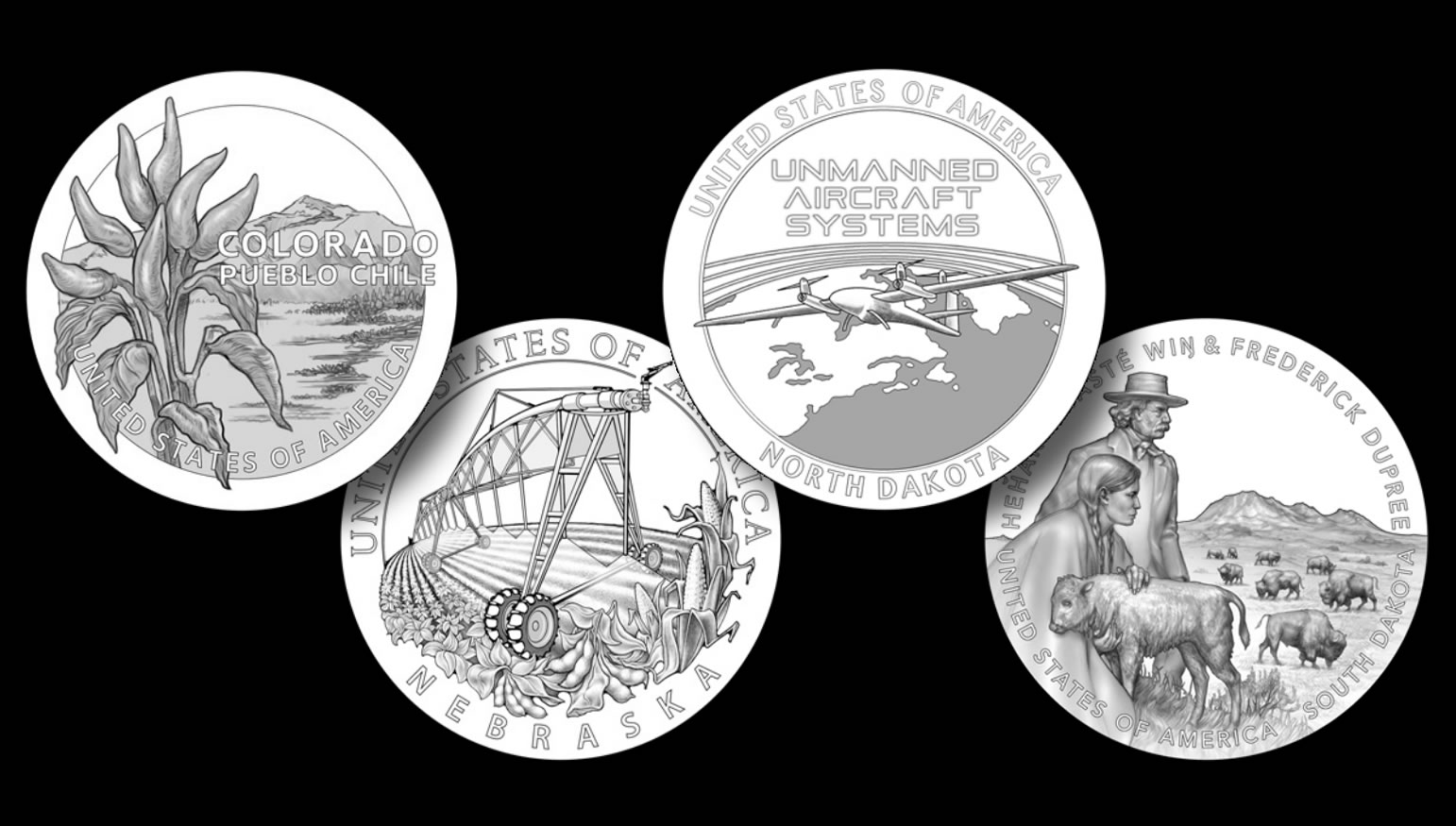
Candidate designs: U.S. Mint, via CoinNews.
These are candidate designs, not final coins. Artwork can change before production.
A label that raised money instead of a price
A private auction of 20,000 CAC Grading certification labels autographed by CAC founder and CEO John Albanese raised a six-figure sum. Proceeds will support nonprofit numismatic organizations and charities, including food pantries. The exact amount has not been disclosed.
Albanese described the signing as a one-and-done event.
These are private grading-service labels, not U.S. Mint issues. The number 20,000 is not a federal mintage, and a signed label does not change the coin inside the holder.
Coin clubs and nonprofit numismatic organizations can request funding through October 31 by writing to Albanese and explaining their purpose and how the money would be used. He asked applicants to write in their own words without AI software. We are not writing applications on anyone’s behalf.
Counterfeit coin detection: quick checklist
Before buying a valuable coin, consider these coin collecting tips:
- Weigh and measure it against official specifications.
- Inspect the edge for seams, filing or weak reeding.
- Look for grainy or porous surfaces associated with casting.
- Tilt the coin under good light. Unnatural luster or missing flow lines can be warning signs.
- Check the certification number on the ANACS, NGC, PCGS or CACG website.
- Treat any QR code on a holder as unverified until you independently confirm the certification number.
Authentication is not grading. Rare coins attract the best fakes, so use extra care with key dates and expensive varieties.
ANA grading standards in plain groups
The ANA Official Grading Standards group grades broadly as follows:
- MS-60 to MS-70: Uncirculated coins with varying levels of marks, luster and eye appeal.
- AU-50 to AU-58: Light wear on the highest points.
- EF-40 to EF-45: Light overall wear with strong detail.
- VF-20 to VF-35: Moderate wear with major details clear.
- F-12 to F-15: Noticeable wear with the main design and lettering visible.
- VG, G and AG: Progressively heavier wear and loss of detail.
Grade is only one part of value. Rarity, demand, originality, eye appeal and provenance also matter.
The Friday no-PVC check
Soft plastic flips can contain polyvinyl chloride, or PVC. Over time, PVC breaks down and leaves a sticky green film on the coin. The residue can stain or etch a surface permanently. Collectors often call this coin PVC damage.
For coin storage for collectors, choose holders clearly marked PVC-free. Mylar, polyethylene, polypropylene and hard acrylic are common inert materials.
Keep your collection cool, dry and stable. Handle coins by their edges. Remove any flip that feels tacky, looks cloudy or smells strongly of plastic. Check cardboard holders and albums for moisture or mildew.
If you find green film, isolate the coin and seek professional advice. Do not clean it yourself.
Our guide on how to store your coin collection covers 2×2 holders, hard plastic cases, albums and slab-style holders. With new Mint products, leaving the original packaging intact is usually the safest approach.
What is a coin show?
What is a coin show? It is a temporary marketplace and classroom. You can compare coins in person, ask dealers questions, buy supplies and practice grading. You do not have to buy from every table.
This weekend’s listed shows, from Friday, October 9, through Sunday, October 11, include:
- Salem, Ohio, October 9–10
- Clearwater, Florida, October 10
- Pensacola, Florida, October 10
- Pittston, Pennsylvania, October 10
- Port Hadlock, Washington, October 10
- Colts Neck, New Jersey, October 10
- Indianapolis, Indiana, October 10
- Countryside, Illinois, October 11
- Wapakoneta, Ohio, October 11
- Telford, Pennsylvania, October 11
- Burlington Township, New Jersey, October 11
- Hunt Valley/Timonium, Maryland: October 11
Confirm hours, admission and venue details with organizers before traveling. Check Find Coin Shows and CoinShows.us for updates.
Standing Liberty quarter 1916 reminder
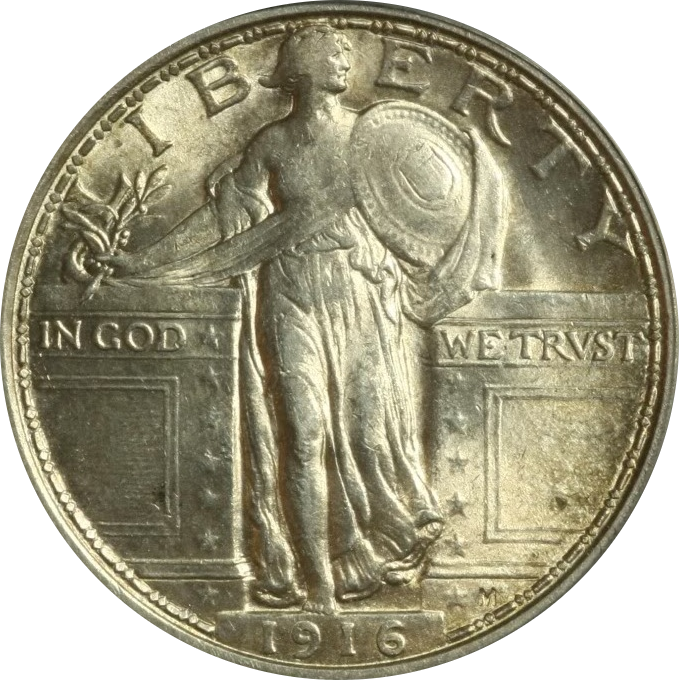
Photo: The Coin Show media library.
The standing liberty quarter 1916 is both the key date and the first year of the series. That combination makes it a target for alterations.
A worked-over 1917 Type 1 quarter can sometimes be presented as a 1916. Study the date and the surrounding fields for signs of tooling, unnatural surfaces or mismatched wear. When significant money is involved, a certified example from a reputable service is usually the safer choice.
For more coin collecting tips, listen to The Coin Show, our coin collecting podcast and numismatic podcast.
Sources
- CoinNews: 403-Mintage Team USA Privy Silver Eagle Heads to Auction
- GreatCollections, Item 2263401
- CoinWeek: Unique 1878 Gold Pattern Quarter Eagle Just Set a New Record
- Stack's Bowers, Judd-1566 lot
- CoinNews: US Mint Sales: Supergirl Debuts, 2026 Proof Set Tops 240,000
- CoinNews: U.S. Mint Shows 2028 American Innovation $1 Candidate Designs
- CoinNews: CAC Grading Auction Generates Six Figures for Numismatic Groups
- ANA Official Grading Standards
- NGC Counterfeit Detection Resources
- The Coin Show: Storing Your Coin Collection
- Find Coin Shows
- CoinShows.us