The Daily Mint, Sunday, October 11, 2026: Norway’s Record Viking Hoard Passes 5,000 Coins, a $70 Million Auction Month, and a Sunday No-PVC Check
Photo: Wolfmann, CC BY-SA 4.0, via Wikimedia Commons. A Viking-Age silver hoard from Teisen, Oslo, shown for comparison with the Mørstad find.
A Norwegian field has yielded more than 5,000 Viking-Age coins, while a major U.S. auction set a firm record. Today’s edition also has a few quick Mint notes, a counterfeit checklist and a Sunday coin-storage check.
Norway’s Mørstad hoard passes 5,000 coins
Metal detectorists Rune Sætre and Vegard Sørlie found the first silver coins on April 10, 2026, in a field beside the Glomma River on the Mørstad farm in Åmot, Norway. After finding 19 coins, they stopped and contacted county archaeologists. A team arrived the next day and recovered about 70 coins on its first day.
The total climbed quickly: about 2,970 by the end of April, 3,274 on May 1, and more than 4,000 a week later. Coin 4,000 was a Danish penny of Harthacnut, son of Cnut the Great, probably struck at Lund around 1030–1035. The count reached 4,772 by mid-May and 4,886 by early summer.
After excavation paused for harvest, work resumed with an excavator to investigate deeper signals. The 5,000th coin, an Otto-Adelheid penny, was found at the end of September. On October 1, archaeologists had counted around 5,200, and county archaeologist May-Tove Smiseth thinks the final total could exceed 6,000.
This is Norway’s largest Viking-Age coin hoard, larger than the next four Norwegian finds combined. It is not the largest in history: the Spillings hoard on Gotland, found in 1999, contained more than 14,000 coins, mostly Islamic dirhams. Museum of Cultural History professor Svein Harald Gullbekk called Mørstad “truly exceptional.”
The coins were struck between about 975 and 1050. More than 95 percent come from kingdoms in what are now England and Germany. The rest include Danish, Swedish, Bohemian, Irish, Norwegian and a few Islamic issues. Most are whole, suggesting the silver circulated as money rather than bullion. A few pieces of hacksilver were also found.
The coins may have been stored in a leather pouch that rotted away, allowing ploughing to scatter them. The field’s stoneless soil likely helped preserve many coins in bright, nearly uncleaned condition.
Four early coins of Harald Hardrada help date the deposit. Harald became co-king in 1046 and sole king in 1047, so the hoard was buried after 1046–47, probably not long afterward. Before Mørstad, only about 15 to 20 examples of this early coin group were known. His pennies weighed around 0.90 grams and were struck at Nidarnes, today’s Trondheim, and Hamar. Their silver content fell deliberately from around 90 percent to just over 30 percent during his reign. That shift from a coin’s metal value toward its face value was one early step toward modern money. One coin even bears traces of a suspension loop, suggesting it was worn as jewelry before returning to circulation.
Archaeologist and excavation leader Kjetil Loftsgarden links the wealth to iron production. Østerdalen produced iron from bog ore, while iron-poor Denmark imported it. The silver, he argues, may have been earned through trade rather than raids.
Under Norway’s Cultural Heritage Act, finds older than 1537 and coins older than 1650 belong to the state. A finder’s reward is possible; for silver, the minimum is the metal value plus 10 percent, normally split between finder and landowner and subject to tax. The Ministry of Climate and Environment has provided 1.2 million kroner for excavation and radar surveys. Oslo’s Museum of Cultural History has promised a public exhibition.
The practical lesson is familiar: report a find, stop digging and never clean an old coin. Its location is part of its story.
Stack’s Bowers sets a firm auction record
Stack’s Bowers Galleries’ Summer 2026 Global Showcase, an event auctioneer partner of the ANA’s World’s Fair of Money, brought in $70,011,421 across more than 12,000 lots. All prices include the buyer’s fee. The firm says it is the highest-grossing sale in its more than 90-year history.
Highlights included a 1777 George III Lion and Wolf medal in silver at $103,700; a Russian Slava Rossii medal and a newly discovered 1841 John Tyler Indian Peace Medal at $134,200 each; and a John Jacob Astor / American Fur Company trade medal at $122,000. The Robison-Salmon Noe 3-B NE shilling also brought $134,200. Other results included a 1694 Carolina Elephant token at $53,680, the Garrett-Roper Higley copper at $42,700, and an 1893-O Liberty Head half eagle that set an issue record at $43,920. An 1896 Morgan dollar in an old NGC holder brought $39,040, and an 1883 Hawaiian dollar sold for $26,840.
“Demand was strong across every category we offered, from United States, world, and ancient coins to currency and numismatic Americana,” said Stack’s Bowers president Brian Kendrella.
The takeaway for collectors: fresh, high-end material can draw strong bids, and medals and tokens have markets of their own.
Short news notes
- The U.S. Mint opens orders for the 2026 American Innovation $1 Coin Reverse Proof Set on Tuesday, October 13, at noon Eastern. It costs $60 and includes four San Francisco reverse proof dollars for Iowa, Wisconsin, California and Minnesota, plus a certificate. Household limit: two.
- The 2026 Semiquincentennial Proof Set, released October 6 for $107, has a 480,000 product limit. The Mint’s latest report showed 240,259 sold. A product limit is not a final mintage.
- The Royal Canadian Mint and Agoro released a Deadpool and Wolverine collection on October 6: a quarter-ounce gold round limited to 1,500 and two one-ounce silver rounds limited to 10,000 each. They are rounds, not legal-tender coins, and draw on the characters’ Canadian roots. Not everything shiny in a box is a coin.
Counterfeit coin detection: a Sunday checklist

Photo: Wikimedia Commons. Certified coins in slabs, the part of the market counterfeiters work hardest to imitate.
Counterfeiters produce convincing PCGS and NGC holders, including holograms and barcodes, and may copy real certification numbers.
- Don’t trust a listing link or holder QR code. Enter the certification number yourself at PCGS or NGC, or use the grading service’s own app.
- Compare weight with official specifications. Check magnetic properties when appropriate, and study die markers and surface texture.
- Grainy or porous fields can suggest casting. Filled or mushy lettering may indicate plating over a base metal.
- Be cautious of prices far below market and sellers who pressure you to hurry.
A slab is a grading company’s promise, not proof that the coin inside is genuine. Authentication and grading are different things. Keep an eye on your pocket change and your online carts.
ANA grading standards reminder
A quick guide to the main ranges in the ANA grading standards:
- MS-60 to MS-70: Uncirculated, with no wear from circulation.
- AU-50 to AU-58: Light wear on the highest points.
- EF-40 to EF-45: Light overall wear with strong detail.
- VF-20 to VF-35: Moderate wear; major details remain clear.
- F-12 to F-15: Noticeable wear, with the main design and lettering visible.
- VG, G and AG: Progressively heavier wear and less detail.
Grade is only part of value. Rarity, demand, originality, eye appeal and provenance matter too.
Sunday no-PVC check
Soft plastic flips may contain PVC, or polyvinyl chloride. As it breaks down, it can leave sticky green residue known as coin PVC damage. That film may stain or permanently etch a coin’s surface.
For coin storage for collectors, choose holders clearly marked PVC-free. Mylar, polyethylene, polypropylene and hard acrylic are common inert materials. Remove any flip that feels tacky, looks cloudy or smells strongly of plastic. Isolate the coin and seek professional advice. Don’t clean it yourself.
Keep your collection cool, dry and stable. Handle coins by their edges, and check cardboard holders and albums for moisture or mildew. For more on how to store your coin collection, see our storage guide.
What is a coin show?
A coin show is a temporary marketplace and classroom. You can compare coins in person, ask dealers questions, buy supplies and practice grading. You do not have to buy from every table.
Today’s listings for Sunday, October 11:
- Pittsburgh, Pennsylvania: O.N.R. Coin Show, Castle Shannon Fire Department, 10 a.m.–3 p.m., free admission.
- Indianapolis, Indiana: 71st Street Coin and Currency Show, Northside Events & Social Club, free admission.
- Countryside, Illinois: West Suburban Coin Show, 10 a.m.–3 p.m.
- Telford, Pennsylvania: Montco Coin Show, 10 a.m.–3 p.m.
- Falls Creek, Pennsylvania: Tri County Coin Show, Falls Creek Firehall, 9:30 a.m.–3:30 p.m., free.
- Hunt Valley/Cockeysville, Maryland: Hunt Valley-Timonium Coin & Currency Show, Embassy Suites, 9 a.m.–4 p.m., free.
- Royal Oak, Michigan: Royal Oak Coins & Collectibles Show, Elks Lodge, 10 a.m.–3 p.m., free.
- Melville, New York: Coins, Stamps and Collectibles Show, 8 a.m.–1 p.m., free.
Confirm hours, admission and venue with the organizer before traveling. Check Find Coin Shows and CoinShows.us for listings.
Standing Liberty quarter 1916 note
The Standing Liberty quarter 1916 is both the series’ first year and key date, so it is a target for alterations. A worked-over 1917 Type 1 can be dressed up as a 1916. Look at the date and nearby fields for tooling, unnatural surfaces or wear that does not match the rest of the coin. For a significant purchase, a certified example from a reputable grading service is usually the safer choice.
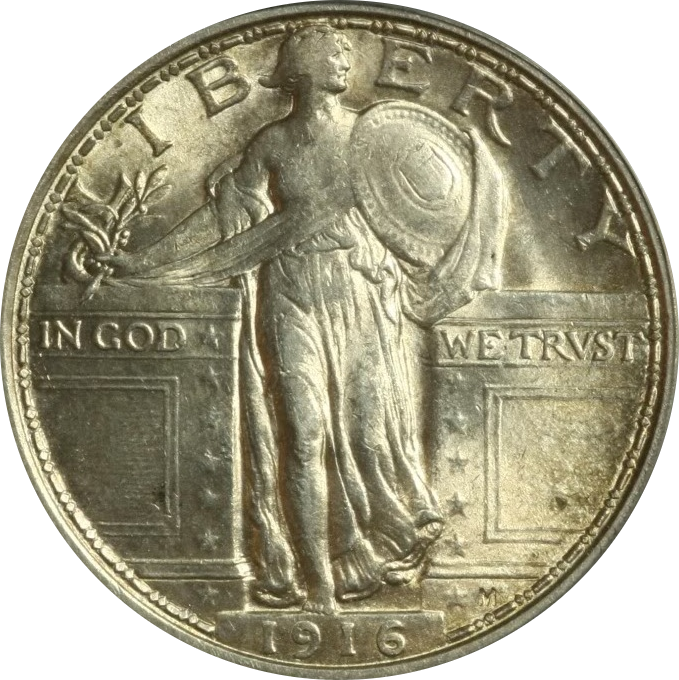
Photo: The Coin Show media library.
Thanks for reading. For more coin collecting tips, listen to The Coin Show, our coin collecting podcast and numismatic podcast, and find our video episodes on The Coin Show YouTube channel.
Sources
- Glanz & Gravur: “The Mørstad Hoard: More than 5,000 silver coins from the age of Harald Hardrada”
- ScienceNorway reports on the Mørstad hoard
- Numismatic News: Stack’s Bowers Summer 2026 Global Showcase realizes over $70 million
- CoinNews: U.S. Mint sales and 2026 Proof Set report
- World Numismatic News: American Innovation Reverse Proof Set opens October 13
- CoinNews: Deadpool and Wolverine get the gold and silver treatment
- CoinWeek: “Fun with Fakes”
- NGC counterfeit detection resources
- ANA official grading standards
- The Coin Show: “Storing Your Coin Collection”
- Find Coin Shows and CoinShows.us