The Daily Mint, Sunday, October 4, 2026: A 2,600-Coin Medieval Hoard, a $6.5 Million Gold Scam Warning, and a Sunday No-PVC Check
Photo: Library of Congress via Wikimedia Commons (public domain).
Here’s your Sunday roundup of discoveries, warnings, coin shows, grading basics, and a quick storage check.
A 2,600-Coin Hoard Near Moscow
Archaeologists from the Institute of Archaeology of the Russian Academy of Sciences found more than 2,600 silver coins in a ceramic jug near the Kolomna Kremlin. The discovery was first reported in late August and continues to draw attention this month.
The coins date to the first half of the 15th century. Most were struck during the reigns of Vasily I and Vasily II. The hoard was found intact, which gives researchers an unusually complete look at the money circulating in one regional market.
Some pieces feature rare “flying bird” designs. Specialists believe those types may point to a local mint in Kolomna. The find is considered the largest hoard of Russian coins from the 1420s found to date. After study, it will go to the Kolomensko-Zaraysky Museum-Reserve.
A denga was a small silver coin made from flattened silver wire. The planchet was cut from the wire and struck, leaving many examples with irregular shapes and thin, “fish scale” appearances. That rough look is part of the charm of early Russian wire money.

Photo: Wikimedia Commons (public domain).
Anglo-Saxon Pennies Found Near the Vatican
Excavations at the Palazzo della Rovere near the Vatican have been underway since 2020. Researchers have now identified 20 Anglo-Saxon coins from the site: 19 silver pennies and one halfpenny.
The coins were minted between the late ninth and mid-10th centuries under Edward the Elder, Æthelstan, and Eadred. University of Cambridge researchers connect them to the Schola Saxonum, the Anglo-Saxon quarter of medieval Rome.
This is important because the coins provide the first material evidence that English residents in the area could trade using their own currency. The finds were scattered or located in small clusters, rather than buried together as a savings hoard. That pattern suggests everyday use.
Alongside the coins, archaeologists found evidence of leather, bone, and metalworking. Together, the discoveries point to a working community, not just a place for pilgrims to stay. English travelers and craftspeople were living, shopping, and trading far from home.

Photo: Portable Antiquities Scheme / Frank Basford, via Wikimedia Commons (CC BY 2.0).
Germany's Largest Hadrianic Hoard
Metal detectorist Oliver Riedl found 934 Roman silver denarii near Wesseling, Germany. The discovery was announced September 22.
The coins weigh about 3.1 kilograms, making this the largest Hadrianic-era coin hoard found in Germany and one of the largest known worldwide. The earliest coins date to 148 BC. The group was likely buried in a straw-lined ceramic pot during the second quarter of the second century AD.
The hoard is now held by the LVR-Landesmuseum Bonn. Researchers will have the chance to study the coins as a group, including their dates, wear, origins, and possible connection to the person who buried them.

Photo: Sussex Archaeological Society / Laura Burnett, Portable Antiquities Scheme, via Wikimedia Commons (CC BY-SA).
Hoards are evidence of everyday life, not just treasure. They can show how people saved money, moved through a region, responded to uncertainty, and used coins across generations.
Warning: Fake Federal Agents, Real Gold Bars
Pennsylvania State Police are investigating a multi-state impersonation scam that has taken approximately $6.5 million from victims. People in Pennsylvania, Maryland, and Washington state have been affected.
The scheme often starts with a pop-up on the victim’s computer. The caller then claims to be a federal agent and says the victim’s identity, Social Security number, or bank account is connected to criminal activity.
The victim is pressured to withdraw savings, buy gold bars or coins, and hand them to a courier for “safekeeping.” Two California men were arrested September 10 after police stopped their vehicle in Pennsylvania. Investigators found about $215,000 in gold inside.
The warning is simple: no legitimate law enforcement officer will tell you to buy gold or give gold and cash to a courier. If you may have been targeted, contact the Pennsylvania State Police using the information in their public notice.
Counterfeit American Silver Eagles are also appearing in online and private sales. Many are offered below market price, sometimes in slabs with fake grading labels. A practical counterfeit coin detection checklist:
- Weigh and measure the coin against official specifications.
- Inspect the edge for seams, filing, unusual reeding, or other irregularities.
- Look for grainy, porous, or soft surfaces that may indicate casting.
- Tilt the coin under good light. Watch for unnatural luster or missing flow lines.
- Check certification numbers yourself on the grading company’s website.
- Treat any QR code on a slab as unverified until you confirm the number independently.
For more examples and diagnostic information, see NGC’s counterfeit detection resources. Authentication is not grading. A coin must be genuine before its grade has any meaning.
What Is a Coin Show?
So, what is a coin show? It’s a temporary marketplace and classroom where you can compare coins in person, talk with dealers, buy supplies, and practice grading. It’s also one of the best places to ask questions without pressure.
Coin shows happening today, Sunday, October 4, include:
- Minot Coin Club Show, Minot, North Dakota
- Brunswick Coin and Stamp Show: Topsham, Maine
- North County Coin Show, Anaheim, California
- Metro East Coin & Currency Club 44th Annual Fall Coin Show: Collinsville, Illinois
The Great American Coin & Collectibles Show in Rosemont, Illinois, wrapped up Saturday.
Looking ahead, the Wilkes-Barre Coin Club Show in Pittston, Pennsylvania, and the Pensacola Coin & Currency Show in Milton, Florida, are scheduled for October 10–11.
Show details can change, so confirm hours, admission, and venue information with organizers before traveling. For more listings, check Find Coin Shows and CoinShows.us.
If it’s your first show, bring a want list, a loupe, and a budget. Ask before handling a dealer’s coins. Take notes. You do not have to buy the first example you see.
ANA Grading Standards, in Plain Groups
The ANA grading scale becomes easier to understand when you group the grades.
- MS-60 to MS-70: Uncirculated coins with no wear. The number reflects factors such as luster, contact marks, strike, and eye appeal.
- AU-50 to AU-58: About Uncirculated coins with light wear on the highest points.
- EF-40 to EF-45: Light overall wear with strong remaining detail.
- VF-20 to VF-35: Moderate wear. Major design features remain clear.
- F-12 to F-15: Noticeable wear, but the design and lettering are still visible.
- VG, G, and AG: Progressively heavier wear, with less detail and weaker rims or lettering.
The grade is only part of a coin’s value. Strike, luster, color, eye appeal, cleaning, and originality all matter. The ANA Official Grading Standards provide the full descriptions.
The Sunday No-PVC Check
Soft flips can contain polyvinyl chloride, or PVC. Over time, PVC breaks down and leaves a sticky green film on a coin. This is coin PVC damage. It can stain or etch the surface.
For safe coin storage for collectors, use holders clearly marked PVC-free. Inert materials include Mylar, polyethylene, polypropylene, and hard acrylic.
Keep your collection cool, dry, and stable. Handle coins by their edges. Pull any flip that feels tacky, looks cloudy, or smells strongly of plastic. Also check cardboard holders and albums for moisture or mildew.
If you find green film, isolate the coin. Do not clean it yourself. Get advice from a qualified conservator or experienced professional.
For more detail on how to store your coin collection, review your holders one box or album at a time.
Standing Liberty Quarter 1916 Reminder
The 1916 is the key date and first year of issue for the Standing Liberty quarter. Altered or worked-over 1917 Type 1 quarters are sometimes offered as 1916s, so study the date and surrounding design closely.
When real money is involved, counterfeit coin detection and professional authentication matter. A strong photograph can help you learn the design, but it cannot replace an in-hand examination.
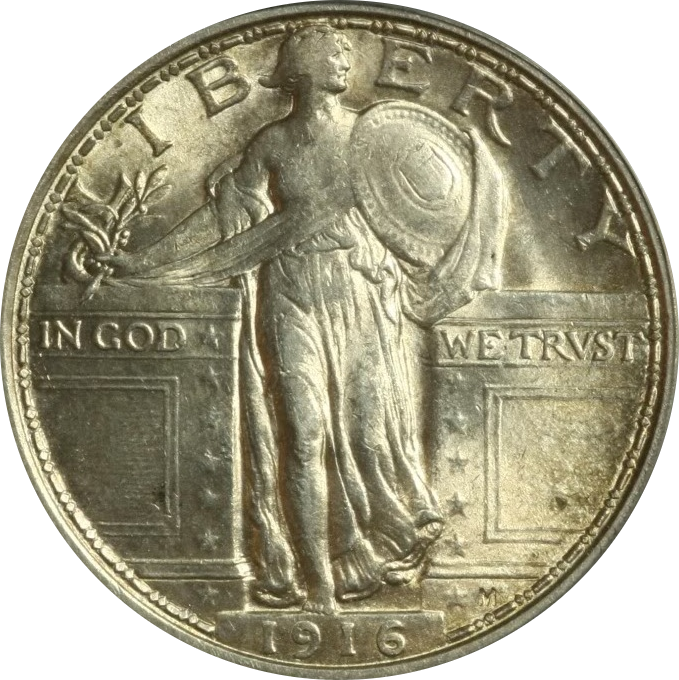
Image credit: The Coin Show media library.
For more collector stories and practical advice, hear The Coin Show podcast, a coin collecting podcast and numismatic podcast for collectors at every level: coinshowradio.com.
Sources
- Russian hoard, Kolomna: Archaeology Magazine and TASS
- Anglo-Saxon coins in Rome: University of Cambridge
- Wesseling Roman hoard: LVR-Landesmuseum Bonn and Archaeology Magazine
- Gold bar scam: Pennsylvania State Police
- Counterfeit detection: NGC
- ANA grading standards: American Numismatic Association
- Coin storage: The Coin Show
- Coin show listings: Find Coin Shows and CoinShows.us
Follow The Coin Show’s podcast and blog for more numismatic news and practical collecting tips.