The Daily Mint, Monday, October 5, 2026: The 2026 Proof Set Lands Tomorrow, a $235,000 Penny in Houston, and a Monday No-PVC Check
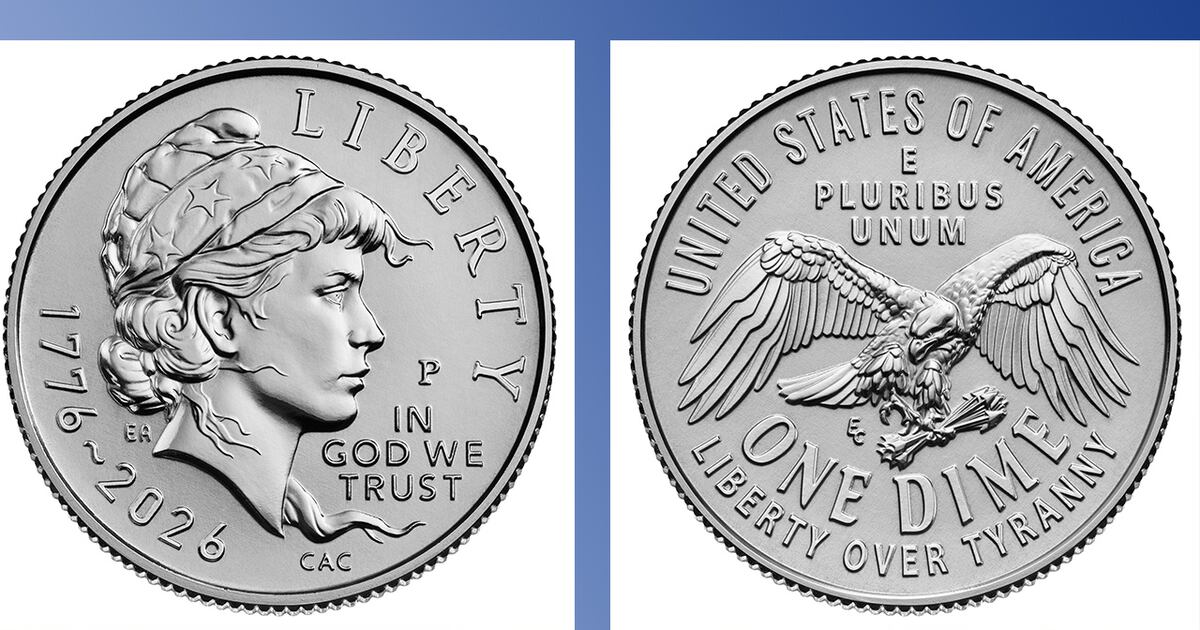
U.S. Mint via The Coin Show media library.
The 2026 U.S. Mint Proof Set goes on sale tomorrow, a newly confirmed 1943 bronze cent is on display in Houston, and an electrotype 1841 half cent offers a reminder to slow down before buying a rare coin.
Here is today’s roundup, plus a few practical checks for your collection.
The 2026 Proof Set goes on sale tomorrow
The 2026 United States Mint Proof Set goes on sale Tuesday, October 6, at noon Eastern Time. The issue price is $107.
Each set contains 10 Proof coins struck at San Francisco with the “S” mintmark. The coins come in two clear protective lenses, along with a presentation package and certificate of authenticity.
The Mint has set a product limit of 480,000 sets. It currently lists no mintage limit for the individual coins and no household order limit. That means the coins should not be described as having a 480,000 mintage.
This is a landmark issue because Congress authorized the designs under the Circulating Collectible Coin Redesign Act of 2020 for the one-year Semiquincentennial period.
The Emerging Liberty dime brings Liberty back to the obverse for the first time since 1945. That ends the Roosevelt dime run that began in 1946.
The Enduring Liberty half dollar is an even bigger change. The Statue of Liberty replaces John F. Kennedy and the Presidential Coat of Arms for 2026. The reverse shows Liberty passing her torch to a new generation and carries the words, “KNOWLEDGE IS THE ONLY GUARDIAN OF TRUE LIBERTY.” It is the first major departure from the Kennedy half dollar format in more than six decades.
The five Semiquincentennial quarters create a compact visual history. Their subjects are the Mayflower Compact, Revolutionary War, Declaration of Independence, U.S. Constitution, and Gettysburg Address.
The Native American $1 honors Polly Cooper and the Oneida Indian Nation. Its design shows Cooper sharing white corn with George Washington at Valley Forge. Washington holds his hat in gratitude.
The Jefferson nickel keeps Jefferson and Monticello, but adds the dual date “1776 ~ 2026.”
The Lincoln cent is also historically interesting. The Mint struck its final one-cent coin for general circulation in November 2025, and Congress has moved to end the circulating penny after 234 years. The Mint will continue making Lincoln cents for collectors. The 2026-S Proof cent is a collector-only coin with the “1776 ~ 2026” dual date. Victor David Brenner’s Lincoln portrait and the Union Shield reverse remain.
A Proof coin is made differently from ordinary pocket change. The Mint uses specially prepared blanks and polished dies. Each coin receives at least two strikes, creating frosted design elements and mirrored fields.
A $235,000 bronze cent is on display in Houston

National Numismatic Collection, National Museum of American History / Jaclyn Nash, public domain.
The lead historical story today is a genuine 1943 bronze Lincoln cent. Certified PCGS XF40 BN under certification number 54723120, it carries a PCGS Price Guide value of $235,000.
U.S. Coins and Jewelry of Houston bought the coin and placed it on public display Saturday, October 3. It is in the company’s second-floor showroom at 8501 Katy Freeway, Houston. Hours are Monday through Friday, 10 a.m. to 5 p.m., and Saturday, 10 a.m. to 3 p.m.
In 1943, the U.S. Mint switched to zinc-coated steel cents to save copper for the war effort. A few leftover bronze planchets from 1942 remained in the presses and were struck with the 1943 date. Nobody intended those coins, which is exactly why they matter. The 1943 bronze cent is included in Whitman’s 100 Greatest U.S. Coins.
This example had a quiet history. A family bought it from a collector in the early 1960s and never had it authenticated. Appraiser Alvin Stern later submitted it to PCGS, which confirmed the coin.
World Numismatic News now counts it as the 26th traced 1943 bronze cent: 18 from Philadelphia, including this one, one from Denver, and seven from San Francisco. Older published estimates of “about 20” are out of date. Grading-service population reports can also overstate totals because crossovers and regrades may give one physical coin several certificates.
The coin has a famous rumor attached to it. A post-war story claimed Henry Ford would give away a car for the first copper 1943 cent. Ford denied the claim. In 1947, however, a teenager found a genuine example in his high school cafeteria change, helping the story live on.
For counterfeit coin detection, start with the basics. A steel cent will stick to a magnet, but a magnet cannot authenticate a bronze example. Compare weight and diameter with official specifications. Inspect the edge for seams or tool marks. Grainy or porous surfaces can suggest casting, while unnatural luster may point to plating. Always verify a certification number independently on the grading company’s own website. Do not rely only on a QR code on a slab.
The Houston dealer says it has examined thousands of copper-colored 1943 cents. Every previous example was either a steel cent or a plated fake. PCGS President Stephanie Sabin has called the 1943 bronze cent one of the most frequently submitted and widely misidentified coins.
The ANA grading standards place XF-40 to XF-45 in the Extremely Fine range. That means light overall wear with strong remaining detail. The broader scale runs from MS-60 to MS-70 for coins with no wear; AU-50 to AU-58 for light wear on the highest points; EF/XF-40 to XF-45 for light wear and strong detail; VF-20 to VF-35 for moderate wear; F-12 to F-15 for noticeable wear; and VG, G, and AG for progressively heavier wear. Grade is only part of value. Strike, luster, color, eye appeal, cleaning, and originality matter too. See the ANA Official Grading Standards.
Counterfeit watch: an electrotype 1841 half cent
NGC recently examined an 1841 Braided Hair half cent that looked convincing but turned out to be an electrotype.
Electrotypes are not struck coins. Thin metal shells are electroplated over wax molds taken from a genuine coin. The shells are joined and filled with metal to reach the correct weight.
Warning signs on this piece included raised metal near one star, a warped bar in the E of LIBERTY, a fuzzy appearance, and edge tool marks where someone tried to hide the seam between the shells.
The 1840–1848 Braided Hair half cents, along with the 1849 Small Date and 1852, are known only as Proofs or restrikes. Worn, circulated examples should not exist. If you see one, be suspicious.
Authentication is not grading. A coin must be genuine before its grade means anything.
What is a coin show? Shows coming October 10–11
So, what is a coin show? It is a temporary marketplace and classroom where collectors can compare coins in person, meet dealers, buy supplies, and practice grading. It is also one of the best places to ask questions without pressure.
Coming up this weekend:
- October 10–11: Wilkes-Barre Coin Club Show at the Oblates of St. Joseph’s Seminary in Pittston, Pennsylvania.
- October 10–11: Pensacola Coin & Currency Show at the Elks Lodge in Milton, Florida.
- October 10: Clifton Stamp, Coin, Cover and Postcard Show in Clifton, New Jersey.
- October 10: Horst Auction Center coin sale in Ephrata, Pennsylvania, with 466 lots.
- October 11: Rare and key-date estate coin auction in Kutztown, Pennsylvania.
For your first visit, bring a want list, loupe, and budget. Ask before handling a dealer’s coins. Take notes, and remember that you do not have to buy the first example you see.
Confirm hours, admission, and venue details with organizers before traveling. Check listings at Find Coin Shows and CoinShows.us.
The Monday No-PVC Check
Soft flips can contain polyvinyl chloride, or PVC. Over time, PVC breaks down and leaves a sticky green film on a coin. That is coin PVC damage, and it can stain or etch the surface.
For safe coin storage for collectors, use holders clearly marked PVC-free. Inert materials include Mylar, polyethylene, polypropylene, and hard acrylic.
Keep your collection cool, dry, and stable. Handle coins by their edges. Remove any flip that feels tacky, looks cloudy, or smells strongly of plastic. Check cardboard holders and albums for moisture or mildew, too.
If you find green film, isolate the coin. Do not clean it yourself. Ask a qualified conservator or experienced professional for advice.
For more on how to store coin collection, review one box or album at a time.
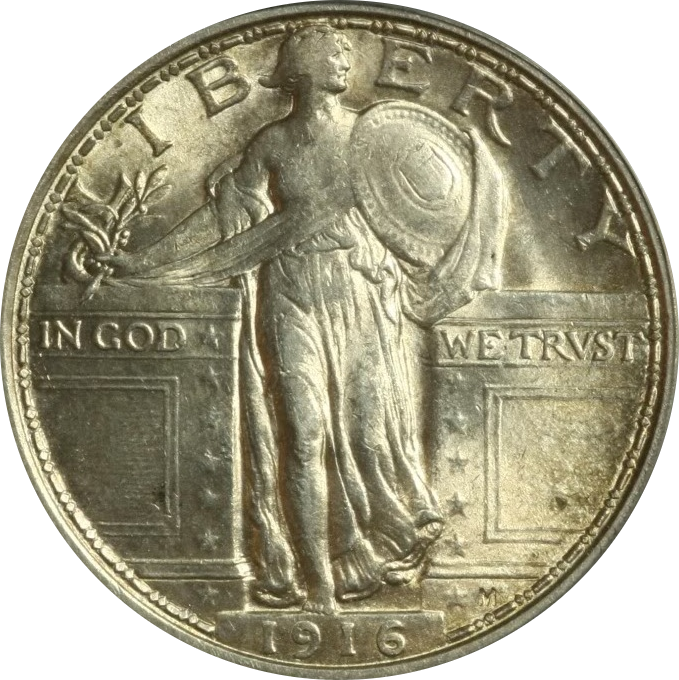
A 1916 Standing Liberty quarter reminder
The standing liberty quarter 1916 is both the key date and the first year of issue for the series.
Altered or worked-over 1917 Type 1 quarters are sometimes offered as 1916 examples. Study the date and surrounding design carefully. A strong photograph can help you learn the design, but it cannot replace an in-hand examination. When serious money is involved, professional authentication is the safer choice.
Credit: The Coin Show media library.
For more collector stories and practical coin collecting tips, listen to The Coin Show coin collecting podcast. Our numismatic podcast covers rare finds, new Mint issues, collecting basics, and the people who make the hobby interesting.
Sources
- 2026 Proof Set: CoinWeek
- 2026 United States Mint Proof Set
- 1943 Bronze Cent in Houston: World Numismatic News
- Counterfeit 1841 Half Cent
- ANA Official Grading Standards
- Storing Your Coin Collection
- Coin Show Listings, Find Coin Shows
- Coin Show Listings, CoinShows.us
- NGC Counterfeit Detection Resources