

Counterfeit Coin Detection Secrets Revealed: What Experts Don’t Want You to Know
Welcome back to another edition of The Daily Mint. I’m Penny, and today we’re diving into the dark side of numismatics. If you’ve ever scrolled through an online auction and thought, “That 1916 Standing Liberty Quarter looks a little too good to be true,” you’re already developing the right instincts.
In the world of coin collecting, "expert" knowledge often feels like a secret club. Dealers and high-end graders have a certain "vibe" they look for, but it’s not magic. It’s a systematic checklist of science, history, and a healthy dose of skepticism. Today, we’re pulling back the curtain on counterfeit coin detection and giving you the coin collecting tips you need to protect your wallet and your collection.
The Myth of the "Secret" Trick
Let’s get one thing straight: there isn’t one single trick that catches every fake. Counterfeiters are getting smarter, especially with "superfakes" coming out of overseas labs that use the correct metal alloys. However, even the best fakes usually fail when you apply a layered approach.
Whether you’re a regular listener of our numismatic podcast or a newcomer just starting to learn how to store a coin collection, the first step is always the same: know what the real thing is supposed to look like.
1. The Numbers Don't Lie: Weight and Size
The most basic tool in any collector’s kit isn’t a magnifying glass, it’s a precision digital scale. Experts never skip the "Spec Check." Every coin minted by the U.S. Mint (and most world mints) has exact specifications for weight, diameter, and thickness.
If you’re looking at a 1794 Flowing Hair Silver Dollar, you need to know exactly what it’s supposed to weigh.
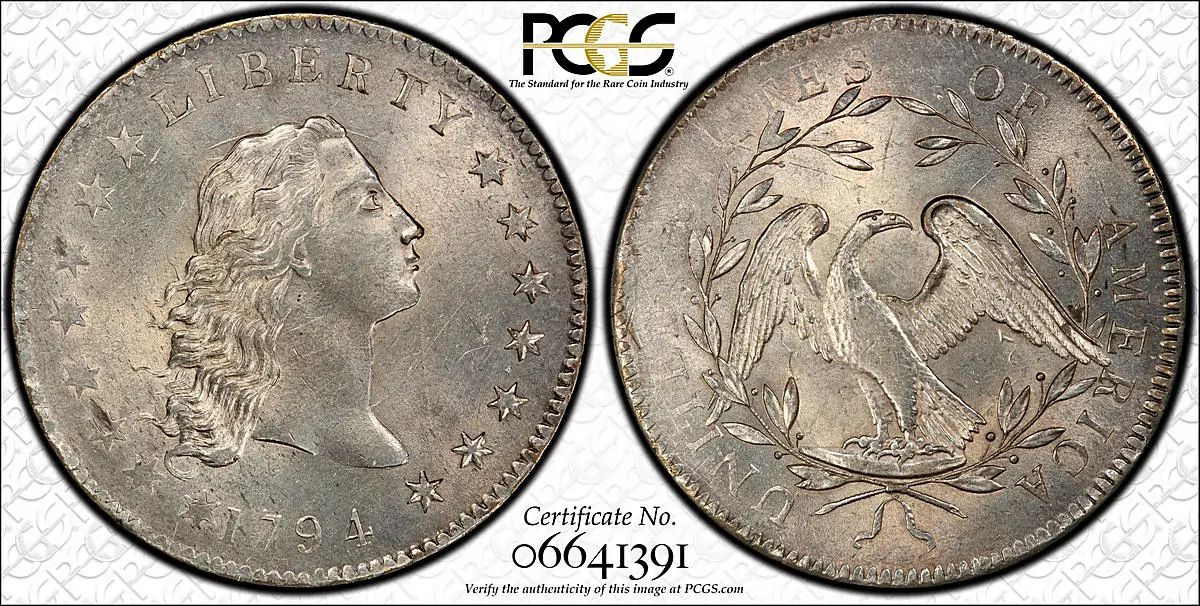
Fakes often use base metals like copper, tin, or lead and then plate them in silver or gold. Because these metals have different densities, the counterfeiter has a choice: make the coin the right weight (which makes it too thick or too wide) or make it the right size (which makes it too light).
Pro Tip: Get a scale that measures to at least 0.01g. A standard silver dollar should be 26.73 grams. If it’s 24.5 grams, it doesn’t matter how pretty it looks, it’s a fake.
2. The Physics of Silver and Gold
Silver and gold are funny metals. They aren't magnetic, but they are highly conductive. This leads us to two of the best low-tech tests in the book:
- The Slide Test: If you have a strong neodymium magnet, hold it at a 45-degree angle and let a silver coin slide down it. It won’t stick, but it will slide slowly and smoothly. This is due to "eddy currents" creating a resistive magnetic field. A fake coin made of base metal will usually just tumble off or stick like glue.
- The "Ping" Test: This is the oldest trick in the book. Gently balance a coin on your finger and tap it with another coin or a plastic pen. Genuine silver and gold have a high-pitched, long-lasting ring, almost like a bell. Fakes made of lead or zinc will give you a dull "thud."
Note: Be careful with the ping test on high-grade coins. You don't want to leave a "ping mark" on a potential MS65 specimen!
Visual Tells: What the Loupe Reveals
Once a coin passes the physical specs, it’s time to get up close and personal. Most experts use a 10x loupe. Anything more powerful and you start seeing "ghosts," but 10x is the sweet spot for seeing the details that fakes usually miss.
Look for "Mushy" Details
Struck coins (real ones) are made with tons of pressure, creating sharp, crisp lines. Cast fakes (made by pouring molten metal into a mold) often have "mushy" or rounded edges on the letters. If the date looks like it’s melting into the field of the coin, walk away.
The Edge is the Key
Most collectors spend all their time looking at the "heads" and "tails," but the edge is where fakes often fail. On a cast coin, you might see a faint seam running around the center of the edge where the two halves of the mold met. On coins with reeding (those little ridges), look for uneven spacing or "slipping" where the machine didn't quite line up.
Surface Texture
Genuine coins have "luster", that cartwheel effect where light dances across the surface. This happens because the minting process creates microscopic flow lines in the metal. Many fakes have an "orange peel" texture or tiny pits that look like bubbles. These are signs of casting or poor-quality planchets.
The 1916 Standing Liberty Quarter: A Case Study
If you’re serious about the hobby, you’ve probably dreamt of finding a 1916 Standing Liberty Quarter. With a mintage of only 52,000, it’s a holy grail for many.
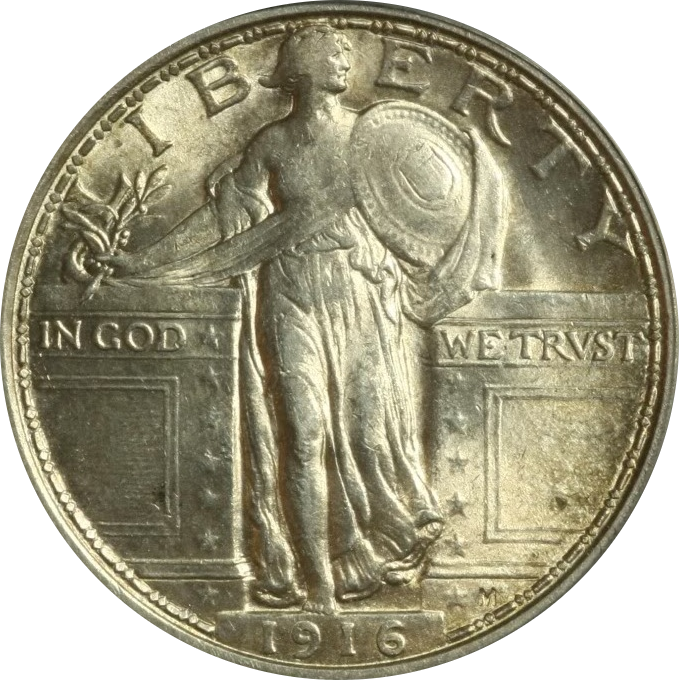
Because it's so valuable, it's also a major target for counterfeiters. Often, fakes are actually genuine 1917 quarters that have had their dates "tooled" or altered. This is where knowing ANA grading standards and specific die varieties becomes vital. On a genuine 1916, the gown details and the shield have very specific characteristics that differ from the 1917 Type 1. If you don't know those nuances, you might buy a "rare" coin that’s actually a $20 altered common date.
Coin Care: Don't Kill Your Collection!
Finding a genuine coin is only half the battle. You also have to keep it that way. One of the biggest "secrets" experts share is the danger of coin PVC damage.
If you’ve ever bought an old collection and noticed the coins are covered in a sticky, green slime, you’ve seen PVC damage. Old-school plastic flips were made with polyvinyl chloride (PVC) to make them soft and pliable. Over time, the chemicals in the plastic leak out and literally eat the surface of your coins.
How to Store Your Coin Collection
When looking for coin storage for collectors, always ask for "PVC-free" or "archival safe" materials.
- Mylar Flips: These are stiff and "crinkly," but they won't rot your coins.
- Airtite Holders: Hard plastic capsules that provide a near-airtight seal.
- Slabs: Buying coins already graded by services like NGC or PCGS is the ultimate "safety" move, as they are sonically sealed in inert plastic.
What is a Coin Show, Anyway?
If you’re tired of squinting at blurry eBay photos, it’s time to head to a coin show. A coin show is essentially a pop-up marketplace where dozens (or hundreds) of dealers set up tables to buy, sell, and trade.
It’s the best place to learn because you can handle thousands of coins in a single afternoon. Most dealers are happy to show you the difference between a genuine piece and a "black cabinet" fake they keep for educational purposes. It’s like a live, in-person version of a numismatic podcast. You get the stories, the history, and the hands-on experience that no blog post can fully replace.
Modern Tech: Beyond the Human Eye
For high-value items like the 1796/5 Half Eagle, experts pull out the big guns.
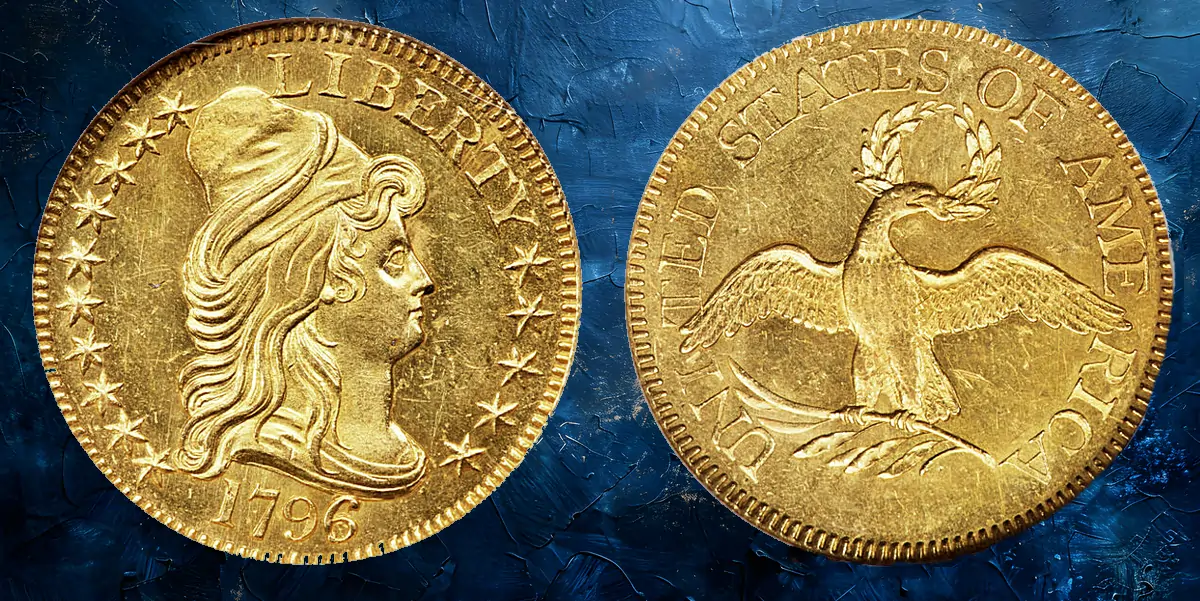
When millions of dollars are on the line, we use:
- UV Light: This can reveal hidden cleaning, repairs, or "putty" used to hide scratches.
- XRF (X-Ray Fluorescence): This machine shoots X-rays at the coin to determine its exact elemental composition without damaging it. If your "gold" coin comes back as 60% copper, you’ve got a problem.
- Sigma Metalytics: A handheld device that measures the electrical resistivity of a coin to verify its metal content through plastic holders or flips.
Final Thoughts: Trust, but Verify
At the end of the day, the best counterfeit detection tool is your brain. If a deal seems too good to be true, it probably is. Keep listening to your favorite coin collecting podcast, stay up to date on the latest mint releases like the new 1776-2026 Emerging Liberty Dime, and never stop looking through your loupe.
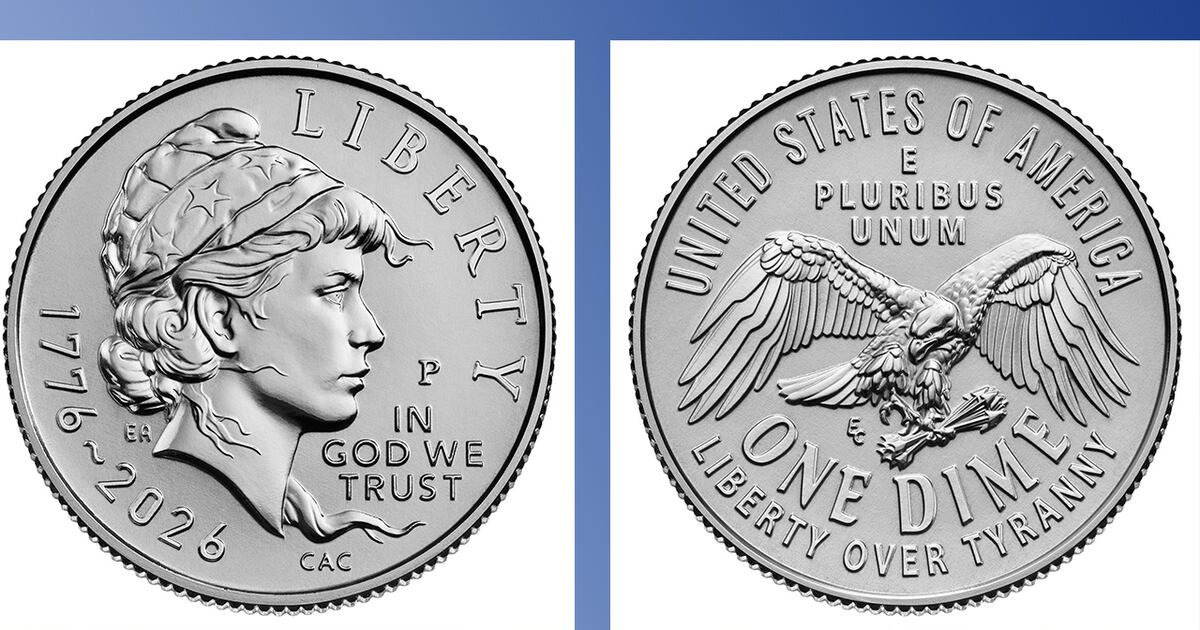
Collecting is a journey, and part of that journey is learning to spot the fakes so you can truly appreciate the masterpieces.
Stay sharp, keep your coins out of PVC, and we'll see you next time at The Daily Mint. Happy hunting!