
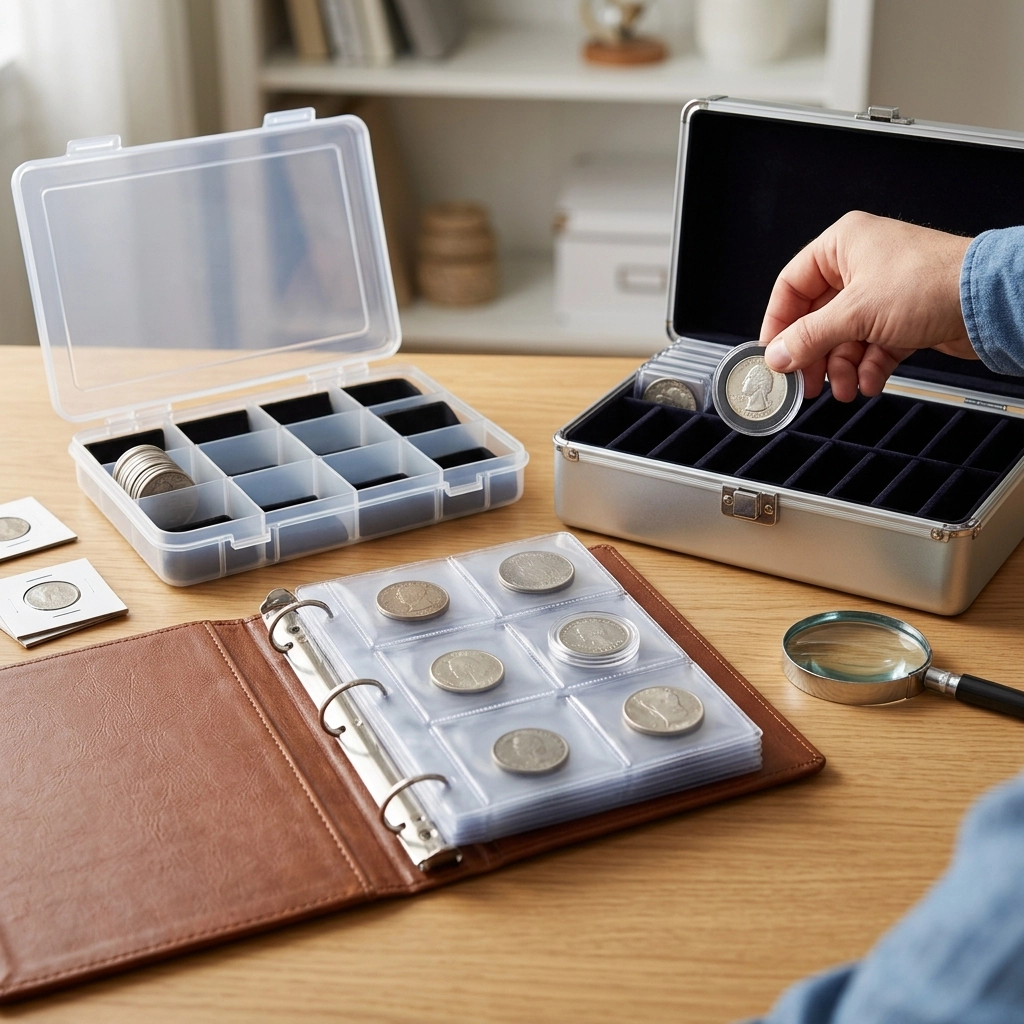
How to Choose the Best Coin Storage for Collectors (Compared)
Hey there, fellow collectors. Matt Dinger here from The Coin Show. If you’ve spent any time listening to our coin collecting podcast, you know we’re obsessed with the details. We talk about the history, the hunt, and the "big wins" at auction. But there is one topic that isn’t always flashy but is arguably the most important part of the hobby: how to store your collection.
You can find the rarest coin in the world, but if you toss it into a shoebox in a humid basement, you’re basically watching your investment melt away. Today on The Daily Mint, we’re breaking down the best ways to keep your treasures safe, comparing the top storage methods, and diving into why "no PVC" is the golden rule of numismatics.
The Enemy Number One: Coin PVC Damage
Before we talk about what to use, we have to talk about what not to use. If you take one thing away from this post, let it be this: PVC is the enemy.
Polyvinyl Chloride (PVC) is a plasticizer used in many cheap, soft plastic flips. Over time, these chemicals break down and release an acidic green goo onto your coins. This is known in the hobby as coin pvc damage. It starts as a light film and eventually eats into the surface of the metal. If you have coins sitting in soft, flexible flips that smell like a new shower curtain or a pool toy, get them out of there immediately.
When looking for coin storage for collectors, always verify that the material is "PVC-free" or "archival safe." Your coins will thank you in twenty years.
Comparing Your Storage Options
Choosing the right storage depends on what you’re collecting. Are you working on a set of Lincoln Cents, or are you holding onto a high-grade standing liberty quarter 1916? The value and the goal of the collection dictate the gear.
1. Cardboard 2×2 Holders
These are the bread and butter of the hobby. They are cheap, easy to label, and fit into standard 20-pocket binder pages.
- Pros: Very affordable; easy to organize.
- Cons: You have to be careful with staples. A stray staple scratch can ruin a coin's grade. Pro-tip: Use a pair of pliers to flatten the staples after you click them shut.
2. Coin Tubes
If you’re stacking silver eagles or common-date Buffalo nickels, tubes are the way to go. They save space and protect coins from physical contact.
- Pros: Best for high-volume storage.
- Cons: You can’t see the coins easily without taking them out.
3. Coin Albums (Dansco, Whitman, and Intercept)
Albums are for the builders. There is nothing more satisfying than filling a hole in a Dansco album.
- Pros: Great for display; helps track progress.
- Cons: Some older albums can cause "album toning" on the edges. If you want the best, look for Lighthouse INTERCEPT Technology Albums. They use specialized materials to neutralize harmful gases in the air.
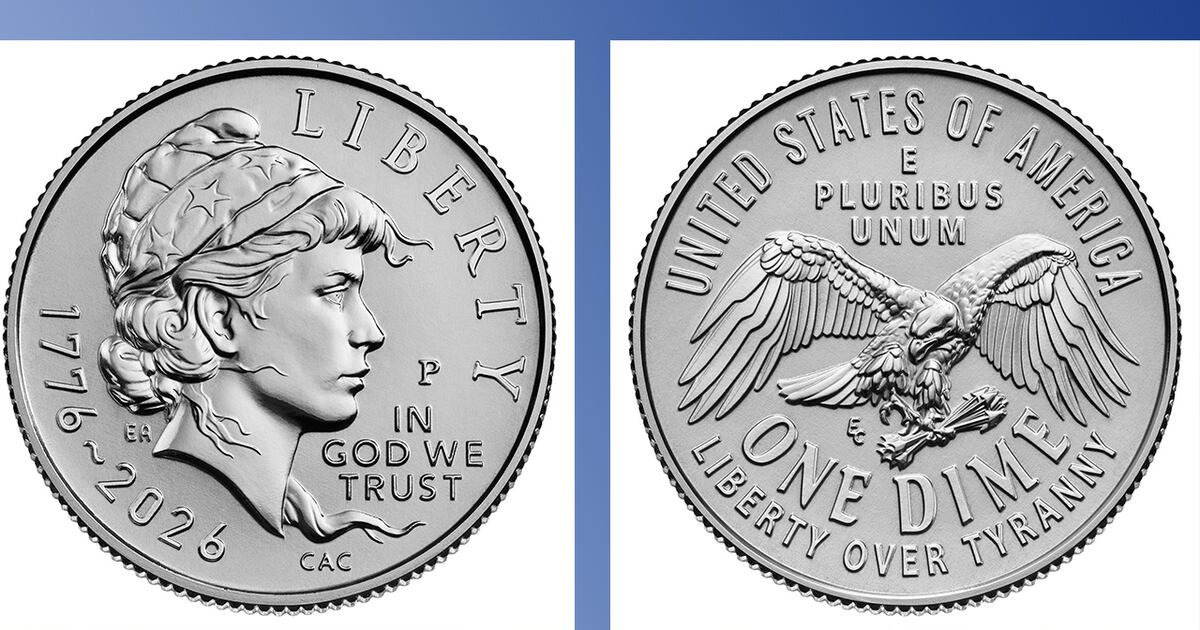
The new 1776-2026 Emerging Liberty Dime, released just a few weeks ago, is a perfect candidate for a modern commemorative album.
4. Hard Plastic Capsules (Air-Tites)
For individual coins that are valuable but not yet graded, Air-Tite holders are excellent. They provide a literal air-tight seal that prevents oxidation.
- Pros: High protection; crystal clear view.
- Cons: More expensive per coin than cardboard or tubes.
5. Certified Slabs (PCGS/NGC)
If you have a high-value rarity, it should probably be in a professional slab. These holders are sonically sealed and include a grade based on ANA grading standards.
- Pros: Ultimate protection; guaranteed authenticity; easier to sell.
- Cons: You have to pay for the grading service, which isn't cheap.
Why Quality Storage Matters: A Historical Lesson
To understand why we obsess over storage, you only have to look at the "big ones." Take the 1794 Flowing Hair Silver Dollar. This coin is legendary, being the first dollar struck by the U.S. Mint. One specimen recently sold for $4.5 million.
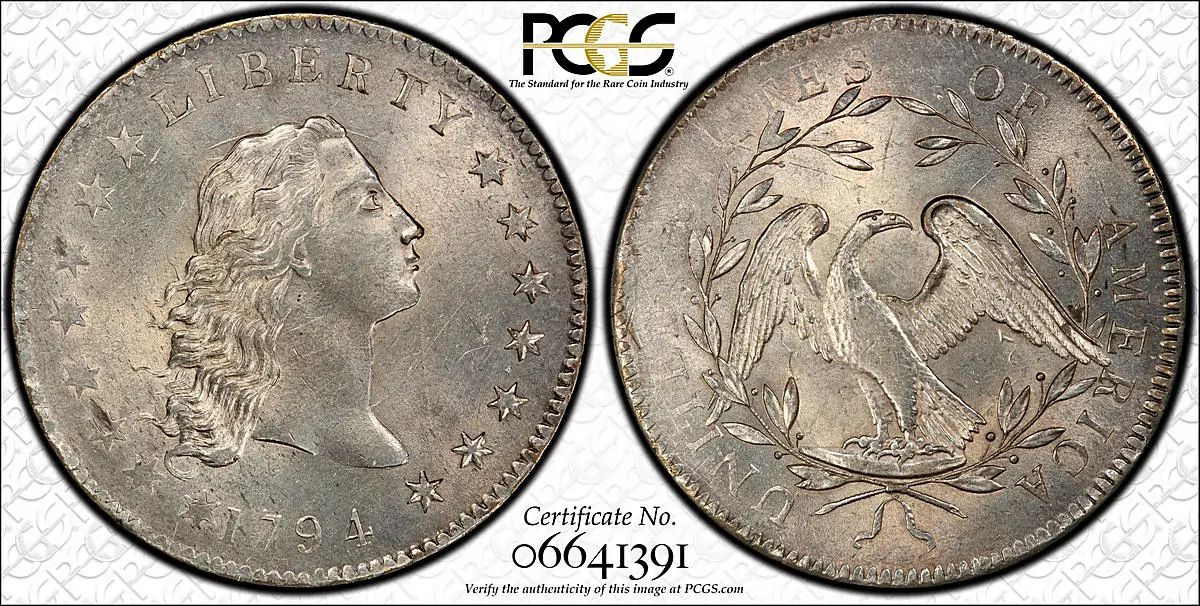
At that level of value, a single fingerprint or a tiny patch of environmental damage could cost the owner hundreds of thousands of dollars. Even if you don't own a multi-million dollar coin, the principle is the same. Whether it's a 1794 Dollar or a 1916 Standing Liberty Quarter, the state of preservation is what determines the value.
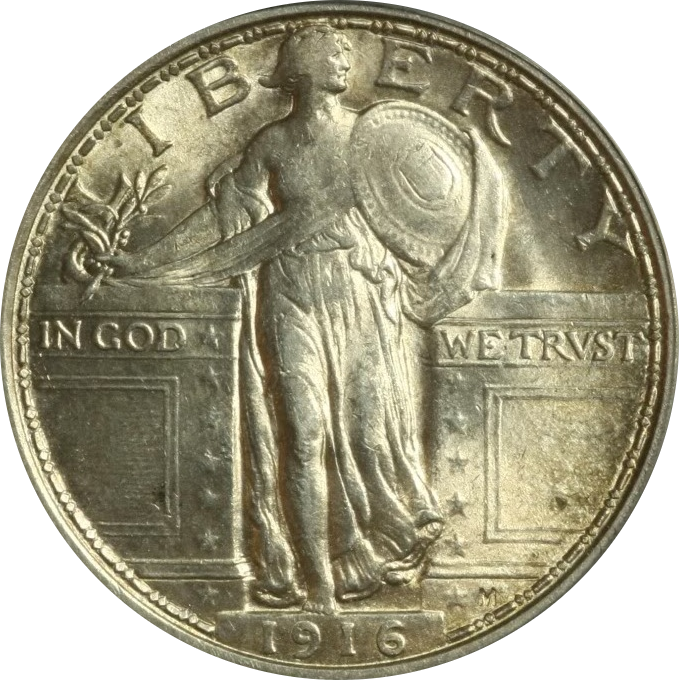
The 1916 Standing Liberty Quarter is a prime example of a coin where "originality" is key. Collectors want to see the original luster and crisp details. If this coin was stored in a PVC flip in the 1970s, it might be a green mess today. Instead, because collectors learned these coin collecting tips over the decades, many of these beauties have survived in incredible condition.
Counterfeit Coin Detection and Protection
Good storage also helps with counterfeit coin detection. When a coin is kept in a clear, high-quality holder, you can examine the edges and surfaces with a loupe without touching the metal. Oils from your skin are acidic and will leave permanent marks over time.
By keeping your coins organized and protected, you also make it easier to compare them against known authentic pieces. If you're ever unsure about a coin's authenticity, bringing it to a professional in a secure holder is much better than carrying it loose in your pocket!
Where to Learn More: The Coin Show Experience
If you're still wondering how to store coin collection items properly, or if you're confused by the different brands, the best thing you can do is get out into the community.
People often ask us, "what is a coin show?" It’s more than just a marketplace. It’s a place where you can see all these storage solutions in person. You can handle the albums, see the difference between a generic flip and a brand-name capsule, and talk to dealers who have been in the game for forty years.
We cover these topics constantly on our numismatic podcast. We’ve interviewed experts from PCGS and NGC about their holders, and we’ve shared horror stories of collections ruined by bad storage choices.
Summary Comparison Table
| Storage Method | Best For | Protection Level | Visibility |
|---|---|---|---|
| 2×2 Cardboard | Common coins / Bulk | Low-Medium | Good |
| PVC-Free Flips | Short-term / Submissions | Medium | Excellent |
| Albums | Date/Mint Mark Sets | Medium-High | Best for Display |
| Air-Tites | Individual Gems | High | Excellent |
| Slabs (PCGS/NGC) | Investment / High Value | Highest | Excellent |
Final Thoughts on Coin Care
Don’t let the technical side of storage scare you off. The goal is to enjoy your collection. By choosing the right coin storage for collectors, you’re ensuring that your coins look just as good when you pass them down to the next generation as they do today.
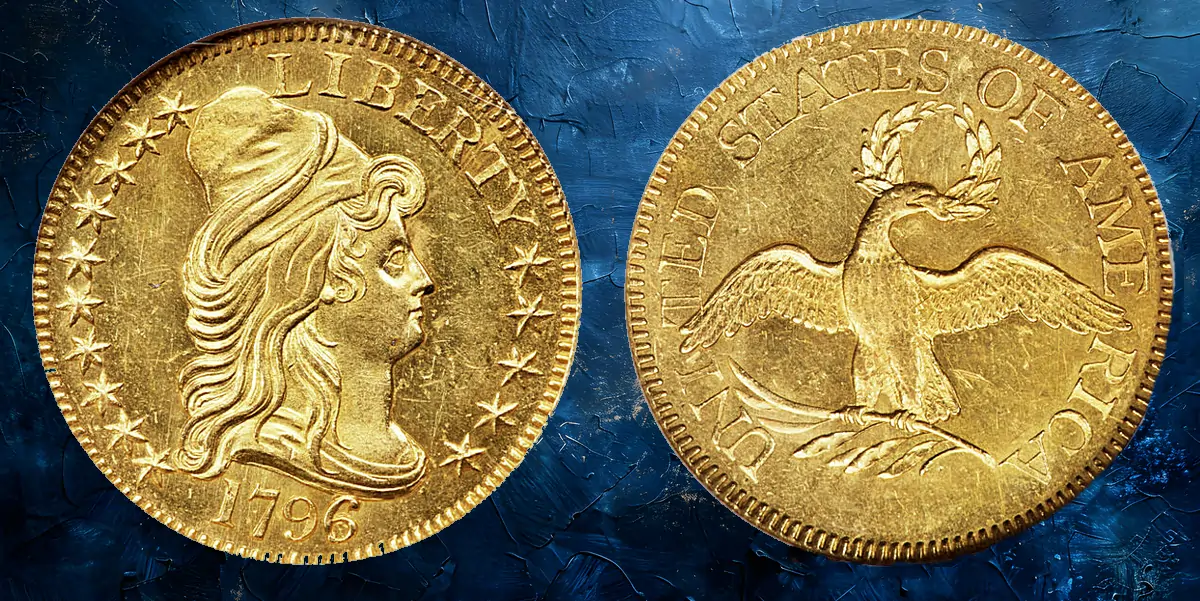
Whether you're tucking away a record-breaking 1796-5 Half Eagle or just a cool dime you found in pocket change, treat it with respect.
Stay curious, keep hunting, and for the love of all things numismatic: throw away those PVC flips!
Check back in with us tomorrow on The Daily Mint for more tips, and don't forget to subscribe to The Coin Show podcast for your weekly dose of coin talk. Happy collecting!