The Daily Mint, Tuesday, October 20, 2026: The Gettysburg Quarter Hits Your Change, The Penny That Went Viral in 1955, and a Tuesday No-PVC Check
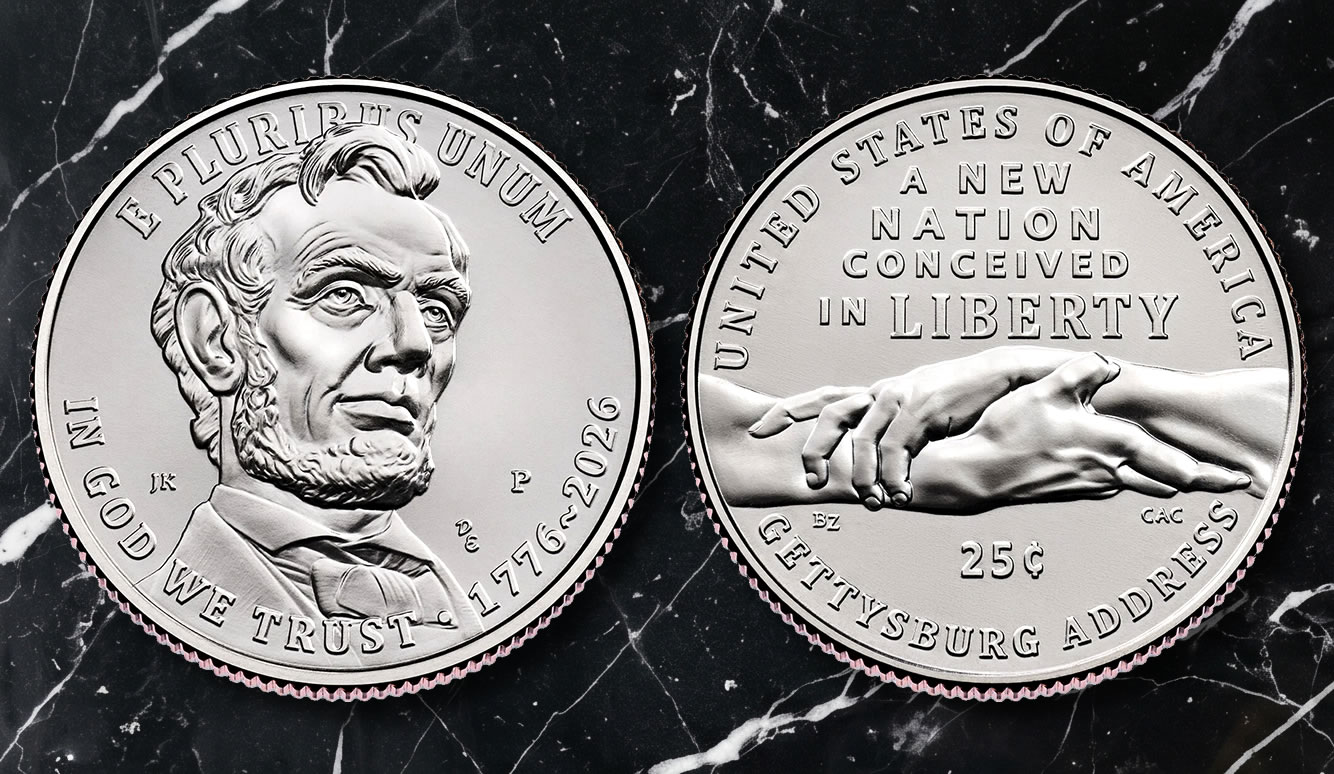
U.S. Mint images of the 1776-2026 Gettysburg Address quarter, via CoinNews.
It’s Tuesday, October 20. The fifth and final Semiquincentennial quarter is beginning to reach everyday change, while a famous 1955 penny is having another moment as the penny era winds down. If you’d rather listen than read, The Coin Show is a coin collecting podcast, too.
The Gettysburg Address quarter starts its journey
Yesterday, October 19, the U.S. Mint announced it had begun shipping the 1776–2026 Gettysburg Address quarter to Federal Reserve Banks. From there, coins move through banks and into cash registers, so this is one of the few new coins you might genuinely find in your change.
It’s the final design in this year’s five-quarter series: the Mayflower Compact (January 5), Revolutionary War (March 23), Declaration of Independence (June 1), U.S. Constitution (August 10), and now Gettysburg Address.
The obverse features a weathered portrait of Abraham Lincoln, with E PLURIBUS UNUM, IN GOD WE TRUST, and 1776 ~ 2026. Artistic Infusion Program artist Justin Kunz designed it; former Mint Medallic Artist Don Everhart sculpted it. On the reverse, two clasped hands represent Lincoln’s effort to reunite a divided nation. Beth Zaiken designed the scene, and Mint Medallic Artist Craig Campbell sculpted it. Above the hands is A NEW NATION CONCEIVED IN LIBERTY, a phrase drawn from Lincoln’s Gettysburg Address, delivered on November 19, 1863, at the dedication of the Soldiers’ National Cemetery.
Production began in April. Through September, the Mint had struck just 2.8 million coins: 1.4 million each in Philadelphia and Denver. That’s a small start beside the 161.6 million Constitution quarters and 316.4 million Mayflower Compact quarters struck. More Gettysburg quarters have been made since, with October production figures due in November.
For collectors, the Mint plans to offer rolls and bags on November 13 at noon ET through usmint.gov. The two-roll set includes 40 coins each from Philadelphia and Denver and costs $56. Separate 100-coin bags cost $63. Rolls for the first four designs sold out quickly.
The Mint’s free public launch ceremony and coin exchange is tomorrow, Wednesday, October 21, at Gettysburg National Military Park. In the meantime, check your quarters for the clasped hands on the reverse and look for a P or D mint mark.
Read more: CoinNews on the quarter entering circulation.
The penny that went viral before social media
The 1955 Doubled Die Obverse Lincoln cent became famous because you don’t need a microscope to see its bold doubling on the date, LIBERTY, and IN GOD WE TRUST. Known as FS-101 and Wexler WDDO-001, it shows a Class I counterclockwise spread.
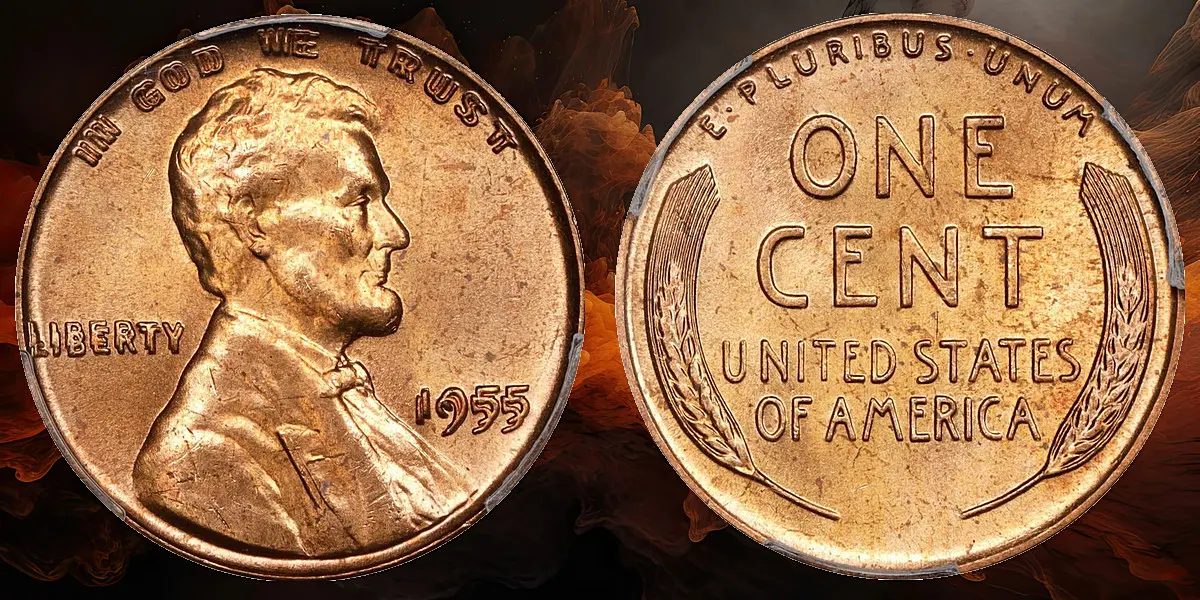
1955 Lincoln Cent, FS-101 Doubled Die Obverse, PCGS MS-65 RD. Image via CoinWeek.
The Philadelphia Mint struck its final circulating penny on November 12, 2025, ending a 232-year run. Congress approved legislation in late September 2026 to address the phaseout and cash rounding. That makes this famous cent a fitting artifact of the pocket-change era.
During a 1955 cent shortage, Philadelphia ran two 12-hour shifts. Misaligned hub impressions left doubling on an obverse die, which was used on an overnight shift. By the time the error was noticed, thousands had mixed with ordinary cents. Chief Coiner Sydney C. Engel chose not to destroy millions of usable coins to recover them. Roughly 40,000 doubled cents were struck; about 16,000 were caught, and around 24,000 released. Stack’s Bowers estimates only 3,000 to 4,000 survive in all grades.
One distribution story involves cigarette vending machines, which charged 23 cents. Vendors sometimes returned two pennies tucked under a pack’s cellophane. Some 1955 Doubled Dies reportedly spread this way around greater Boston, Pittsfield and western Massachusetts, and Endicott, Johnson City, and Binghamton, New York.
At the top of the market, GreatCollections sold the Stewart Blay PCGS MS65+ RD CAC example for $320,625 on February 23, 2025. PCGS reported just 19 examples in MS65 RD as of late September 2026. More accessible results include Heritage MS64 RD coins at $21,960 in January 2026 and $18,300 in May; a Stack’s Bowers MS64 RB CAC brought $14,640 in June, a record for the grade. AU examples have sold for less: a CACG AU58 for $3,416 and a PCGS AU55 for $2,379. The CoinWeek article suggests XF or AU could be a sweet spot: light circulation barely dulls the dramatic doubling.
For authentication, look for strong, separated design elements, not the flat, shelf-like look of machine doubling. Genuine examples also show roughly a 5% die misalignment on the reverse and fine vertical die-polishing lines near the left side of the T in ONE CENT. PCGS has documented sophisticated counterfeits, so certification makes sense at this price level.
The cent uses Victor David Brenner’s design, weighs 3.11 grams, measures 19.05 mm, and has a plain edge, 95% copper composition, and wheat reverse. Philadelphia struck about 330.58 million regular 1955 cents, plus 378,200 proofs. With the penny out of circulation, old jars of wheat cents are worth a careful look. Check the date and LIBERTY, but remember that flat, shelf-like doubling is usually machine doubling, not a true doubled die.
More details: CoinWeek’s story of the 1955 Doubled Die.
Quick news notes
- Sedwick Auction 40 runs November 5–7, with nearly 1,950 lots, including more than 500 shipwreck coins. The headline is a Mexico City 1714 J gold Royal 8 escudos, NGC MS 65, recovered from the 1715 Fleet. It’s one of only 10 known of its variety and carries a $200,000–$400,000 estimate. (CoinWeek)
- The Mint’s free Gettysburg quarter launch and public coin exchange is tomorrow, October 21, at Gettysburg National Military Park. See CoinNews for event details.
- The PCGS Trade & Grade Showcase is at Philadelphia’s Live! Casino Hotel October 21–23. It offers a chance to submit coins and meet the grading team in person.
Counterfeit coin detection: a quick checklist
- Compare the doubling: a true doubled die has rounded, separated design elements; machine doubling tends to look flat and shelf-like.
- Check known markers. On the 1955 DDO, look for fine vertical polishing lines near the T in ONE CENT.
- Weigh and measure when appropriate. A genuine 1955 cent weighs 3.11 grams and measures 19.05 mm.
- Examine luster and surfaces under good light.
- Be especially careful with famous, valuable varieties; they attract sophisticated fakes.
- If meaningful money is involved, buy certified coins from reputable sellers.
ANA grading standards, in plain groups
The ANA grading standards group coins by wear and condition; they’re the scale PCGS and NGC build on. About Good to Good (AG-3 to G-6) means heavy wear and mostly outline-level detail. Very Good to Fine (VG-8 to F-15) retains major design elements and mostly clear lettering. Very Fine to Extremely Fine (VF-20 to EF-45) has most detail, with wear on high points.
About Uncirculated (AU-50 to AU-58) shows slight friction on the highest spots and much original luster. Mint State (MS-60 to MS-70) has no wear; strike, contact marks, and luster help determine the grade. Proof describes a strike type, usually with mirrored fields and frosted devices, not a level of wear.
Tuesday no-PVC check
Coin PVC damage can start with soft plastic flips that release plasticizers over time. The result may be green, sticky residue that etches a coin’s surface. Check coins in older flips, especially inherited collections stored in jars and flips: those pennies may be worth a closer look now.
Good coin storage for collectors comes down to inert materials such as Mylar, polyethylene, polypropylene, or hard acrylic holders. Keep coins in a cool, dry place and handle them by the edges. If you find green residue, don’t rub it off; seek a professional evaluation first. For more on how to store coin collection, see our storage guide.
What is a coin show?
A coin show is a bourse where dealers buy and sell coins, clubs gather, and collectors can meet people who know the hobby. Beginners can often get free advice while browsing.
Here are upcoming events listed by CoinShows.us. Confirm details with the promoter before traveling.
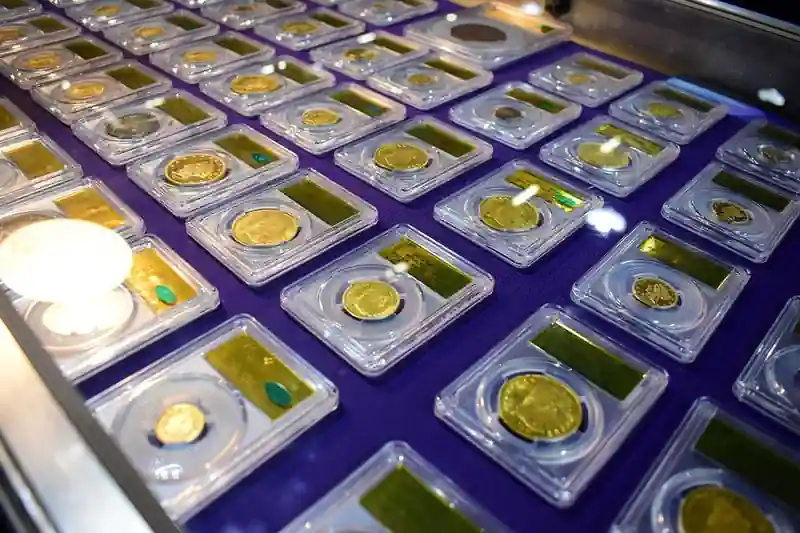
Image via CoinShows.us.
- Wednesday, October 21: The Villages / Wildwood Coin Show in Wildwood, Florida, free entry.
- Wednesday, October 21–23: PCGS Trade and Grade Showcase in Philadelphia, Pennsylvania.
- Thursday, October 22–24: PAN Fall Coin Show, Monroeville Convention Center, Monroeville, Pennsylvania.
- Thursday, October 22: Las Vegas Numismatic Society Coin Show, Tuscany Suites and Casino, Las Vegas, Nevada.
- Friday, October 23: Wasatch Winter Coin Show / Utah Coin Show, SLCC Miller Conference Center, Sandy, Utah.
- Friday, October 23: Toronto Coin Expo in Toronto, Ontario.
A reminder about the 1916 Standing Liberty quarter
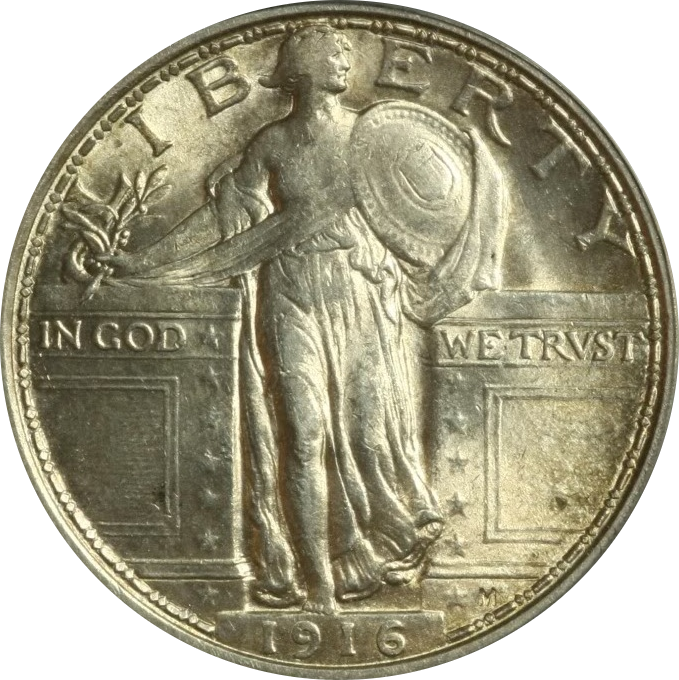
Before the 1917 redesign, there was the original: the 1916 Standing Liberty quarter. Only 52,000 were struck, making it one of the great rarities of 20th-century American coinage. If you get the chance to see one in person at a show, take it. And if you own coins from this era, keep them out of PVC.
1916 Standing Liberty Quarter from The Coin Show media library.
More coin talk
Want more coin collecting tips? Tune in to The Coin Show: a coin collecting podcast and numismatic podcast at coinshowradio.com.
Sources
- CoinNews: Gettysburg Address Quarter Enters Circulation
- CoinNews: Gettysburg Address Quarter Launch Ceremony Set for Oct. 21
- CoinWeek: The Penny That Taught America to Check Its Change
- GreatCollections: 1955 Doubled Die sale archive
- CoinWeek: Sedwick Auction 40
- CoinShows.us
- NGC counterfeit detection resources
- American Numismatic Association
- The Coin Show: Storing Your Coin Collection