The Daily Mint, Thursday, October 8, 2026: Eight 2026 Coins Came Back From Space, Germany’s Biggest Roman Silver Hoard, and a Thursday No-PVC Check
Photo: NASA / U.S. Mint
The 2026 coins that went to space are now for sale
The U.S. Mint released the 2026 Semiquincentennial Proof Set on October 6. The set costs $107 and contains 10 Proof coins struck at the San Francisco Mint. Production is limited to 480,000 sets.
The coins come in two lenses with Mint packaging and a certificate of authenticity. The interesting part is what happened before the set reached collectors.
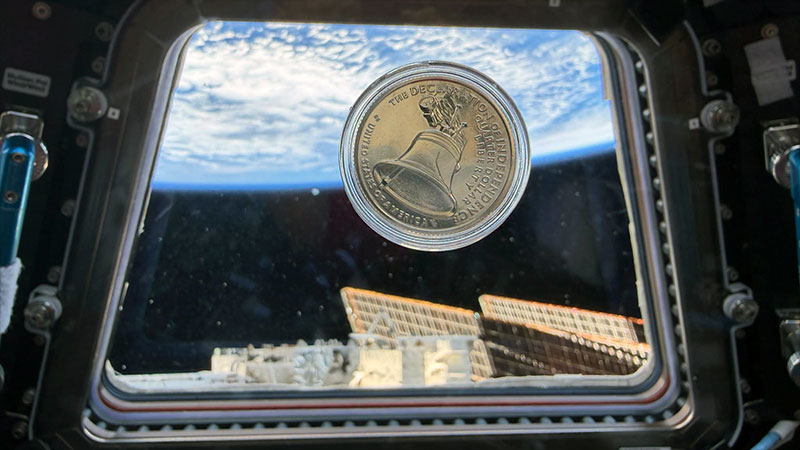
According to collectSPACE, eight of the 10 coin types in the set spent time aboard the International Space Station.
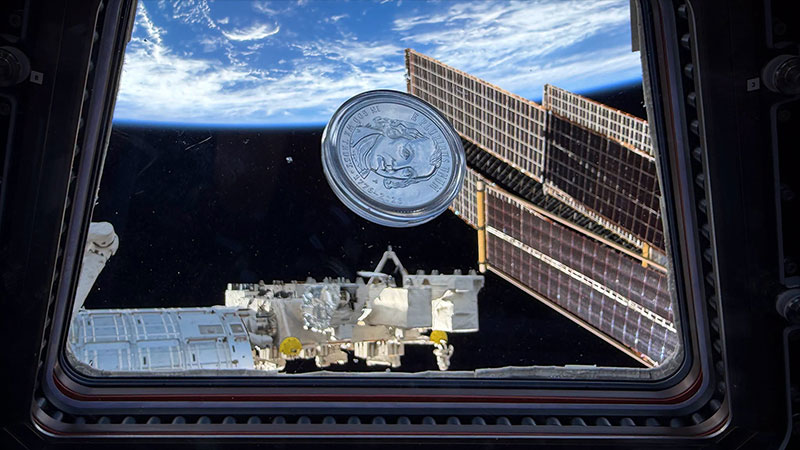
Photo: NASA / U.S. Mint
In May, a SpaceX Dragon spacecraft delivered these coins to the ISS:
- The Jefferson nickel
- The Emerging Liberty dime
- The Enduring Liberty half dollar
- Five Semiquincentennial quarters
All eight coins carry the dual date 1776-2026. They spent 32 days, 14 hours and 5 minutes off Earth before splashing down on June 17.
The Lincoln cent and the dollar coin in the Proof Set were the only two types that did not fly.
Mint Director Paul Hollis shared an ISS photograph of the Enduring Liberty half dollar on October 6. The U.S. Mint also supplied the designs for the eight coins involved.
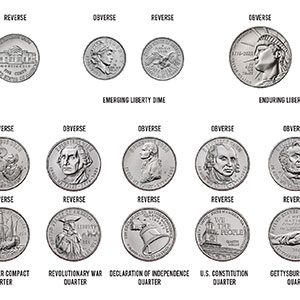
Official U.S. Mint image, via The Coin Show media library
There is some extra history here, too. Mercury, Gemini and Apollo astronauts sometimes carried coins as souvenirs. NASA ended that practice in 1972 after a congressional investigation. Since then, coins have occasionally flown at the Mint’s request, including 12 gold Sacagawea dollars and two Apollo 11 curved commemoratives.
The Semiquincentennial designs, except for the nickel, are scheduled to be retired. The Roosevelt dime and Kennedy half dollar return, while American Youth Sports Program quarters are planned for 2027.
If you bought the Proof Set, leave it sealed. The original packaging is the safest place for these coins, and there is no good reason to open it simply to inspect the contents.
More than 900 Roman silver coins in one field
A metal detectorist in Wesseling, Germany, uncovered 934 Roman silver denarii. It is being described as Germany’s largest Roman coin hoard connected with the reign of Emperor Hadrian, who ruled from AD 117 to 138.
The find began with 15 coins. When the detector continued to signal, the finder stopped and contacted local authorities. Archaeologists then excavated the area carefully.
A denarius was a standard Roman silver coin used for everyday payments, military wages and trade. The hoard appears to have been buried in a ceramic vessel lined with straw. Most of the coins are associated with the first and second centuries.
Why bury a hoard? The owner may have been protecting savings during unrest. The coins might also have been hidden before travel or simply stored in a place thought to be safe. We may never know why the owner did not return.
Reporting a discovery matters. Archaeologists need the exact location and surrounding soil information to understand a find. Removing coins one at a time without documentation can destroy much of the historical evidence. The Wesseling coins were recovered as a group and are now being studied and displayed.
Stack’s Bowers’ Summer 2026 auction tops $70 million
Stack’s Bowers’ Summer 2026 Global Showcase Auction realized more than $70 million, including the firm’s ANA-week sales. It was a record total for the company.
One notable result came from the Mack C. Chase Collection of Walking Liberty half dollars. The collection included 253 lots and realized $2,448,125. A 1921-D Walking Liberty half dollar led the group at $183,000.
A record auction total makes a good headline, but it does not tell the whole story. Mid-priced coins are what keep a series active. They give more collectors a chance to participate, compare prices and build sets over time.
That means the auction calendar is still worth watching if your budget is measured in hundreds or a few thousand dollars rather than six figures.
Coming October 13: the American Innovation Reverse Proof Set
The U.S. Mint opens orders for the 2026 American Innovation $1 Coin Reverse Proof Set on October 13 at noon Eastern time.
The $60 set contains four Reverse Proof dollars struck at San Francisco. The coins represent Iowa, Wisconsin, California and Minnesota. Each set includes a certificate of authenticity, and the household limit is two.
If this series interests you, check the Mint’s product page before ordering. Review the final product limit, shipping details and household limit first. Reverse Proof surfaces show contrast clearly, so handle the lenses and packaging carefully.
What the October market actually looks like
October’s Greysheet market analysis describes auction results as moderate to strong. The top-end headline coins appear flat to slightly down, while lower-grade collector material is moving higher.
One softer area is the $200,000 to $500,000 range, where buyer demand is thinner than it has been in stronger periods.
For most collectors, the practical lesson is simple: the middle of the market matters most. Grade, eye appeal and price discipline are more useful than chasing auction headlines. A pleasing collector-grade coin can be a better purchase than a famous piece priced beyond its natural demand.
Counterfeit coin detection, short version
Here is a quick counterfeit coin detection checklist:
- Weigh and measure the coin against official specifications.
- Inspect the edge for seams, filing or weak reeding.
- Look for grainy or porous surfaces that may suggest casting.
- Tilt the coin under good light. Unnatural luster or missing flow lines can be warning signs.
- Check the certification number on the ANACS, NGC, PCGS or CACG website.
- Treat any QR code on a holder as unverified until you confirm the number independently.
Authentication is not grading. A coin can be genuine without being highly graded, and a familiar-looking holder does not prove that the coin inside is genuine.
Beth Deisher has also returned to the board of the Anti-Counterfeiting Educational Foundation as fake coins and fake packaging continue to circulate through online marketplaces. Buy carefully, especially when a deal seems far below the normal market level.
ANA grading standards in plain groups
The ANA grading standards can feel complicated at first. These broad groups provide a useful starting point:
- MS-60 to MS-70: Uncirculated, with no wear from circulation.
- AU-50 to AU-58: Light wear on the highest points.
- EF-40 to EF-45: Light overall wear, with strong detail remaining.
- VF-20 to VF-35: Moderate wear, while major details remain clear.
- F-12 to F-15: Noticeable wear, but the main design and lettering are visible.
- VG, G and AG: Progressively heavier wear and fewer remaining details.
Grade is only part of value. Rarity, demand, originality, eye appeal and provenance matter, too. You can review the ANA’s official grading standards as you learn.
The Thursday no-PVC check
Soft plastic flips can contain polyvinyl chloride, or PVC. Over time, PVC can break down and leave a sticky green film on a coin. The residue may stain or etch the surface permanently.
For safer coin storage for collectors, choose holders clearly marked PVC-free. Mylar, polyethylene, polypropylene and hard acrylic are generally suitable inert materials.
Keep your collection cool, dry and stable. Handle coins by their edges. Remove any flip that feels tacky, looks cloudy or smells strongly of plastic. Check cardboard holders and albums for moisture or mildew, too.
If you see green film, isolate the coin and get professional advice. Do not clean it yourself.
Our guide on how to store a coin collection covers 2×2 holders, hard plastic cases, albums and slab-style holders. For new Mint products, leave the original packaging intact. Move a coin to another holder only when there is a real reason.
What is a coin show?
What is a coin show? It is a temporary marketplace and classroom. You can compare coins in person, ask dealers questions, buy supplies and practice grading. You do not have to buy from every table.
This week’s listings include:
- Walnut Creek, California, October 10
- Florence, South Carolina, October 10
- Clearwater, Florida, October 10
- Milton, Florida, October 10–11
- Pittston, Pennsylvania, October 10–11
- Countryside, Illinois, October 11
- Rickreall, Oregon, October 11
Bring a want list, a loupe and a budget. Ask before handling a dealer’s coins. Confirm hours, admission and venue details with organizers before traveling. Check Find Coin Shows and CoinShows.us for updates.
A 1916 Standing Liberty quarter reminder
The Standing Liberty quarter 1916 is both the key date and the first year of the series. That makes it an important coin to study, but also a target for alterations.
A worked-over 1917 Type 1 quarter can sometimes be presented as a 1916. Study the date, the surrounding fields and the overall design. If real money is involved, a certified example from a reputable grading service is the safer choice.
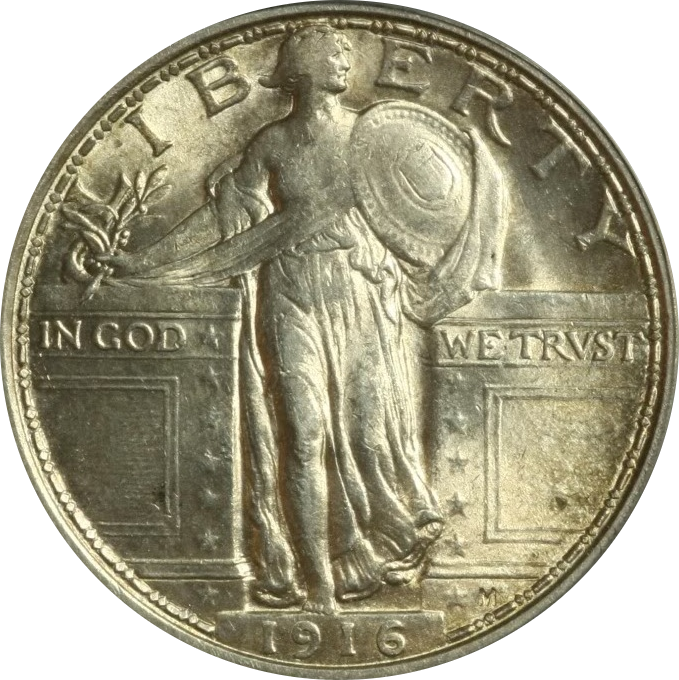
Official coin image, via The Coin Show media library
This is where good counterfeit detection habits pay off. Check the coin before getting distracted by the date.
And one more 2026 design is worth keeping nearby:
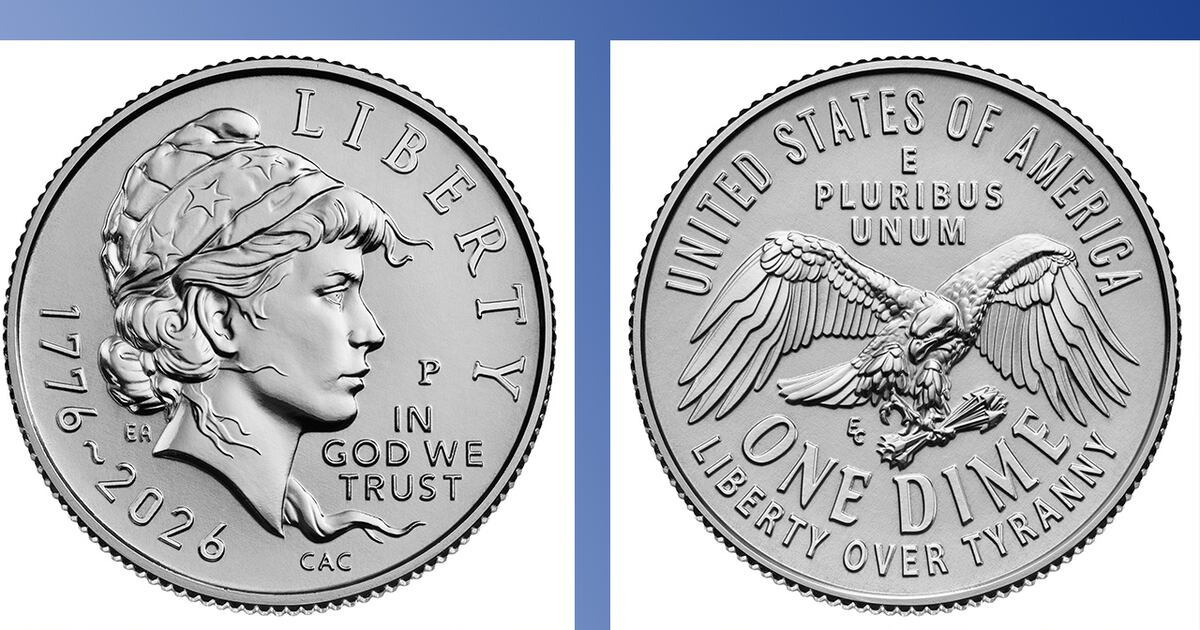
Official U.S. Mint image, via The Coin Show media library
For more coin collecting tips, news and conversation, listen to The Coin Show, our coin collecting podcast and numismatic podcast. Thanks for reading, and enjoy the hunt.
Sources
- collectSPACE: 2026 coins spent time aboard the International Space Station
- Popular Mechanics: Hadrian-era Roman coin hoard
- Coins and Art: Germany’s largest Roman coin hoard
- Stack’s Bowers Summer 2026 Global Showcase results
- 2026 American Innovation $1 Coin Reverse Proof Set
- Greysheet October 2026 market analysis
- NGC Counterfeit Detection
- Beth Deisher returns to the ACEF board
- ANA Official Grading Standards
- The Coin Show: Storing Your Coin Collection
- Find Coin Shows
- CoinShows.us