
How to Spot the Rare July 4th Privy Mark Quarter in Your Pocket Change
Hey there, fellow collectors! Welcome back to another edition of The Daily Mint. If you’ve been listening to our coin collecting podcast, you know we’ve been buzzing about the biggest hunt of the year: the 2026 Semiquincentennial "July 4th" privy mark quarter.
The U.S. Mint is celebrating the 250th anniversary of the United States in a big way. They’ve released a special variant of the "Declaration of Independence" quarter that is already causing a frenzy in the numismatic community. Unlike the standard issues you’ll find in your change every day, this one has a tiny secret that makes it worth way more than twenty-five cents.
Let’s break down how you can spot this rare bird and, more importantly, how to take care of it once you do.
The Hunt: What is the July 4th Privy Mark?
In 2026, the Mint is releasing five different quarter designs to honor the Semiquincentennial. The third design in the series features the Declaration of Independence. While millions of these will be struck with standard "P" (Philadelphia) or "D" (Denver) mint marks, the Mint decided to do something special for the actual anniversary.
They struck exactly 250,000 quarters with a special "July 4" privy mark. To put that in perspective, standard quarters often have mintages in the hundreds of millions. These 250,000 coins were mixed into regular bank shipments across the country. You can't buy them in sets or bags from the Mint; you can only find them in circulation.
How to Identify the Coin
If you’re sorting through a roll or checking your pocket change, here is your checklist for the "July 4th" privy mark quarter:
- The Obverse (Front): Look for the portrait of Thomas Jefferson (the author of the Declaration). You’ll see the dual dates "1776 ~ 2026."
- The Privy Mark: Look in the open field to the left of Jefferson’s portrait. You are looking for the tiny inscription: "July 4".
- The "No Mint Mark" Factor: These special quarters were struck at West Point or Philadelphia but carry no mint mark. If you see a "P" or "D" on a Jefferson 2026 quarter, it’s a regular issue. If that spot is blank and the privy mark is on the left, you’ve hit the jackpot.
- The Reverse (Back): The back features the iconic Liberty Bell with its famous crack.

Coin Care 101: The PVC Menace
Once you find one of these rare quarters, the first thing you might want to do is put it in a holder. But be careful! Not all holders are created equal. One of the biggest threats to a new find is coin pvc damage.
Many older "soft" plastic flips contain polyvinyl chloride (PVC) to make them flexible. Over time, these chemicals break down and leach onto the coin, creating an oily, green residue. If left alone, this residue will actually eat into the metal, causing permanent pitting and surface damage.
Pro Tip: If you see "green slime" on a coin, it’s likely PVC damage. You can sometimes save the coin by soaking it in pure acetone (not nail polish remover!), but it’s better to avoid the problem entirely. Always use PVC-free, archival-quality holders like Mylar flips or hard plastic capsules.
How to Store Your Coin Collection Like a Pro
If you’re just starting out, you might be wondering about the best coin storage for collectors. Here are a few coin collecting tips for keeping your finds in "Mint State" (MS) condition:
- Avoid Humidity: Store your coins in a cool, dry place. Humidity can lead to unsightly toning or spotting, especially on copper-nickel and silver coins.
- Handle with Care: Always hold coins by the edges. Even clean hands have oils that can leave permanent fingerprints on a pristine coin surface.
- Use Proper Albums: If you like folders, make sure they are made of acid-free paper. For high-value coins, individual non-PVC flips or slabs are the way to go.
Knowing how to store coin collection items properly is the difference between a coin that stays valuable and one that ends up in a "Details" grade bin.
A Look Back: The 1916 Standing Liberty Quarter
Finding a rare coin in circulation isn't a new thrill. Long-time listeners of our numismatic podcast know that we love a good history lesson. One of the most famous "short-mintage" stories is the standing liberty quarter 1916.
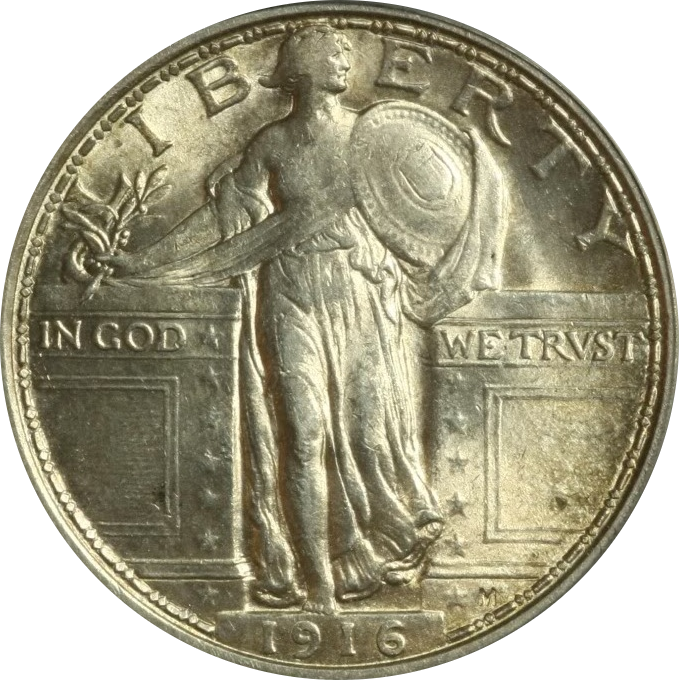
When the Standing Liberty design first debuted in 1916, it was only struck during the final two weeks of December. Only 52,000 were made. Because the design changed slightly in 1917 (to cover Liberty’s chest with chain mail), the 1916 version became an instant rarity.
Much like the 2026 July 4th privy quarter, the 1916 Standing Liberty was a low-mintage surprise that collectors scrambled to find. If you ever come across one of these in an old jar of change: unlikely as it is: you’re looking at a coin worth thousands of dollars.
Counterfeit Coin Detection and Grading
With rarity comes the risk of fakes. Counterfeit coin detection is a skill every collector should practice. For modern coins like the July 4th quarter, check for "mushy" details or incorrect weights. Genuine coins are struck with immense pressure, resulting in sharp, crisp lines.
If you think you have a winner, you should learn about ANA grading standards. The American Numismatic Association uses the Sheldon Scale, which ranges from 1 (poor) to 70 (perfect).
- MS-60 to MS-70: Mint State (no wear).
- AU-50 to AU-58: About Uncirculated (slight wear on the high points).
Most privy mark quarters found in change will likely be in the AU or low MS range. To get the most value, consider sending your find to a third-party grading service like PCGS or NGC.
Join the Community: What is a Coin Show?
If all of this sounds exciting, you need to get out there and meet other collectors. You might be asking, what is a coin show? Simply put, it’s a convention where dealers and collectors meet to buy, sell, and trade. It’s the best place to see rare coins in person, buy supplies, and get expert opinions on your finds.
We talk about upcoming shows and the latest industry news every week on the show. If you haven't checked out our coin collecting podcast, now is the perfect time to subscribe.
Conclusion
The 2026 July 4th Privy Mark Quarter is a "once-in-a-lifetime" find. With only 250,000 released into the wild, the odds are tough, but that’s what makes the hunt so much fun. Keep your eyes on that Jefferson obverse, watch out for the Liberty Bell, and for goodness' sake: keep your coins away from PVC!
Happy hunting, and we’ll see you at the next coin show!