
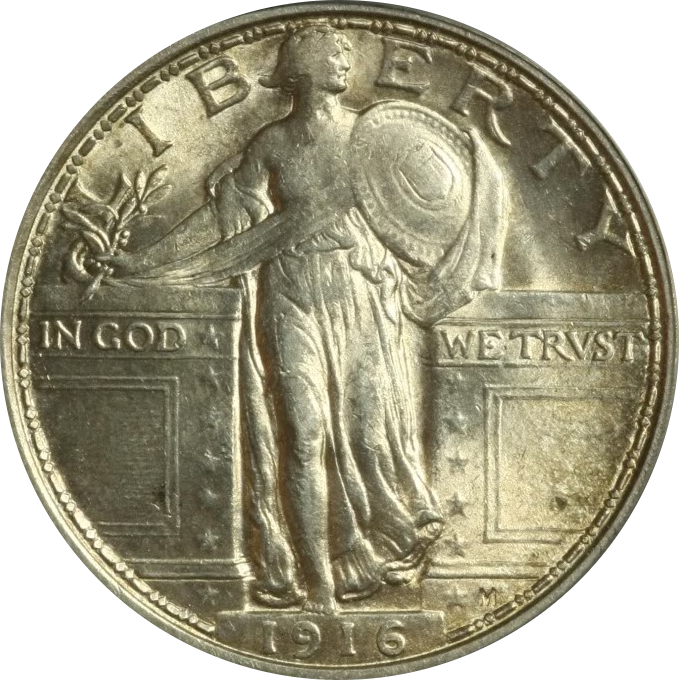
Looking for a 1916 Standing Liberty Quarter? 10 Things You Need to Know
If you have ever spent an afternoon digging through a bucket of "junk silver" or scrolling through high-end auction listings, you’ve probably felt the pull of the 1916 Standing Liberty Quarter. It is the white whale of 20th-century silver. It’s the coin that makes every collector’s heart skip a beat when they see a "Type 1" design with a worn-out date.
But before you drop four or five figures on this legendary piece of American numismatics, you need to know what you’re looking at. This isn't just another quarter; it's a historical artifact with a tiny mintage and a whole lot of "gotchas" for the unwary.
At The Coin Show, we talk about these big-ticket items all the time on our coin collecting podcast. We want to make sure you’re armed with the right info before you make the leap. Here are 10 things you absolutely need to know about the 1916 Standing Liberty Quarter.
1. The Mintage is Ridiculously Low
When we say "key date," we mean it. Only 52,000 of these quarters were struck. To put that in perspective, the 1917 Philadelphia mintage (the very next year) was over 8.7 million.
Because they were struck in late December 1916 and didn't really hit circulation until 1917, they were often overlooked by the public. While about 10,000 are estimated to survive today, finding one in any grade: even "About Good": is a major win.
2. It’s a "Type 1" Design
The Standing Liberty series has two distinct flavors: Type 1 and Type 2. The 1916 is strictly a Type 1.
How do you tell? Look at the reverse (the eagle side). On a Type 1, there are no stars underneath the eagle. In late 1917, the Mint changed the design to include three stars under the eagle and moved the eagle higher up. If you see stars under that bird, it’s not a 1916.
3. The Legend of the Scandal
You’ve probably heard the story: the 1916 design was so "scandalous" because Liberty’s right breast was exposed, leading to a public outcry that forced the Mint to cover her up in chainmail for the Type 2.
While it makes for a great story at a coin show, historians generally agree the redesign was more about the coin's "strike-ability" and the fact that the date wore off way too fast. Still, the 1916 remains the "bare-chested" rarity that collectors love to talk about.
4. The "Full Head" (FH) Designation
If you are looking at Mint State (uncirculated) examples, you’ll see the letters "FH" on the grading label. This stands for Full Head.
The Standing Liberty design was notoriously difficult to strike. Often, the detail on Liberty’s head came out flat or blurry. To get the FH designation under ANA grading standards, you need to see:
- Three distinct leaves in her hair.
- A clear, unbroken hairline.
- A visible ear indentation.
A 1916 with a Full Head is a monster coin. While some early 1916s were well-struck, many are soft. If you find one with a sharp head, expect to pay a massive premium.
5. Beware the "Altered" 1917
Because a 1916 is worth thousands and a 1917 is worth… significantly less, "coin doctors" have been known to try and turn a 7 into a 6.
Counterfeiters will take a 1917 Type 1 and use a tool to move the metal around on the last digit. When you're shopping, look for tool marks around the date. If the texture of the metal around the "6" looks different from the rest of the coin, walk away. This is why we always recommend buying key dates in certified slabs from PCGS, NGC, or ANACS.
6. Dateless 1916s are Real (But Tricky)
Standing Liberty Quarters had a major design flaw: the date was "incuse" (raised) on a high point of the coin. It was the first thing to wear off.
There are thousands of "dateless" Type 1 quarters out there. Some are 1916s, and some are 1917s. Expert collectors look for specific "diagnostics," like the hair detail or the rivets on the shield, to tell them apart. ANACS is one of the few grading services that will officially attribute a dateless quarter as a 1916 if the diagnostics are clear.
7. Storage is Everything: The "Green Slime" Warning
You’ve just spent $2,000 on a 1916 Quarter. The last thing you want to do is kill it with coin PVC damage.
Back in the day, many collectors used soft, "flippy" plastic holders. These were made with PVC (polyvinyl chloride). Over time, the chemicals in that plastic break down and release a gas that turns into hydrochloric acid when it hits moisture. The result? A sticky, green "slime" that eats into the silver.
Coin collecting tips 101: Never use soft, smelly, rubbery plastic flips. If your coin holder smells like a new shower curtain, get the coin out of there immediately! Use Mylar flips (which are stiff and "crinkly") or hard plastic capsules like Air-Tites.
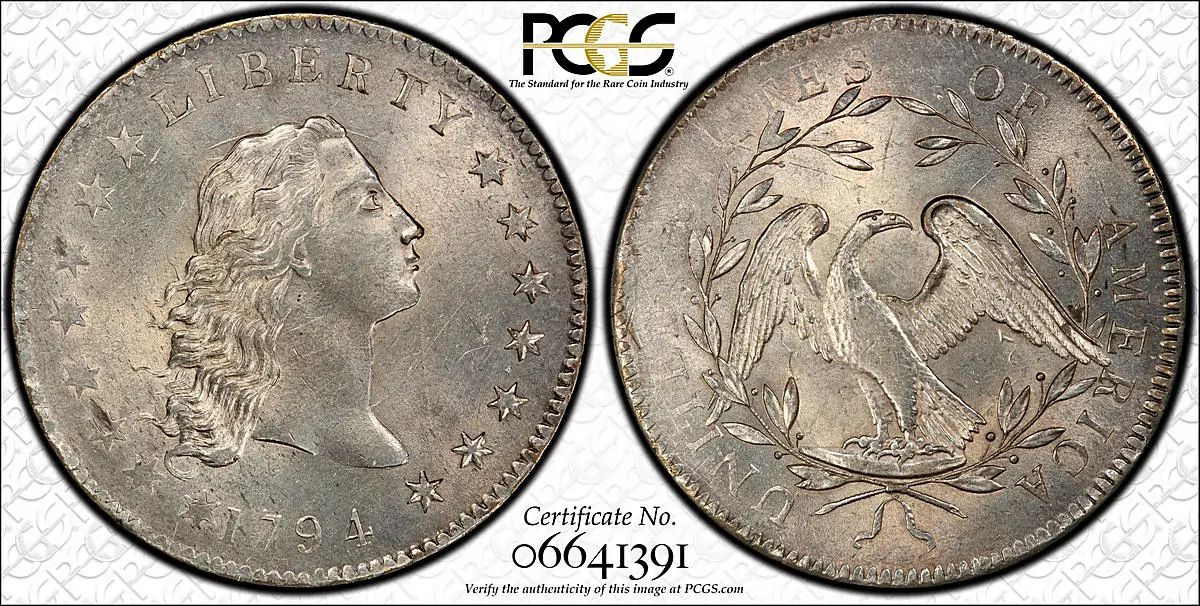
Even the most expensive coins, like this 1794 Dollar, require the highest level of archival protection.
8. Where to Look for Wear
If you’re grading a raw 1916, look at the high points. For the obverse (front), the wear starts on Liberty's right knee and the center of the shield. On the reverse, check the eagle's breast and the tips of the wings.
Even a "slick" coin with just the outline of Liberty is still a 1916. If you can see the date at all, you're ahead of the game.
9. Attend a Coin Show
If you’re serious about finding one of these, you need to know what is a coin show and why you should be there. A coin show is a gathering of dealers where you can actually hold the coins (in their slabs, usually) and compare different examples.
Photos online can be deceptive. Seeing the "luster" or the "toning" of a 1916 in person is the only way to know if it's the right coin for your collection. Plus, it’s a great place to pick up coin storage for collectors like intercept shields and non-PVC albums.
10. How to Store a Growing Collection
Once you add a 1916 to your set, your storage needs change. You’re no longer just a casual hobbyist; you’re a steward of history.
For how to store coin collection assets properly:
- Keep them in a cool, dry place.
- Use silica gel packs to pull moisture out of the air.
- Consider a safe or a bank deposit box for key dates.
- Avoid the "junk drawer" at all costs!
Summary Checklist for the 1916 SLQ
| Feature | What to Look For |
|---|---|
| Mintage | Only 52,000 (Very rare) |
| Reverse | No stars under the eagle (Type 1) |
| Strike | Check for "Full Head" (FH) detail |
| Authenticity | Look for altered dates or "added" 6s |
| Protection | NO PVC! Use Mylar or Slabs |
Final Thoughts
The 1916 Standing Liberty Quarter is a masterpiece of American engraving. Whether you are looking for a well-worn "filler" for your album or a high-grade investment piece, it represents a unique moment in U.S. history when art and currency collided.
If you want more numismatic podcast content and deep dives into rare coins, check out our latest episodes over at The Coin Show. We cover everything from counterfeit coin detection to the latest U.S. Mint releases.
Happy hunting, and remember: check those dates, and keep that silver away from the green slime!