The Daily Mint — Thursday, November 5, 2026: The 1982-D Penny That Shouldn’t Exist, a Viking Hoard Under a Patio, and a Thursday No-PVC Check
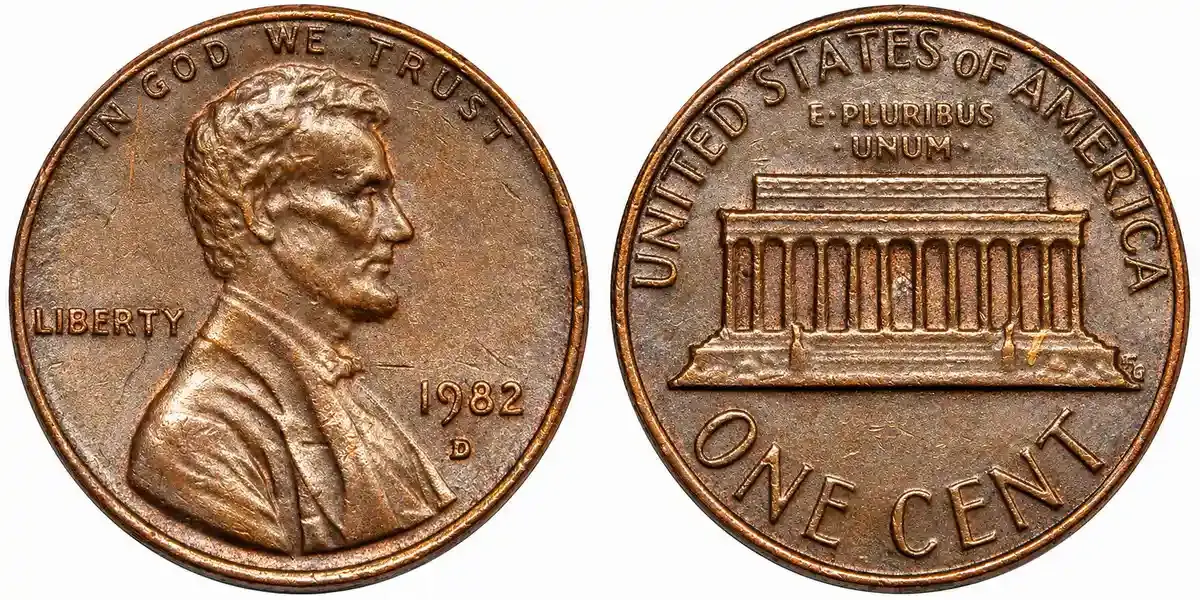
Image: Stack's Bowers Galleries / via CoinWeek.
Welcome to the November 5 edition of The Daily Mint from The Coin Show, a coin collecting podcast. Today’s lead story is a one-cent coin found in a $50 bank bag that sold for $18,800. We’ll also visit Denmark, where a homeowner uncovered the country’s largest Viking silver hoard beneath a garden patio. Plus, a quick metals check, this weekend’s coin shows, and a reminder to check old holders for PVC.
The 1982-D Small Date Bronze Penny: A One-Cent Coin That Sold for $18,800
On November 23, 2016, Minnesota collector Paul Malone searched a $50 bank bag containing 5,000 Lincoln cents. A homemade weighing device helped him separate heavier copper-alloy cents from lighter zinc cents. In the bag, he found a heavy 1982-D Small Date cent.
Only two examples have been authenticated. Both are graded NGC AU-58 Brown. Malone’s discovery weighs 3.08 grams. The second, authenticated in 2019, weighs 3.07 grams.
A transition year at the Mint
In 1982, the Mint changed cent composition. The traditional alloy was 95% copper and 5% zinc, with a weight of 3.11 grams. The new copper-plated zinc cent contained 2.5% copper overall and weighed 2.50 grams.
West Point began striking zinc cents on January 7, 1982, followed by Philadelphia. Denver continued making copper-alloy cents for most of the year. Research by David W. Lange indicates Denver struck its final copper-alloy cents on the morning of October 21, paused for about an hour, then switched to zinc planchets.
The date design changed during the year, too. Engravers introduced a revised obverse with a smaller date. In all, there were seven regular 1982 business-strike varieties: four Philadelphia combinations, Large and Small Date in each metal, and three Denver combinations, Large Date copper, Large Date zinc, and Small Date zinc.
Denver never intended to strike a Small Date cent on a copper-alloy planchet. The rare coin is a transitional planchet error, likely an old copper-alloy blank struck by the new Small Date dies. It follows the same basic principle as the famous 1943 bronze cents, when leftover copper blanks were struck during the wartime shift to steel.

Image: CoinWeek. Left: the 1982-D Large Date. Right: the Small Date. Look at the tops of the numerals.
How to check a 1982-D cent
Use three checks:
- Mintmark: Look for the D beneath the date.
- Date style: On the Large Date, the tops of the 9 and 8 extend above neighboring numerals, and the 2 has a straighter diagonal stroke. On the Small Date, the numeral tops align more evenly. The 2 curves gently and sits farther from the rim, and the 8’s upper loop is smaller than its lower loop.
- Weight: Zinc cents weigh about 2.50 grams. Copper-alloy cents have a 3.11-gram standard. Use a scale that reads to at least 0.01 gram.
All three checks must pass. Most heavy 1982-D cents are ordinary Large Date copper coins. Careful comparison is one of the most useful coin collecting tips, and it’s a good reminder that counterfeit coin detection starts with checking the details rather than relying on a seller’s claim.

Image: Heritage Auctions / via CoinWeek. The second known example, graded NGC AU-58 BN.
Malone’s coin sold for $18,800 at a Stack’s Bowers ANA auction in August 2017. Heritage sold the second specimen for $10,800 in April 2019, then resold Malone’s coin for $8,400 that September. Prices include buyer’s premium. Even rare errors do not rise at every sale.
The 95% copper and 5% zinc alloy is technically brass, since tin was removed from the cent composition in 1962. “Bronze” remains the standard numismatic term for this error.
Denver struck more than six billion cents in 1982, so a third example could still turn up in a jar or bank roll. A $25 bank box contains 50 rolls, or 2,500 cents. Be wary of uncertified online listings. Insist on NGC or PCGS authentication and verify the certification number. If you find a possible example, don’t clean it.
Beginner tip: a three-check habit, mintmark, date style, then weight, works on any transitional error. A coin that passes only one or two of the tests is almost always a common coin.
Denmark's Biggest Viking Silver Hoard Turned Up Under a Patio
A homeowner digging a garden patio in Rebild, Denmark, found a clay vessel containing Viking-age silver. At about 18.5 kilograms, or 40.9 pounds, it is the largest silver hoard found in Denmark. The previous record, the Tersley Hoard, weighed about 6.5 kilograms.
The Rebild find includes roughly 700 objects and fragments: silver ingots, arm rings, cut silver known as hack silver, and a small Thor’s hammer amulet. Among 47 whole and cut coin fragments are Arab dirhams and two Anglo-Saxon pennies of Edward the Elder, who ruled from 899 to 924. Those coins help date the hoard to the 10th century. Coins were cut into pieces to make change, while jewelry and silver fragments also served as money.
One silver bar bears a runic inscription reading “Hutu,” likely a person’s name. When found, the vessel still held 320 objects and weighed 6.4 kilograms. Researchers believe the hoard was systematically organized.

Image: Nordjyske Museer / via Numismatic News. The Rebild Treasure as excavated.
Denmark’s Danefæ law, often translated as “property of the dead,” dates to the 13th century. Unclaimed treasure more than 100 years old belongs to the state, and the finder receives a reward. Until museum law changes in 1984 and 1989, precious-metal antiquities could be melted and recycled into new coins.
It’s the third Viking treasure find in the Rebild area. A 1971 hoard came first, followed by the nearby Rold Treasure, six gold armbands weighing 762.5 grams. Two were found protruding from a forest path. Treasure laws differ by country, but the story is a striking reminder that backyards can hold history.
Quick news notes
- Metals check: On Thursday, gold traded near $4,117 to $4,124 per ounce, up more than 1% and back above $4,100 after reclaiming $4,000 Wednesday. Silver was near $52.58, up about 0.6%. Traders are watching Friday’s U.S. payrolls report. FXStreet
- The U.S. Mint’s $250 Historical SemiQ gold proof went on sale November 5. Numismatic News
- The Whitman Baltimore Expo runs November 12–14 at the Baltimore Convention Center, with free admission. Stack’s Bowers lot viewing starts November 10, featuring an 1885 Trade Dollar, one of five known, and a 1794 Flowing Hair dollar. CoinWeek
- Heritage’s Starlust auction of the 1893 Columbiana collection closes November 9. CoinWeek auction calendar
Counterfeit coin detection: a quick checklist
Buy the seller first. Check feedback and return terms before focusing on price. Weigh a coin on a 0.01-gram scale, since a wrong-metal fake may show up immediately. For the 1982-D error, weight is essential.
Compare the coin with authenticated photos, not memory. Free references include PCGS CoinFacts and NGC’s coin resources. Before paying a premium, verify the certification number at PCGS or NGC. Be cautious with uncertified “rare error” listings. Most heavy 1982-D cents are common Large Date coins. If a rarity looks too cheap, walk away until a catalog reference and a trustworthy label support the claim. See NGC’s counterfeit detection guide.
ANA grading standards, in plain groups
The ana grading standards group circulated coins from About Good (AG-3 to G-6), Very Good (VG-8 to F-15), Very Fine (VF-20 to EF-45), and About Uncirculated (AU-50 to AU-58). Mint State runs from MS-60 to MS-70. Proof describes a strike type, not a grade.
Details grades describe surfaces or color without judging wear. On cents, BN is a brown color designation. Both known 1982-D examples are AU-58, the top of the About Uncirculated range. American Numismatic Association grading standards
Thursday no-PVC check
Coin pvc damage often starts with a sticky or greasy film, green residue, or a chemical smell from an old vinyl flip. PVC residue can etch a coin’s surface over time. Check older holders today, and don’t rub green residue if you find it. Set the coin aside and seek a professional evaluation.
For how to store coin collection safely, choose inert materials such as Mylar, polyethylene, polypropylene, or hard acrylic. Good coin storage for collectors begins with avoiding flexible vinyl holders that can break down. Read more about storing your collection.
What is a coin show? And where to go this weekend
If you’ve wondered what is a coin show, it’s a gathering built around a bourse floor, where dealers buy and sell coins and collectors can ask questions. Clubs often organize shows, and they can be a friendly place for beginners to look around and learn.
Saturday, November 7: Liberty Coin Club’s Money Show, Anthony (St. Paul area), MN; ARC Coin Show, Independence, MO; Brandon Coin Club Fall Show, Brandon, FL, free; Calumet Numismatic Club Show, Crown Point, IN, free; Central Florida Coin Show, Apopka, FL; Chillicothe Coin Show, OH; Knoxville Coin & Currency Show, TN; Lehigh County Coin Expo, Schnecksville, PA; Stark County Coin Club Show, Canton, OH; Vienna Coin Show, VA, its 54th year, also Sunday; Western Maryland Coin Club Show, Ridgeley, WV.
Sunday, November 8: Milwaukee Numismatic Society Annual Show, Brookfield, WI; Greater Atlanta Coin Show, Marietta, GA, free; Clark County Coin Club Show, Springfield, OH, free; Detroit Area Coin Show, Southfield, MI, free; Burlington Coin Show, NJ, free; Auburn Monthly Coin Show, MA, free; Long Island Coin Show, Hicksville, NY; CINA Fall Coin Show, Springfield, IL; Second Sunday Coin Show, Melbourne, FL.
Confirm hours and venues before you travel. See the CoinShows.us weekend listings.
Standing Liberty Quarter 1916 reminder
The standing liberty quarter 1916 was the first year of Hermon MacNeil’s design. Philadelphia struck just 52,000, the lowest mintage in the series. There is no mintmark because Philadelphia did not use one that year. It’s a key date collectors pursue, and like any rare coin, it should never be cleaned.
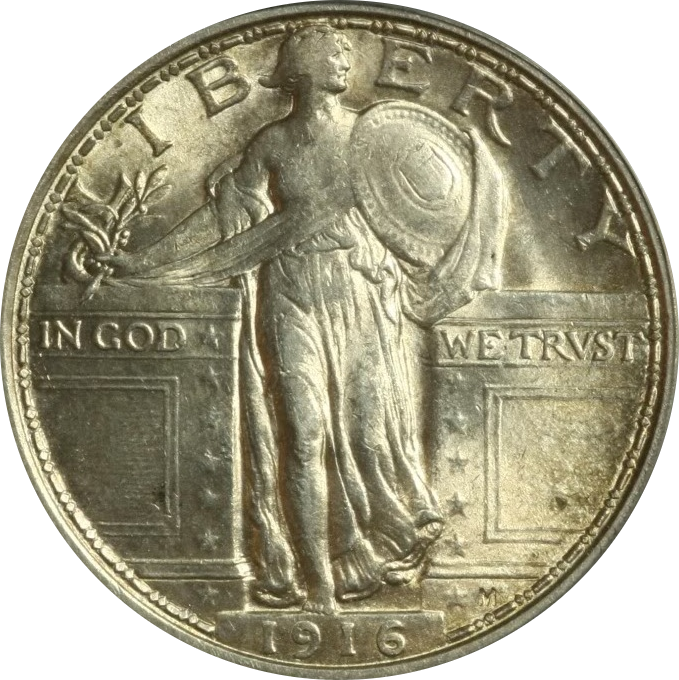
Image: The Coin Show media library. The 1916 Standing Liberty quarter obverse.
The Coin Show is a coin collecting podcast and numismatic podcast with new episodes on mint news, market talk, and collector stories. Listen at coinshowradio.com, and try today’s coin collecting tips on your own change jars.
Sources
- CoinWeek: The 1982-D Penny That Shouldn’t Exist
- Numismatic News: Rebild Treasure
- FXStreet: Silver price
- Numismatic News: Historical SemiQ gold proof
- CoinWeek: Whitman Baltimore Expo
- CoinWeek: 2026 Auction Calendar
- CoinShows.us: This weekend
- NGC: Counterfeit detection
- ANA grading standards
- The Coin Show: Storing Your Coin Collection