The Daily Mint — Tuesday, November 3, 2026: A $10 Eisenhower Dollar That Sold for $189,000, Spain’s Crown Stamped on Peru’s Liberty, and a Tuesday No-PVC Check
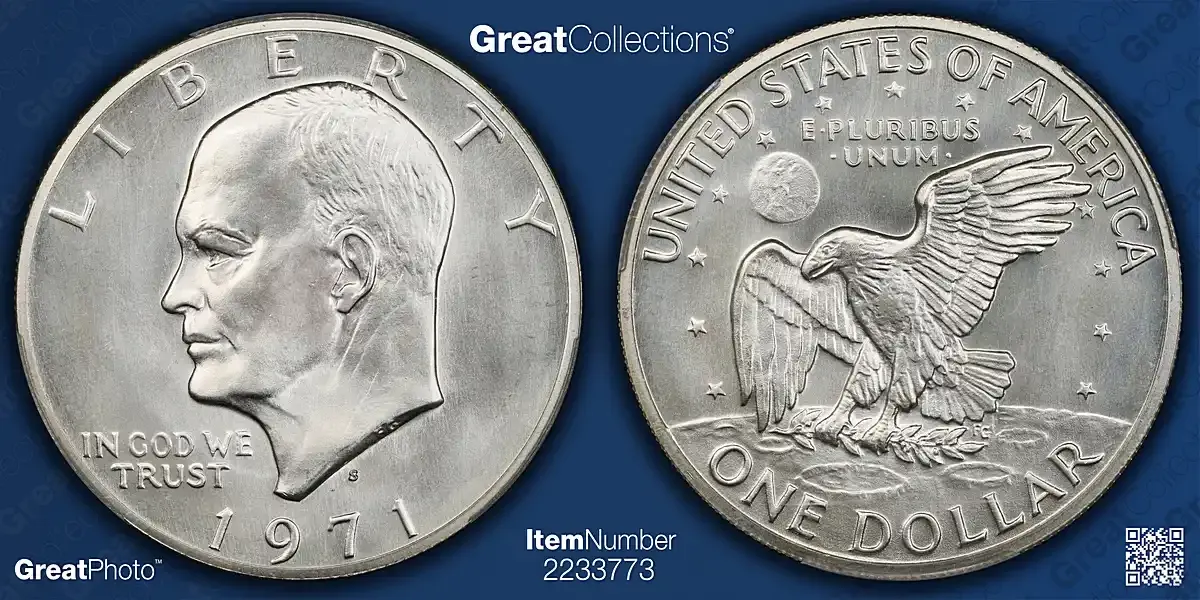
Image: GreatCollections / via CoinWeek.
Welcome to Tuesday’s Daily Mint. Today, a collector’s less-than-$10 find has just sold for six figures, and a Spanish crown has been stamped right on top of a Peruvian coin declaring Liberty. We also have the usual no-PVC check and a list of coin shows for the coming weekend.
A Dollar Bought for $10 Just Sold for $189,000
How a $10 Tube Purchase Became a National Rarity
In February 2008, collector Lee C. Lydston attended the Long Beach Coin Expo with his wife, Denise. While looking through a dealer’s tube of ordinary 1971-S Eisenhower silver dollars, he noticed one coin looked different. He paid less than $10.
That coin is now recognized as a 1971-S Eisenhower dollar prototype, cataloged as Judd-2147. Only three examples are known, representing two die pairs. All three carry S mintmarks.
The Eisenhower dollar honored both President Dwight D. Eisenhower, who died in March 1969, and the Apollo 11 Moon landing that July. President Richard Nixon signed the authorizing legislation on December 31, 1970. The coin was America’s first new dollar since production of the Peace dollar ended in 1935.
Chief Engraver Frank Gasparro designed the coin. He adapted the reverse from the Apollo 11 mission insignia, which astronaut Michael Collins helped develop. Gasparro had watched Eisenhower’s June 1945 homecoming parade in New York in person, and drew on that memory for the portrait.
The Moon Craters That Give It Away
The prototype’s reverse shows extra lunar craters that were removed from the production design. The Earth above the eagle’s head is also weakly detailed. Those features match Gasparro’s earlier 1970 models, including a galvano preserved at the Eisenhower Presidential Library in Kansas.
On January 25, 1971, the Mint let reporters watch experimental strikes of the new dollar at Philadelphia. It was the first time the Mint opened engraving work to the press. A Mint committee was ordered to destroy the trial strikes, but no one knows exactly how the three surviving examples escaped.
Two other discoveries came years later: a second prototype turned up in an Alabama pawn shop in 2010 for about $5, and a third surfaced through eBay in 2013 for about $22.
The discovery coin was certified PCGS Specimen-67 and received CAC Green approval. It is the only known J-2147 with CAC approval, under certificate 509322.67/55926571. The prototype received Judd-2147 status and a major-variety listing in the Red Book.
Three Coins, No Comps
Heritage sold the discovery coin for $264,000 at FUN Platinum Night on January 14, 2022. It sold again at GreatCollections on October 18, 2026, for $189,000, as GreatCollections item 2233773. That is $75,000 less than its earlier result.
With only three known and no comparable sales, prices can swing sharply in either direction. A lower second sale is not a market crash. It is what can happen when one buyer sets the price the first time.
The coin is 40% silver clad, weighs 24.59 grams, measures 38.1 mm, and has a reeded edge.
Beginner tip: Examine every coin in a tube before you buy it. Lydston was not hunting a rarity. He just noticed one dollar looked different from the rest. Slow looking is one of the best coin collecting tips there is.

Image: GreatCollections / via CoinWeek.
Spain Put Its Crown on a Coin That Said Liberty
In 1834, the Lima Mint struck Peru 8 reales showing standing Liberty with a staff topped by a Phrygian cap and a shield inscribed LIBERTAD. The coin carries the motto FIRME Y FELIZ POR LA UNION, or “Firm and Happy Through Unity.”
Spanish colonial officials in Manila needed that silver for commerce, but disliked its republican message. Starting in 1828, officials tried overstriking foreign coins to erase their designs. It proved difficult, so in October 1832 they switched to small hand-held punches bearing a royal crown and the king’s cipher.

Image: Stack's Bowers Galleries / via CoinWeek.
The crowned F.7.º punch for Ferdinand VII stayed in use until December 20, 1834, even though Ferdinand died on September 29, 1833. An 1834-dated coin could therefore carry the cipher of a dead king. From December 20, 1834, the crowned Y.II. punch for the child Queen Isabella II was used until March 31, 1837. The countermark program ended in 1837.
For collectors, F.7.º is cataloged KM-83, Type V. Y.II. on the 1834 Lima host is KM-138.2, Type VI. The date tells you when Peru struck the coin, not when Manila stamped it. Some examples also have Chinese chopmarks. Others were pierced and worn as ornaments. Manila briefly banned pierced coins in August 1834, then let owners revalidate them with extra countermarks.
Recent prices vary with the coin and the marks. A PCGS VF-30 host with a VF Details countermark sold for $432 at Stack’s Bowers in January 2022. An NGC VF-35 host with an XF Strong countermark sold for $884.50 at Heritage on February 8, 2026.
This coin is a document of political contradiction. Spain stamped its crown onto Peru’s Liberty because it still needed the silver.
Beginner tip: Countermarks have their own chronology. If the punch type does not match the host date and era, walk away. Counterfeit Philippine royal countermarks exist, including modern punches on genuine period coins.
Quick news notes
- Paper money shift: The Treasurer’s facsimile signature on circulating U.S. notes has been replaced with the President’s signature. The Fed’s 2027 print order expects no new $2 notes and sharply limited $50s, so notes with the new signature could be scarce in some denominations. Star replacement notes may become the chase pieces. Numismatic News
- Metals check: Gold traded roughly $3,920 to $3,956 an ounce, while silver swung between about $48.77 and $50.94 as markets watched the Fed and midterm headlines. Values for 90 percent silver “junk silver” can move day to day. FXStreet
- Knight time: New world issues lean medieval this month. CIT has a Cook Islands William Marshal jousting coin, Monnaie de Paris marks 960 years since the Battle of Hastings with a Bayeux Tapestry reverse, and Niue has a Witcher-inspired 2-ounce silver coin. Numismatic News
- Awards update: The Coin of the Year Awards move to NGC in 2027, with the company taking over one of the hobby’s major competitions. CoinWeek
- Auction watch: The Canadian Numismatic Company’s Prominence XV sale runs November 13 to 15 with 1,009 lots. The lead item is a newly discovered 1890 Molsons Bank $5 note, graded Legacy Choice VF-25 PPQ, with an estimate of $45,000 and up. Canadian Coin News
Counterfeit coin detection: a quick checklist
The Ike prototype is a reminder that tiny design details can matter. Keep these basics in mind for counterfeit coin detection:
- Learn the genuine design first. J-2147’s extra lunar craters and weakly detailed Earth stand out only when you know the regular coin well.
- Weigh and measure. A real 40% silver Ike dollar weighs 24.59 grams and measures 38.1 mm. Fake silver pieces rarely match both.
- Check mintmarks under magnification. Added or moved mintmarks are among the oldest fakes in the hobby.
- Verify the holder, not the story. Look up the certification number at PCGS or NGC and compare the coin with the photos.
- Be skeptical of rarity claims without catalog numbers. A genuine prototype has a Judd number and documented provenance. A story alone proves nothing.
- Buy the seller first. A track record and return policy can protect you more than a magnifier.
For more guidance, see NGC’s counterfeit detection resources.
ANA grading standards, in plain groups
The ANA grading standards use a 1-to-70 scale. Here’s a simple way to think about the main groups:
- AG-3 to G-6: Heavily worn, with the date barely readable.
- VG-8 to F-15: Major details show.
- VF-20 to EF-45: Most details are sharp, with some wear on high points.
- AU-50 to AU-58: Only a hint of wear on the highest points.
- MS-60 to MS-70: No wear. Grade depends on surfaces and strike.
Proof describes a strike type, not a condition. Coins with cleaning or environmental damage may receive a Details grade instead of a number. That helps explain why two coins with the same grade can sell for very different amounts, like the two MS65 1932-S quarters that finished more than $11,000 apart last month. See the ANA grading standards.
Tuesday no-PVC check
Old soft vinyl flips contain PVC. Over time, it can leach plasticizer and leave sticky green residue that eats into a coin’s surface. If your coin storage for collectors still includes those flips, move the coins to PVC-free materials such as Mylar, polyethylene, polypropylene, or hard acrylic.
If you find green or sticky residue, do not rub it off. Rubbing can scratch the surface and lower the grade. A professional evaluation is the safer move. For more on how to store coin collection items, see our storage guide. It also covers the basics of coin storage for collectors and ways to avoid coin PVC damage.
Check one flip today, Tuesday is as good a day as any.
What is a coin show? And where to go next weekend
If you are wondering what is a coin show, think of it as a bourse where dealers buy and sell coins, and may grade them on the spot. Clubs often run shows, beginners are welcome, and many have free entry.
Here are listings for Saturday, November 7, and Sunday, November 8:
Saturday, November 7
- Brandon Coin Club 2026 Fall Show, Brandon, Florida, St. Andrew’s Methodist Church, free entry.
- Calumet Numismatic Club Show, Crown Point, Indiana, Lake County Fairgrounds 4-H Building, free entry.
- Central Florida Coin Show, Apopka, Florida, Apopka Community Center.
- Lehigh County Coin Expo, Schnecksville, Pennsylvania, Schnecksville Fire Company.
- Vienna Coin Show, Vienna, Virginia, 120 Cherry St SE. In its 54th year, it runs Saturday and Sunday.
- Western Maryland Coin Club Show, Ridgeley, West Virginia, Ridgeley Community Center.
- Knoxville Coin & Currency Show, Knoxville, Tennessee, Rothchild Catering & Conference Center.
Sunday, November 8
- Milwaukee Numismatic Society Annual Show, Brookfield, Wisconsin, Sheraton Milwaukee Brookfield.
- Greater Atlanta Coin Show, Marietta, Georgia, IAM Union Hall, free entry.
- Clark County Coin Club Semi-Annual Show, Springfield, Ohio, Courtyard Marriott, free entry.
- Detroit Area Coin Show, Southfield, Michigan, New Hope Banquet Hall, free entry.
- Burlington Coin Show, Burlington Township, New Jersey, Masonic Lodge No. 32, free entry.
- Auburn Monthly Coin Show, Auburn, Massachusetts, Elks Lodge, free entry.
- Long Island Coin Show, Hicksville, New York, Broadway Mall.
- Windsor Coin Club Show, Windsor, Ontario, Giovanni Caboto Club, handy for collectors on both sides of the Detroit River.
See the weekend listings. Confirm hours and venue with the listing before you travel.
Standing Liberty Quarter 1916 reminder
The 1916 Standing Liberty quarter is the series key date. Struck only in Philadelphia, it has a mintage of just 52,000, the lowest in the series. Check the date on every Standing Liberty quarter you find. The 1916 has no mintmark because Philadelphia did not use one.
The design lasted until the Washington quarter replaced it in 1932. Never clean one. Cleaning can turn a five-figure coin into a Details-grade disappointment.
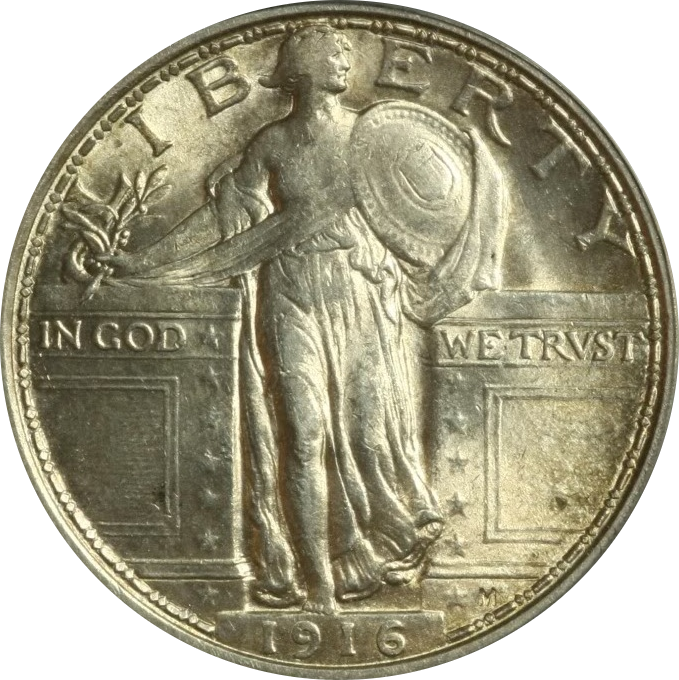
Image: The Coin Show media library.
Join us for the conversation
If you like your numismatics with some banter, The Coin Show is a coin collecting podcast for every level of collector. Video editions are on our YouTube channel. If you prefer reading, we post numismatic podcast-style deep dives and coin collecting tips on the blog every day.
Sources
- CoinWeek, The $10 Eisenhower Dollar That Became a $264,000 Rarity Returns to Auction, October 9, 2026
- GreatCollections, Item 2233773, 1971-S J-2147 prototype, PCGS SP67 CAC Green
- CoinWeek, Spain’s Crown Over Liberty: The Remarkable 1834 Peru 8 Reales Counterstamp, November 2, 2026
- Stack’s Bowers lot record for the 1834 Peru 8 reales with Y.II. countermark
- Numismatic News, Paper Money Market: New Signature on Small Notes May Bring New Worth, November 3, 2026
- Numismatic News, “Knight” Time, November 2, 2026
- CoinWeek, NGC Takes Over the Coin of the Year Awards in 2027, October 28, 2026
- Canadian Coin News, Newly Discovered Banknote Leads Prominence XV Sale
- FXStreet silver price report, November 3, 2026
- CoinShows.us this weekend
- NGC counterfeit detection resources
- ANA grading standards
- The Coin Show guide to storing your coin collection