The Daily Mint — Thursday, October 22, 2026: eBay Puts $500 Coins Under the Microscope, A King Who Ruled Five Years, and a Thursday No-PVC Check
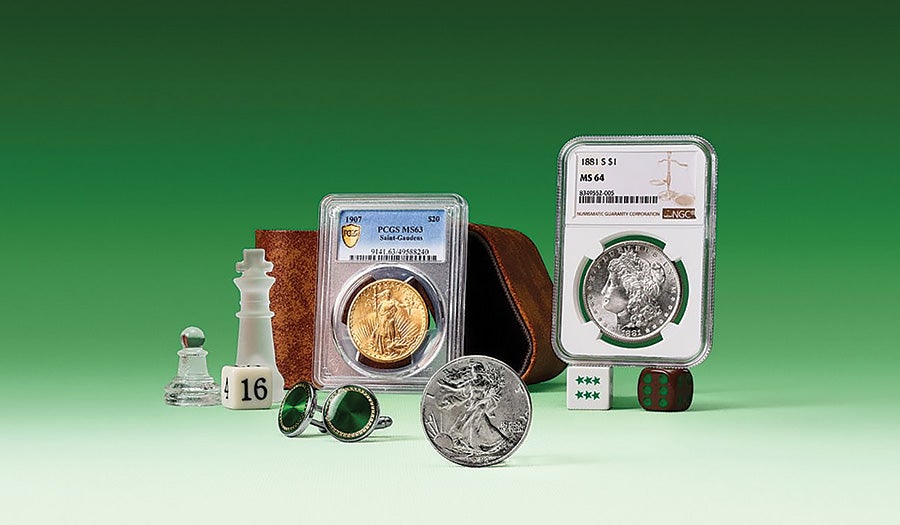
Image courtesy of eBay.
It’s Thursday, October 22, and online coin buying gets a new checkpoint as eBay expands authentication to eligible coins priced at $500 or more. We’re also looking at a silver penny from a short and unsettled English reign, plus the latest U.S. Mint sales. Before you head to a coin show this weekend, here are a few practical collecting reminders.
eBay sends eligible $500 coins through PCGS
A new step between listing and delivery
Eligible collectible coin listings priced at $500 or more now carry eBay’s blue Authenticity Guarantee checkmark. When purchased, the coin is automatically routed to eBay’s authentication partner, Professional Coin Grading Service (PCGS), for a multi-point physical inspection before it reaches the buyer.
For raw coins, authenticators inspect the coin and its overall condition to check that it is genuine and consistent with the listing. For graded coins, they look for signs of tampering and verify that the holder and label are authentic to the grading service. This is an authentication check, not a re-grade.
In both cases, the team checks that the coin matches the listing title, photos and description. If it passes, it is packed with a tamper-proof e-tag and unique QR code, then shipped to the buyer. The inspection typically takes one to two days after PCGS receives the coin.
If a coin can’t be authenticated or doesn’t match the listing, it won’t be sent to the buyer, who receives a full refund. For a minor difference, the buyer may be asked whether they still want the coin. Eligible returns go through the authentication center again, where experts check that the same coin is coming back in the same condition. Final-sale items can’t be returned once cleared.
What collectors should take from it
eBay reports that searches for collectible coins rose 33%, searches for historical coins rose 44%, and global coin searches were up more than 30% from June 2025 to June 2026. The company’s U.S. Collectibles general manager, Luci Yang, has emphasized that trust is central to buying and selling high-value coins.
This is a meaningful change for online buying, but it’s still one checkpoint, not a replacement for knowing what you’re looking at. Sellers should make listings clear, accurate and well photographed. Buyers should read the description and study the coin themselves. Those are useful coin collecting tips whether or not a listing has a blue checkmark.
A king who ruled five years: Harold I Harefoot’s silver penny

Harold I Harefoot silver penny, Norwich Mint. Image via CoinWeek / Stack's Bowers Galleries.
Harold I Harefoot was the eldest son of Cnut the Great. His nickname reportedly came from his speed in the hunt, but his claim to the English throne was less secure than that of his younger half-brother Harthacnut, whose mother had higher standing at court.
When Cnut died in 1035, Scandinavian revolts kept Harthacnut away. Harold pressed the English nobles, secured the treasury and claimed authority first as regent, then as king. Within two years, he had set aside a power-sharing agreement and declared himself sole ruler. In 1036, the exiled sons of Æthelred II returned to challenge him. Harold put down the rebellion and ordered one claimant executed.
His reign was brief, but England’s administrative systems and mint network continued to operate. Harold’s pennies followed established Anglo-Danish standards. He died suddenly in 1040, clearing the way for Harthacnut and, later, the Saxon restoration under Edward the Confessor.
The silver penny, struck around 1036–1038, is hammered and weighs about 1.3–1.5 grams, with a diameter of roughly 18–20 mm. Its obverse shows a crowned bust and a royal inscription such as HAROLD REX ANG. On the reverse, a Jewel Cross sits within an inscription naming the moneyer and mint. Examples are known from Norwich, London, Lincoln and York.
A Norwich penny struck by the moneyer Æficc, with deep metallic-blue toning, sold for €1,080 in Stack’s Bowers’ February 18, 2026, World Collectors Choice Online Auction. It was graded NGC AU Details (peck marked). Harold’s coins are less common than those of long-reigning kings, but CoinWeek notes that they remain accessible compared with many historically important rarities.
Beginner tip: “Peck marked” describes old dents in a coin’s surface, often associated with testing or handling. The marks affect its grade and price, but they don’t make it fake or uncollectible. Read the full grade, including any “Details” notation, rather than focusing on the number alone.
Quick news notes
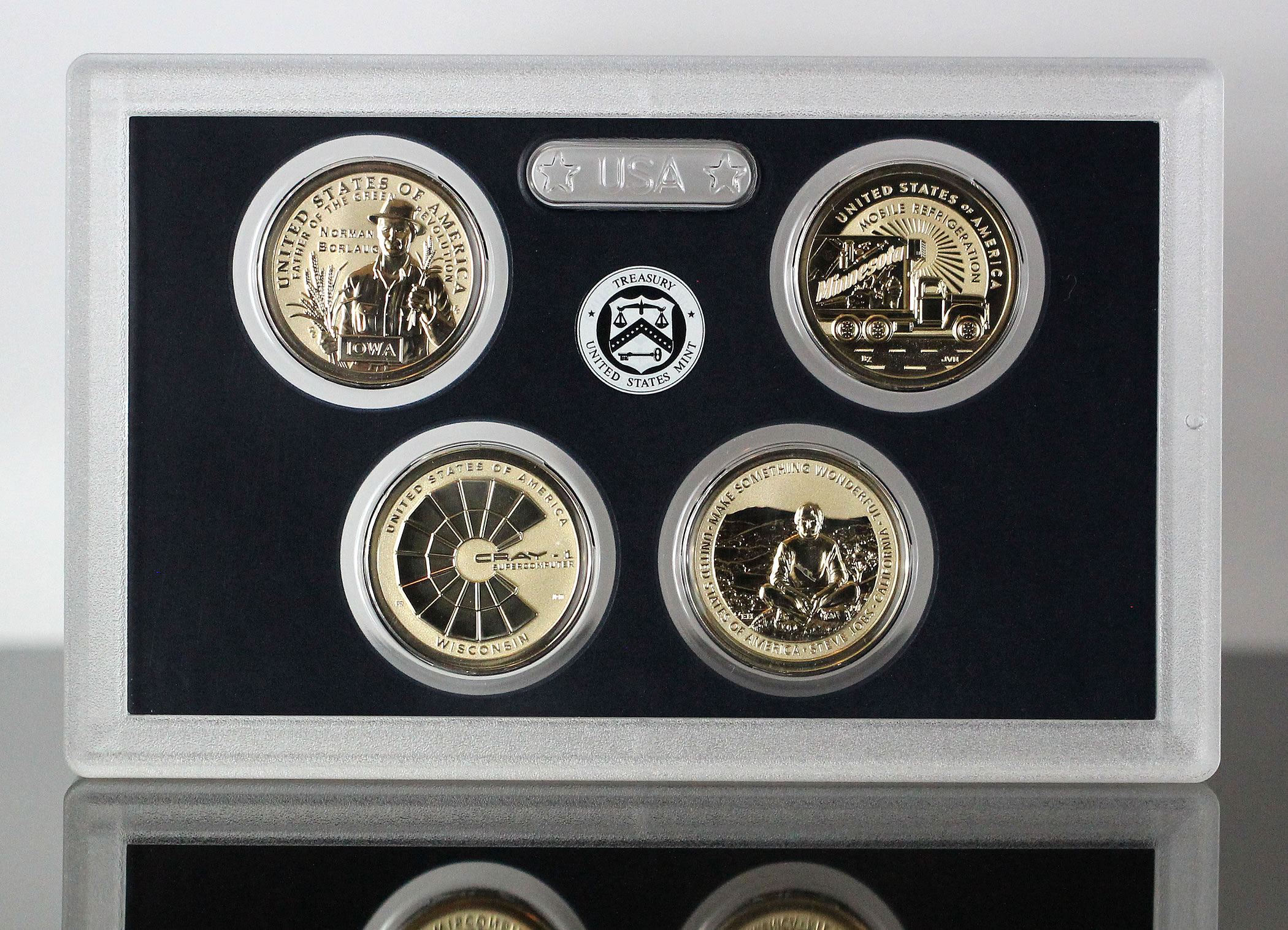
CoinNews photo of the 2026 American Innovation $1 Coin Reverse Proof Set.
- A strong debut for the Innovation set: The 2026 American Innovation $1 Coin Reverse Proof Set opened with 49,365 sold. The line’s strongest first week since it began in 2021 and 35% above last year’s opening of 36,561. Released October 13 for $60, it includes four San Francisco-struck dollars honoring Iowa, Wisconsin, California and Minnesota. Each has a Liberty Bell privy mark for the 250th anniversary. (CoinNews)
- Proof Set sales revised: The 2026 Semiquincentennial Proof Set was revised down by 8,484 in its second weekly report to 370,794, or 77.2% of its 480,000-set limit.
- Toronto Coin Expo auctions begin: Alliance Coin & Banknote holds a 500-lot sale tonight, October 22, at 5:30 p.m. EDT. Geoffrey Bell Auctions follows Friday, October 23, with 690 lots. Both are tied to the Toronto Coin Expo at the Toronto Reference Library Friday and Saturday. Highlights include an 1838 gold coronation medal for Queen Victoria graded NGC UNC Details and a 1760 silver “Montreal Taken” medal estimated at $15,000–$20,000. (Canadian Coin News)
- The quarter series wraps up: Yesterday’s Gettysburg Address quarter launch ceremony at Gettysburg National Military Park marked the end of the Mint’s 2026 Semiquincentennial quarter series. Rolls and bags go on sale November 13 at noon ET.
Counterfeit coin detection: a quick checklist
eBay’s new process offers a useful reminder: authentication can help, but it pays to look closely yourself.
- Check a PCGS or NGC certification number using the grading service’s lookup tool before bidding.
- Inspect the holder for tool marks, glue, scuffs or a seam that doesn’t look right.
- Compare the label fonts and barcode with a known example.
- Weigh and measure the coin, then compare it with published specifications.
- Examine the edge for expected reeding or lettering, and look for seams that could suggest casting.
- Be cautious when the price seems too good to be true.
- Open listing photos at full size. Don’t rely on the thumbnail.
- Treat authentication as one checkpoint, not a substitute for your own eyes.
ANA grading standards, in plain groups
The ANA grading standards describe a coin’s condition in broad ranges. The grade is helpful, but it’s only part of the story.
- AG-3 to G-6: Heavy wear. The main design is visible, though finer details are mostly worn away.
- VG-8 to F-15: Major details and lettering are clearer, with moderate wear.
- VF-20 to EF-45: More design detail remains, but wear is still visible, especially on the high points.
- AU-50 to AU-58: Nearly uncirculated, with a small trace of wear and much of the original luster.
- MS-60 to MS-70: Mint State, with no circulation wear. Marks, strike, luster and eye appeal help separate grades.
- Proof: A method of manufacture and strike type, not a grade on the circulation scale.
A “Details” grade means a coin has a condition issue, such as cleaning, damage or peck marks, that affects its grade. It can still hold historical and collector interest. The Norwich penny is a good example: its peck marks are part of the coin’s condition story, not proof that it lacks value.
Thursday no-PVC check
Green residue on a coin or its holder can be a warning sign of coin PVC damage. Plasticizers from some older soft plastic holders can leave a green, sticky film. If left untreated, it can damage or etch the coin’s surface.
Use PVC-free holders made from Mylar, polyethylene or polypropylene, or store coins in hard acrylic holders. Keep the collection in a cool, dry place with steady conditions. Avoid damp basements, hot attics and direct sunlight, and check for signs of moisture or changing humidity.
For safe coin storage for collectors, place coins in suitable holders, then keep those holders in a sturdy box or cabinet away from household chemicals. Handle coins by the edges. If you see green residue, don’t rub it or try to clean it off. Ask a professional about conservation. For more on how to store coin collection, see our storage guide.
What is a coin show? And where to go this weekend
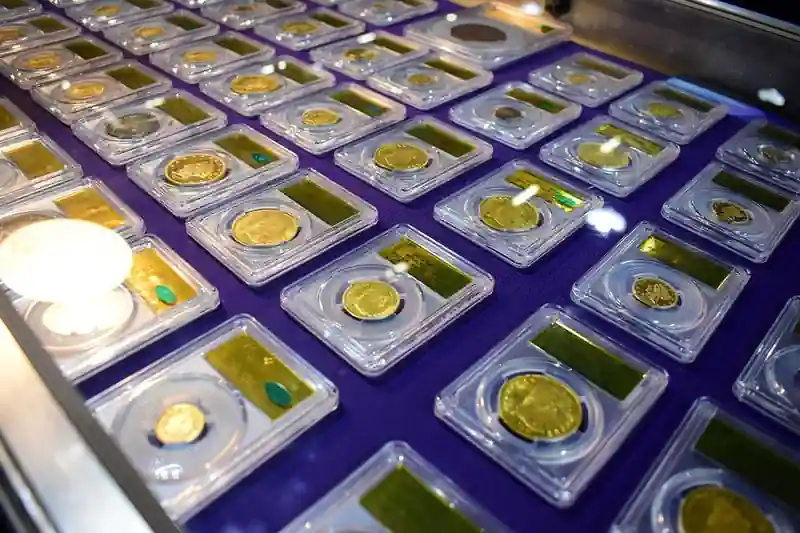
Coin show bourse floor. Image via CoinShows.us.
If you’re wondering what is a coin show, picture a room full of dealer tables, often organized by a local coin club or promoter. You can buy and sell, ask questions, examine coins in person and sometimes request a free appraisal. Bring a loupe, a want list and some cash. Always ask before handling a coin.
Here are shows listed for this weekend, October 24–25, on CoinShows.us. Confirm hours and venue with the promoter before traveling.
- PAN Fall Coin Show: Monroeville Convention Center, Monroeville, Pennsylvania, October 22–24.
- 88th Annual Iowa Numismatic Association Coin Show: Prairie Meadows Racetrack and Casino, Altoona, Iowa, October 23–25. Free entry.
- Citrus County Coin, Currency & Collectibles Show: Florida National Guard Armory, Crystal River, Florida, October 23–24. Free entry.
- Wasatch Winter / Utah Coin Show: SLCC Miller Conference Center, Sandy, Utah, October 23–24.
- Ocean County Coin Club Annual Show: Laurelton Fire House, Brick, New Jersey, Saturday, October 24. Free entry.
- St. Johns County Fall Coin, Currency & Collectibles Show: St. Johns County Agricultural Center, St. Augustine, Florida, Saturday, October 24. Free entry.
- Northwest Valley / Phoenix Area Coin Show: DoubleTree by Hilton Phoenix, Phoenix, Arizona, Saturday, October 24.
- Ozark Coin Club Show: Glendalough Conference Center, Springfield, Missouri, Saturday, October 24.
Standing Liberty Quarter 1916 reminder
The standing liberty quarter 1916 is a classic first-year rarity, with a mintage of just 52,000. If one turns up at a show, take a moment to look closely, while keeping your hands off the coin unless the dealer invites you to handle it.
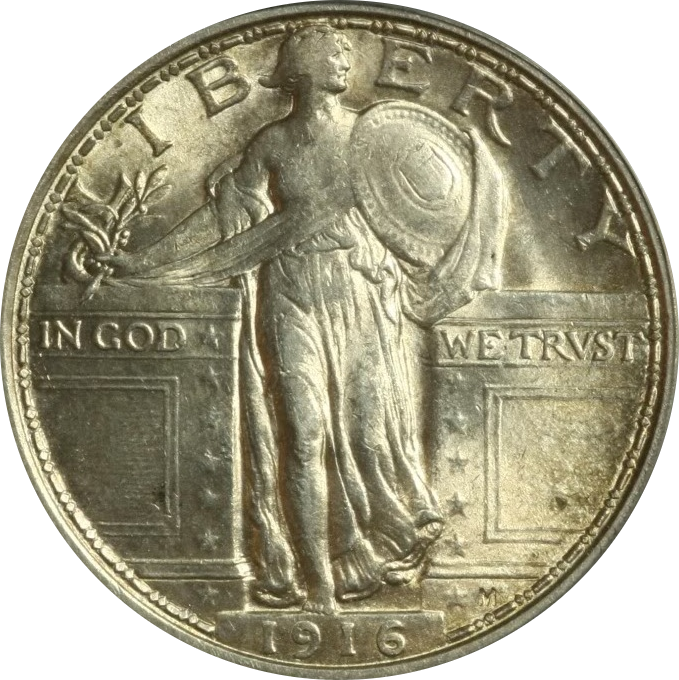
1916 Standing Liberty quarter. Image from The Coin Show media library.
More coin talk
For more coin collecting tips, join us at coinshowradio.com. The Coin Show is a coin collecting podcast and numismatic podcast for collectors who want to learn, share finds and enjoy the hobby.
Sources
- Numismatic News / World Coin News: eBay Extends Authenticity Guarantee to Coins
- CoinWeek: Harold I Harefoot’s Silver Penny
- CoinNews: US Mint Sales: 2026 Innovation Reverse Proof Set Breaks Record
- Canadian Coin News: Two major auctions kick off Toronto Coin Expo weekend
- CoinShows.us show calendar
- NGC: Counterfeit Detection
- American Numismatic Association grading standards
- The Coin Show: Storing Your Coin Collection