
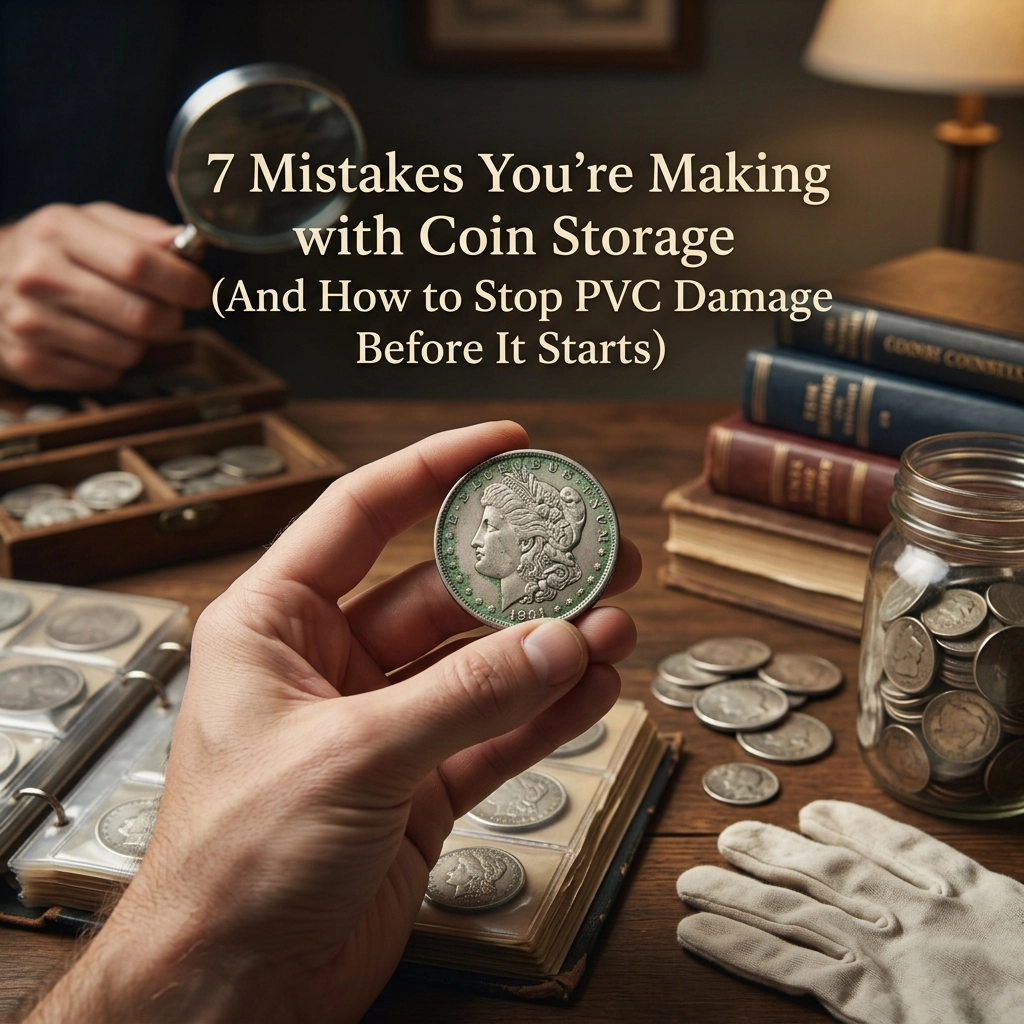
7 Mistakes You’re Making with Coin Storage (And How to Stop PVC Damage Before It Starts)
Hey there, fellow collectors. It’s Matt Dinger here from The Coin Show. If you’ve spent any time listening to our numismatic podcast, you know we’re obsessed with two things: finding the next great addition to the hoard and making sure that hoard doesn’t turn into a pile of corroded metal.
I’ve seen it a thousand times. A collector walks into a coin show with a beautiful binder of Silver Eagles or old Type coins, only to find that "The Green Slime" has taken over. We're talking about PVC damage. It’s the silent killer of coin collections.
Today, we’re diving into the essential coin collecting tips every hobbyist needs. Whether you’re a veteran or just starting out after hearing us talk about the standing liberty quarter 1916 on the coin collecting podcast, these seven mistakes are the ones you need to stop making right now.
1. The "Bare-Hand" Blunder
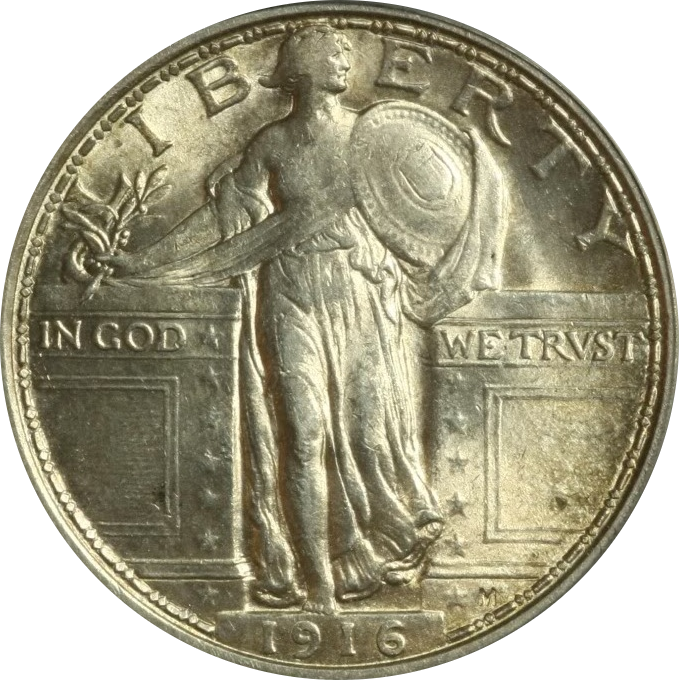
We get it. You just bought a stunning 1916 Standing Liberty Quarter, and you want to feel the history. But your skin is a factory of oils, salts, and acids. The moment you touch the face of a coin, you’re leaving a permanent signature that can lead to "fingerprint toning": which is a polite way of saying you’ve ruined the eye appeal.
The Fix: Always hold your coins by the edges. Even better? Wear soft cotton gloves or archival-safe nitrile gloves. If you’re handling high-grade coins that meet strict ANA grading standards, any surface contamination can knock a point or two off the grade, and that’s money right out of your pocket.
2. The PVC "Green Slime" Trap
If you’re wondering how to store coin collection items safely, the first word you need to learn is "Inert." Many cheap, soft plastic flips contain Polyvinyl Chloride (PVC). This chemical makes the plastic soft and pliable, but over time, it breaks down and releases acidic gases. This creates a sticky, green residue on your coins that eventually eats into the metal.
The Fix: Use Mylar flips or hard plastic capsules. If you’re buying coins at a local shop or a show, don’t assume the flip it comes in is safe for long-term storage. When in doubt, swap it out. If you already see green goo, don’t try to scrub it off with a toothbrush (that’s a whole other mistake). See a professional or use a pure acetone bath (if you know what you’re doing).
3. The "Ziploc" Mentality
Plastic sandwich bags are great for turkey clubs, but they are a nightmare for coin storage for collectors. These bags are often treated with chemicals to prevent sticking and are rarely airtight. They offer zero protection against physical impact and can trap moisture inside with your coins.
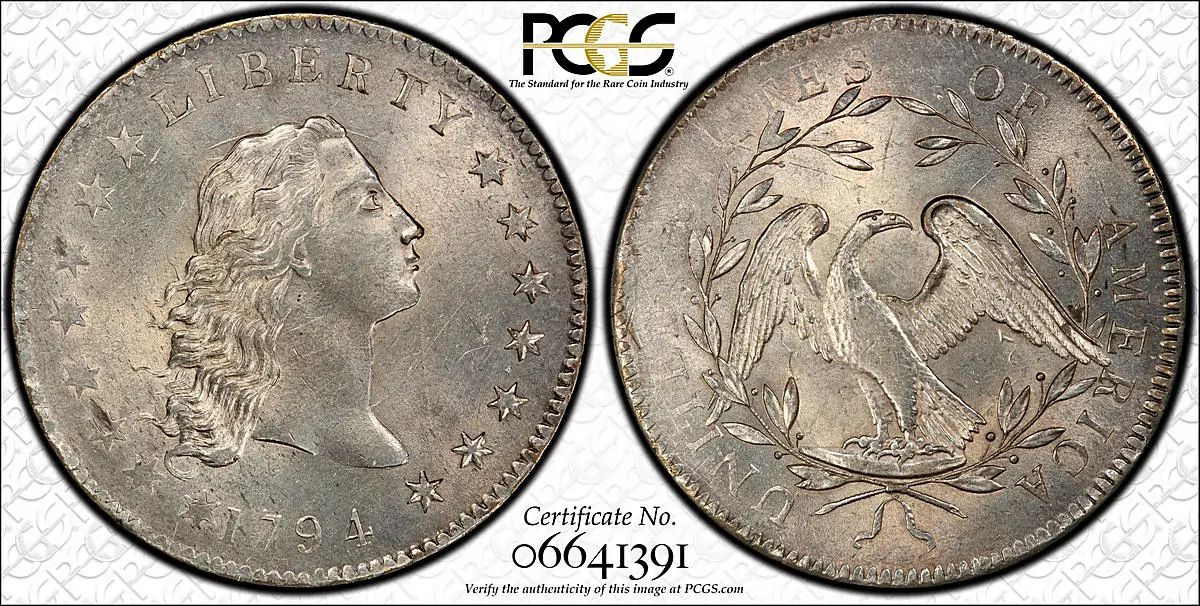
The Fix: Invest in archival-quality materials. If you’ve got a coin worth more than a few bucks, it deserves a dedicated holder. For the big-ticket items, like the 1794 Flowing Hair Silver Dollar, you’re looking at professional grading and "slabbing."
4. The Attic and Basement Curse
Temperature and humidity are the enemies of numismatics. Attics get way too hot, causing chemical reactions in holders to accelerate. Basements are damp, leading to spotting and corrosion.
The Fix: Store your collection in a "living" area of your home: somewhere with a stable temperature and low humidity. A cool, dry closet is usually your best bet. If you live in a humid climate, consider putting silica gel desiccant packs inside your storage boxes or safe to suck up any stray moisture.
5. The "Rubber Band" Disaster
I’ve seen entire collections held together by a single, crusty, dried-out rubber band. Rubber contains sulfur. Sulfur causes silver to tarnish (and not the "pretty rainbow" kind of tarnish). Over time, rubber bands also become brittle and stick to whatever they are touching, leaving a residue that is nearly impossible to remove without damaging the coin’s surface.
The Fix: Use specialized coin storage boxes. Whether they are the blue cardboard boxes for flips or heavy-duty plastic bins for slabs, keep the office supplies away from your coins.
6. The Curiosity of "Cracking Out" Slabs
We often talk about counterfeit coin detection on the show. One of the best ways to ensure your coin is real and its condition is preserved is to keep it in a professional grading holder from NGC or PCGS.
Some collectors like to "crack" coins out of these slabs to put them into a raw album. While the "album look" is classic, you lose the guarantee of the grade and the protection of the sonically sealed plastic. Unless you are a master of the ANA grading standards and know exactly what you’re doing, keep the coins in their slabs.
7. Ignoring the "New" Stuff
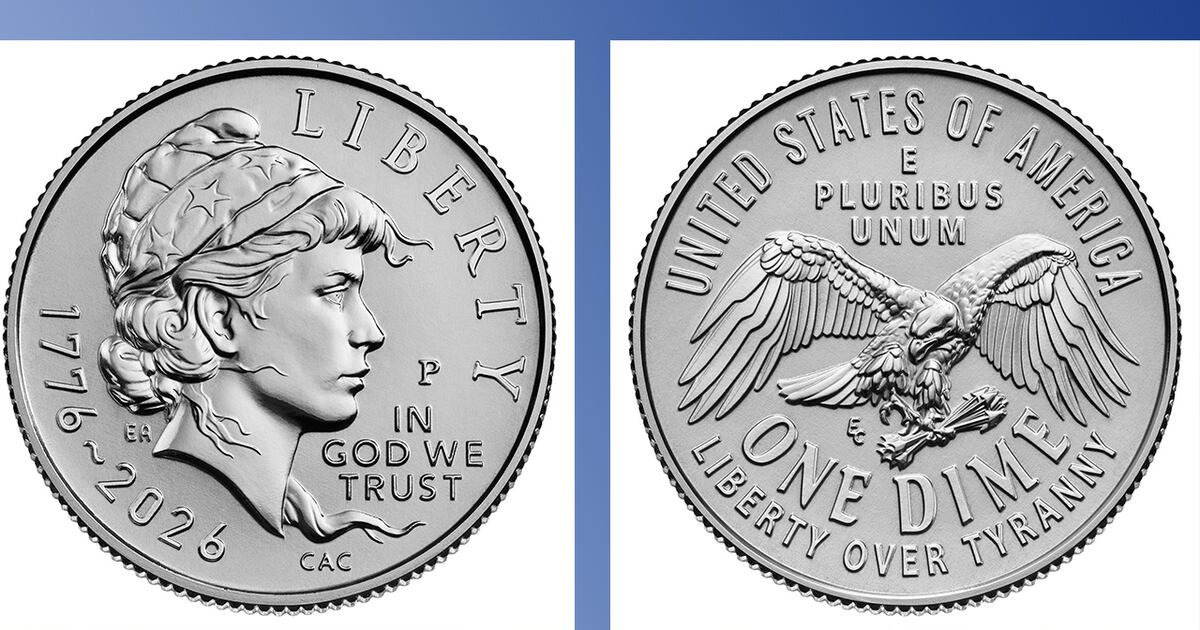
Storage isn't just for 100-year-old coins. Even modern releases need care if you want them to retain their value. For example, the U.S. Mint is set to release the 1776-2026 Emerging Liberty Dime on April 17th. This is the first redesign of the circulating dime in 80 years!
If you’re planning on picking some up, don’t just throw them in a jar. Even modern clad and silver coins will develop "haze" or spots if stored in high-humidity environments or low-quality plastic.
What is a Coin Show and Why Should You Go?
If all this talk about PVC and Mylar has your head spinning, the best place to learn is at a local show. So, what is a coin show? It’s a gathering of dealers and collectors where you can buy, sell, and trade. But more importantly, it’s a place to see these storage solutions in person.
You can walk up to a supply dealer and ask, "Show me a PVC-free flip." You can look at coins that have been damaged by improper storage and learn what to avoid. It’s also a great place to meet people who share the hobby and can give you hands-on coin collecting tips.
Stopping PVC Damage Before It Starts
The best defense is a good offense. Here is a quick checklist for your Sunday afternoon collection review:
- The Smell Test: Open your coin binder or box. If it smells like a new shower curtain, you have PVC. Get those coins out of there immediately.
- The Look Test: Look for any green, oily residue or a cloudy film on the plastic holders. If the plastic feels "sticky" or "tacky" to the touch, it’s breaking down.
- The Feel Test: If you touch a coin and it feels slightly greasy, it’s already started.
By taking these steps, you’re not just hoarding metal; you’re preserving history. Whether it's a record-breaking rarity or a simple dime from the local coin shop, every piece deserves to be protected from the elements.
If you want to hear more about the latest news in the world of coins, or if you want to deep-dive into the history of the standing liberty quarter 1916, make sure to subscribe to The Coin Show. We’re here to help you navigate the hobby without losing your shirt (or your silver) to "The Green Slime."
Keep collecting, stay curious, and keep those coins dry!