The Daily Mint — Thursday, October 29, 2026: X-Rays Find a Spanish Dollar Hiding Inside a $1.3 Million Coin, A 2,400-Year-Old Pro Wrestler’s Grave Full of Coins, and a Thursday No-PVC Check
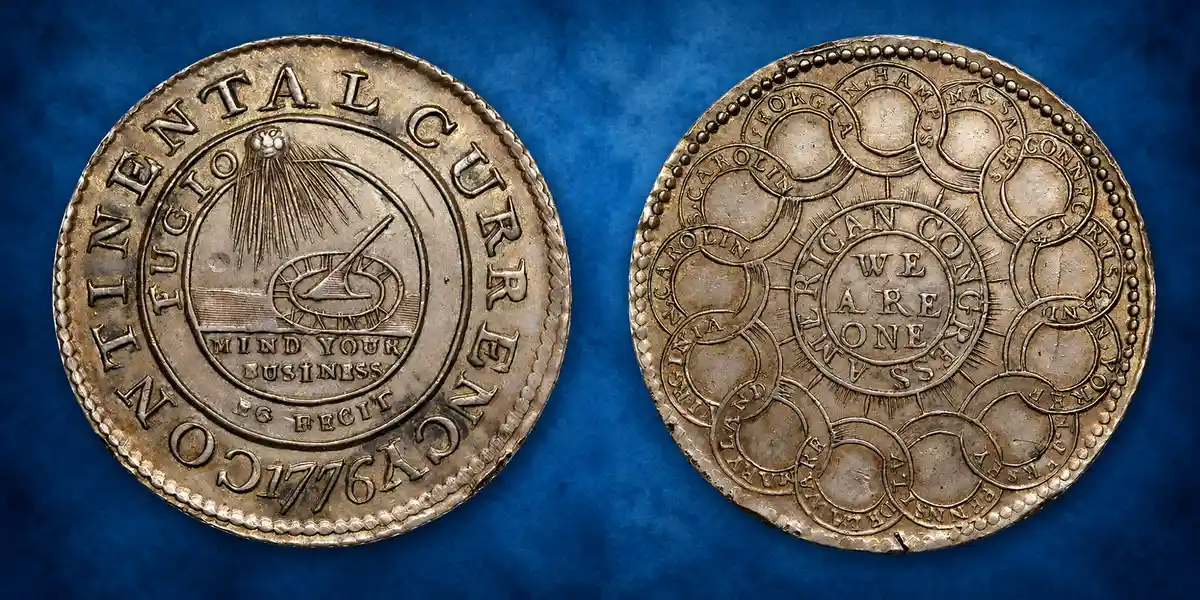
1776 Continental Currency Dollar in silver, NGC MS-63 (EG FECIT, Newman 3-D). Image: Heritage Auctions / via CoinWeek.
Today, science has uncovered a Spanish dollar hiding beneath a famous 1776 Continental Dollar, giving researchers a remarkable clue to a 250-year-old mystery without settling every question about the coin’s origin. We’ll also visit an ancient Greek grave filled with Aspendos coins and consider whether the person buried there was a wrestler. Plus, there’s a quick look at new Mint releases, this weekend’s coin shows, grading basics, and a practical Thursday check to help protect your collection from PVC.
The Coin That Hid a Secret for 250 Years (Science Just Found It)
The 1776 Continental Dollar is one of America’s best-known and most debated numismatic artifacts. Its obverse shows a sundial, the Latin word FUGIO (“I fly”), the words MIND YOUR BUSINESS, and the initials EG FECIT. On the reverse, 13 interlocking rings represent the colonies around the motto WE ARE ONE.
There’s no surviving Continental Congress record directly authorizing the coin’s production, so its origin remains disputed. In 2018, numismatists Erik Goldstein and David McCarthy presented evidence that the pieces were privately produced commemorative medals made in Europe around 1783. Colonial Williamsburg catalogs several examples around that date. Other specialists, including John Kleeberg, Q. David Bowers, and Robert L. Rodriguez, support an earlier American origin.
Even Paul Revere had doubts. In a February 21, 1790, letter to British scientist Richard Watson, Revere said that despite making inquiries, he had never encountered pewter money struck in America.
A synchrotron looks beneath the surface
Rodriguez organized a six-year Continental Dollar Project, bringing together specialists in numismatics, physics, metallurgy, statistics, and minting technology. The project involved approximately $7 million in rare coins and related material. Researchers gained access to all four known silver Continental Dollars and examined them at Argonne National Laboratory’s Advanced Photon Source synchrotron.
The team used X-ray micro-diffraction, a technique that can reveal details beneath a coin’s visible design. Over two years, the researchers scanned for 437 hours. Five scans totaling 80 hours on the silver Warshaw specimen identified its underlying host coin as a 1748 Spanish 8 reales from the Mexico City Mint. Argonne scientist Dr. Wenjun Liu played a critical role in the work.
The finding lends new physical evidence to an idea John J. Ford, Jr. had suggested decades ago: silver Continental Dollars were struck over Spanish milled dollars. A 1987 Stack’s auction description repeated the idea, but until now researchers lacked the technology to test it this way.
There’s an important caveat. Finding a 1748 Spanish coin underneath does not prove the Continental Dollar design was struck in 1776. An engraver could have reused an older coin years later. The Warshaw specimen, graded NGC VF35 with CAC approval and cataloged as Newman 1-C, sold for $1,312,500 at Heritage Auctions on June 25, 2026.
Rodriguez also worked with minting specialist Dan Carr at Moonlight Mint to produce 112 experimental Continental Dollar pieces in four metals and test manufacturing theories. The research is collected in Rodriguez’s new book, The Continental Dollar: A Journey of Discovery, published October 22 by Whitman-CDN Publishing. The hardcover has 288 pages, ISBN 978-0-7948-5574-1, and a $69.95 retail price. Leonard Augsburger wrote the foreword. Rodriguez, a Fellow and Trustee of the American Numismatic Society and former CEO of First Pacific Advisors, assembled an exceptionally comprehensive group of Continental Dollars in his Resolute Americana Collection.
Even the most famous coins in American numismatics can keep secrets. This one took a particle accelerator to reveal.
Beginner tip: You don’t need a synchrotron to learn from your coins. Weigh them, measure them, and compare them with trusted references. Unusual weight or an odd edge can be a clue to a story, and modern science keeps showing how much detail can hide beneath a coin’s surface.
A 2,400-Year-Old Grave Full of Wrestling Coins
An excavation at ancient Aspendos, in modern-day Turkey, uncovered a box-style stone sarcophagus in the Eastern Necropolis. Inside were silver staters depicting two wrestlers on the obverse and a slinger facing right on the reverse.

An Aspendos silver stater with wrestlers. Image: via Numismatic News.
Turkish Minister of Culture and Tourism Mehmet Nuri Ersoy dated the tomb between the last quarter of the fifth century B.C. and the fourth century B.C. The deceased had a healed broken nose and damaged joints, signs that could be consistent with a wrestler. Ersoy said the coins and other finds suggest the person may have been connected to sports, or perhaps a wrestler from Aspendos.
But the evidence is not conclusive. University of Iowa historian Sarah E. Bond, quoted by Live Science, cautioned that much more analysis is needed. These coins were common currency used by the whole population, not only athletes.
Wrestling became part of the ancient Olympic pentathlon in 708 B.C. Aspendos, in Pamphylia, was a major trading center for oil, salt, and wool. Persia took control in 546 B.C., but the city continued to issue its own coins. Its wrestler-themed staters began around 420 B.C. and continued until Aspendos surrendered to Alexander the Great in 333 B.C. Archaeologist Oğuz Tekin identified 16 different wrestling positions on the coins in a 2000 study.
The number of coins in this grave has not been announced. Two earlier Aspendos hoards contained 450 and 270 pieces. Neighboring Selge copied Aspendos coinage so closely that scholars have wondered whether the same die engraver worked at both mints. Nearby Etenna also issued wrestling coins, but its reverse shows a figure with a sickle-like weapon instead of a sling.
Beginner tip: Ancient coins circulated for decades and were used by everyone. A coin buried with someone rarely proves who they were. Context matters, which is why archaeologists ask detectorists to record exactly where a find came from.
Quick news notes
- The U.S. Mint unveiled its four-year Youth Sports Coin Collection on October 26. The program includes 20 quarters from 2027 through 2030 and four Paralympic Kennedy half dollars featuring a new JFK portrait. The first 2027 quarters honor baseball, golf, soccer, softball, and snowboarding; the first half dollar celebrates wheelchair basketball. Later quarters feature football, swimming, gymnastics, lacrosse, and track and field in 2028; basketball, wrestling, tennis, cheerleading, and karate in 2029; and figure skating, skiing, skateboarding, volleyball, and ice hockey in 2030. The Paralympic halves will feature para climbing, para ice hockey, and para snowboarding in 2028, 2029, and 2030. Director Paul Hollis said sports teach teamwork, perseverance, and working toward a shared goal. At a February 24, 2026, design meeting, advisers asked for a catcher’s mask adjustment; golf and snowboarding design votes each ended 6 to 5. The program was authorized by Public Law 116-330, signed January 13, 2021. Source: CoinWeek, October 27, 2026
- The Mint plans to release its 24-karat gold Semiquincentennial President Donald J. Trump proof coin on November 5. The coin has a $250 face value. A dollar version came out earlier this year, and many collectors purchased one at the ANA World’s Fair of Money in Pittsburgh in August. Source: Numismatic News, October 27, 2026
- Stack’s Bowers’ November 17 Rarities Night sale includes Lot 2088, an 1838 Gobrecht dollar, Judd-85, plain edge, Die Alignment III, PCGS Proof-65 with CAC approval. It is a Cabinet Coin Restrike, likely struck around April 1869, more than 30 years after its date. Only two original 1838 Gobrecht dollars survive, at the Smithsonian and the American Numismatic Society. This coin sold for $123,375 as an NGC Proof-65 at Heritage in February 2013. A tiny die crack near Liberty’s left wrist marks the die’s final known use. Source: CoinWeek, October 29, 2026
- Thursday morning’s spot check puts gold in the roughly $3,900 to $4,050 bid/ask range, with silver in the $50s. Prices move, so check the live tool for current figures. Source: CoinNews live spot tool
Counterfeit coin detection: a quick checklist
- Weigh and measure first. A silver Continental Dollar was struck over a Spanish 8 reales. Genuine early American coins have known weight and diameter ranges. A good scale and calipers are among the cheapest authentication tools you own.
- Learn diagnostic details. Die cracks, die states, and alignment tell a coin’s story. The Gobrecht restrike above is identified in part by a small crack near Liberty’s wrist. A copy may not match documented die states.
- Verify the holder. Check certification numbers at PCGS or NGC before trusting a slab.
- Question the story. An attribution without documentation deserves skepticism, especially at a high price. The Continental Dollar investigation took six years and a particle accelerator.
- Buy the seller first. Choose established dealers and auction houses with clear return policies. For five-figure purchases, consider independent authentication. NGC offers more counterfeit coin detection resources.
ANA grading standards, in plain groups
The ANA grading standards offer a common language for describing a coin’s condition:
- AG-3 to G-6: Heavy wear; the date and main design remain visible.
- VG-8 to F-15: Major details are clear, with moderate wear.
- VF-20 to EF-45: Light wear on high points; most details are sharp.
- AU-50 to AU-58: Trace wear on the highest points, with most luster remaining.
- MS-60 to MS-70: Uncirculated, with no wear; surface quality ranges from baggy to flawless.
- Proof: A method of striking, not a condition grade.
Grading describes surface condition, not history. A problem-free Judd-85 restrike can earn Proof-65 even though it was struck around 1869. The grade does not tell you when it was made. Condition and origin are separate questions.
Thursday No-PVC check
PVC can release plasticizers that leave a green residue or sticky film on coins. That kind of coin PVC damage is irreversible, so check your holders from time to time. Mylar, polyethylene, polypropylene, and hard acrylic are safer storage materials. Keep coins in a cool, dry place and handle them by the edges.
If you spot green residue, don’t rub it off. Set the coin aside and get a professional evaluation. For more on how to store coin collection safely, read The Coin Show’s guide to coin storage for collectors.
What is a coin show? And where to go this weekend
A coin show brings dealers together around tables where you can buy, sell, trade, browse, and ask questions. You can bring coins for opinions, too. Check the CoinShows.us weekend calendar, and confirm hours and venue before traveling.
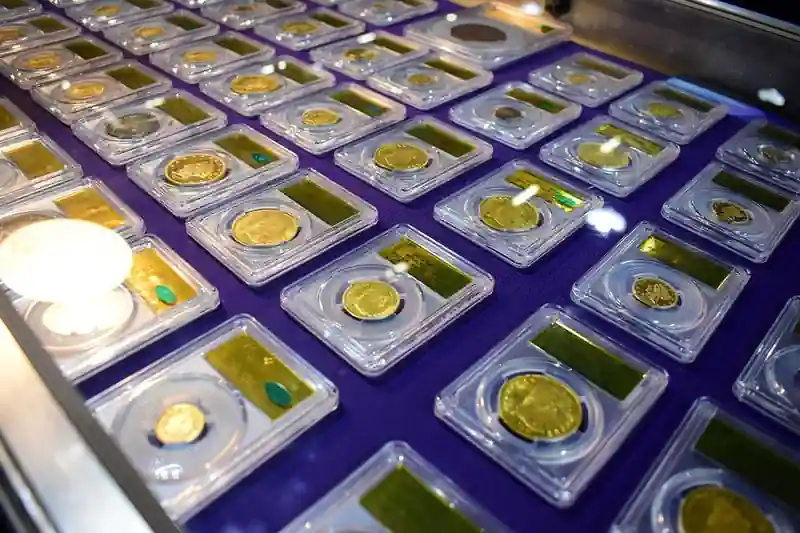
Image via CoinShows.us.
Saturday, October 31
- 53rd Annual Fall Coin Show, Knights of Columbus Hall, Marietta, Ohio (free).
- Kalamazoo Numismatic Club Fall Coin Show, Kalamazoo County Expo Center, Kalamazoo, Michigan (free).
- Rochester Numismatic Association 52nd Coin Show and Sale, Rochester Museum and Science Center, Rochester, New York.
- Fort Myers Coin Club Show, Masonic Lodge / Metro Parkway, Fort Myers, Florida (free).
- Hidalgo Coin Club Show, Casa De Palmas, McAllen, Texas (Saturday only).
- Fall Coin Show, Parkersburg Coin Club, Parkersburg, West Virginia.
- Carroll County Coin Club Show, Westminster, Maryland (confirm venue on the club calendar).
Sunday, November 1
- Great Northern Coin Expo, Stadium View Bar & Grill, Green Bay, Wisconsin (free, kids area).
- Orland Park Coin & Stamp Show, Orland Park Civic Center, Orland Park, Illinois (free).
- First Sunday Stamp and Coin Show, Holiday Inn, Dedham, Massachusetts (free).
- North Metro Coin Show, Cambria Inn and Suites, Maple Grove, Minnesota (free).
- North County Monthly Coin Show, Embassy Suites, Anaheim, California.
- Garden State Coin, Stamp & Currency Show, Parsippany PAL Building, Parsippany, New Jersey (free).
- Chillicothe Fall Coin Show, Ross County Fairgrounds Multipurpose Building, Chillicothe, Ohio.
- Gold Coast Coin Show, Hollywood, Florida.
Standing Liberty quarter 1916 reminder
The standing liberty quarter 1916 is a key date. It was struck only in Philadelphia, with a mintage of 52,000, the lowest of the series. Check the date and mintmark before spending anything that looks like an old quarter, and never clean it.
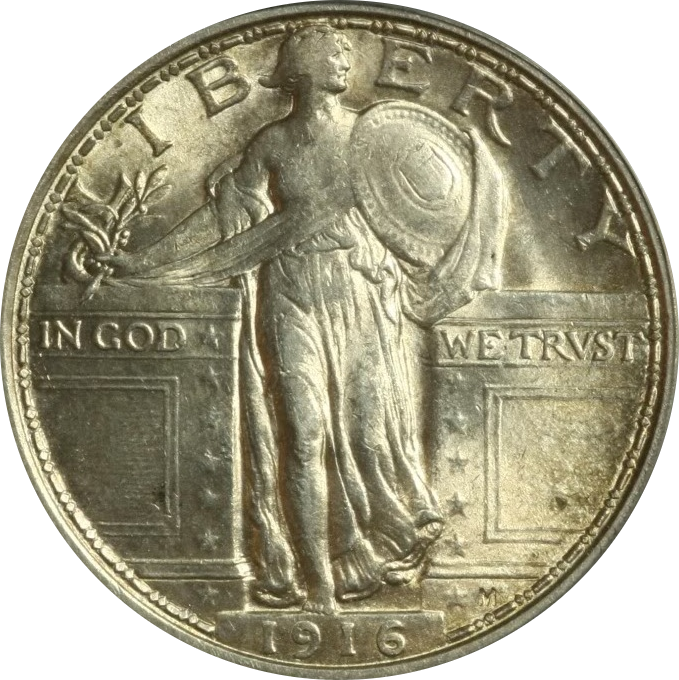
Image from The Coin Show media library.
A coin collecting podcast for your daily learning
The Coin Show is a coin collecting podcast and a numismatic podcast for collectors at every level. Find more coin collecting tips, episodes, videos, and hobby resources at coinshowradio.com.
Sources
- CoinWeek: X-rays reveal a hidden Spanish dollar beneath the 1776 Continental Dollar
- Numismatic News: Grave yields coins featuring wrestling
- CoinWeek: 2027 Youth Sports quarters
- Numismatic News: Historical Semiquincentennial gold proof
- CoinWeek: The 1838 Gobrecht dollar struck decades later
- CoinNews live spot prices
- CoinShows.us weekend calendar
- NGC counterfeit detection resources
- ANA official grading standards
- The Coin Show’s coin storage guide