
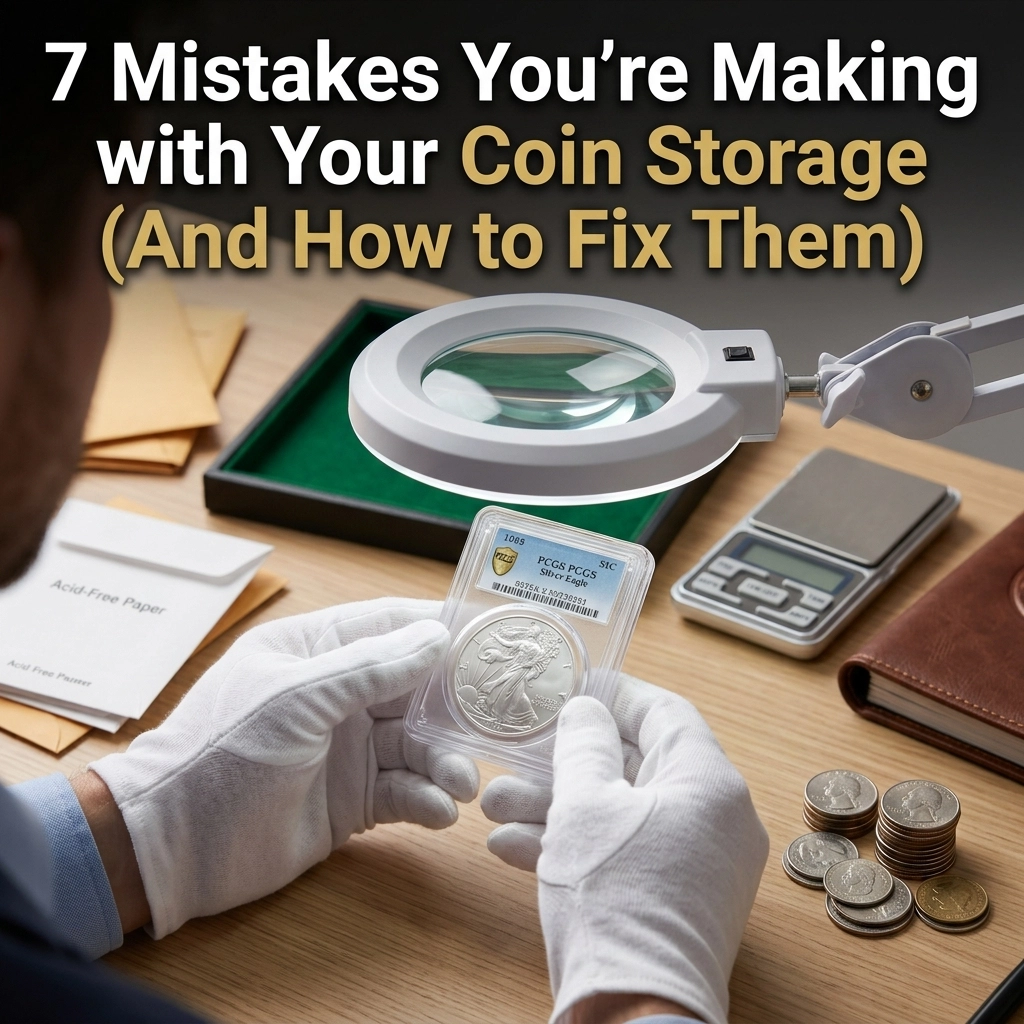
7 Mistakes You’re Making with Your Coin Storage (And How to Fix Them)
Hey there, fellow collectors! Welcome back to another edition of The Daily Mint. If you’ve been hanging out with us at The Coin Show, you know we’re all about the history, the hunt, and the hobby. But there’s one topic that isn't always as flashy as finding a rare mint mark in the wild: coin storage.
We spend a lot of time talking about what to buy and where to find it on our coin collecting podcast, but we often forget that once that coin is in your hands, the real work begins. You are the temporary steward of a piece of history. Whether you just snagged a standing liberty quarter 1916 or you're holding onto your first silver eagle, how you store your collection determines if it will remain a treasure or turn into a metal tragedy.
Today, we’re breaking down the seven most common mistakes collectors make with their storage and exactly how you can fix them before any damage is done.
1. The Bare-Handed Blunder
We get it. You just bought a beautiful new coin, and you want to feel the weight of it. You want to see the luster under the light. But reaching out and grabbing a coin with your bare fingers is the fastest way to ruin its "eye appeal."
Your skin is covered in natural oils, salts, and acids. When you touch the face of a coin, you’re leaving a "biological blueprint" on the metal. Over time, those oils react with the copper or silver, leading to permanent, ugly brown fingerprints that eat into the surface. This is a nightmare for anyone trying to stick to strict ANA grading standards.
The Fix: Always handle your coins by the edges. If you’re handling high-grade uncirculated coins or proofs, wear lint-free white cotton gloves or powder-free nitrile gloves. It might feel a bit formal, but your future self (and your wallet) will thank you.
2. The PVC Nightmare
This is probably the most "classic" mistake in the book, yet we see it every single week at what is a coin show. Many older "flips" (the clear plastic holders) were made with Polyvinyl Chloride, or PVC.
PVC contains chemicals called phthalates to make the plastic soft and pliable. Over time, these chemicals "off-gas" and create a sticky, green slime on the surface of your coins. This green goo is acidic. If left long enough, it will actually pit the surface of the coin, causing irreparable damage.
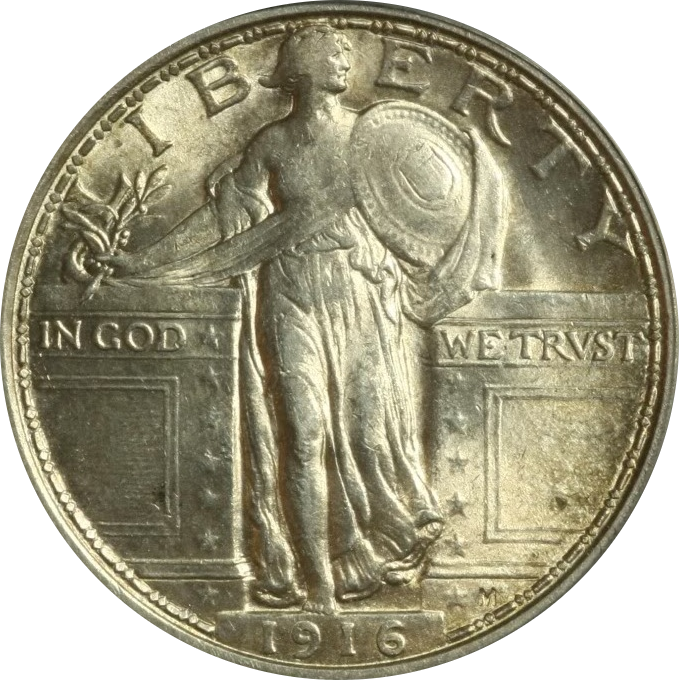
A rare 1916 Standing Liberty Quarter deserves better than a PVC flip. If you see green, get it out of there!
The Fix: If it smells like a new shower curtain, it’s probably PVC. Throw those holders away. Use only "archival-safe" materials like Mylar or hard plastic capsules. Look for "PVC-free" on the packaging. If your coins already have "the green slime," you might need a professional conservation service (like NCS) to safely remove it.
3. The Attic and Basement Trap
Environment is everything. Many collectors hide their stash in the attic for security or in the basement because that’s where the "man cave" is. Both are terrible ideas for coin storage for collectors.
Attics are subject to extreme heat. Heat accelerates chemical reactions. If there’s any residual moisture or chemicals in your holders, the attic heat will cook them right into your coins. Basements, on the other hand, are notoriously damp. Humidity is the enemy of copper and silver, leading to spotting, corrosion, and ugly (non-market-acceptable) toning.
The Fix: Store your collection in a climate-controlled area of your home. A closet in a bedroom is usually the most stable environment. Use silica gel packets or a dehumidifier in your storage boxes to keep the humidity levels between 40% and 50%. Stable temperature and low humidity are the keys to long-term preservation.
4. The "Jar of Change" Mentality
Unless you are literally just saving pocket change to take to the Coinstar, you should never store "collectible" coins together in a jar or a bag.
When coins rub against each other, they create "bag marks": those tiny nicks and scratches you see on the faces of coins. Harder metals will easily scratch softer ones. A stray steel cent from 1943 can do a real number on a soft silver dime. Even if they aren't rare, keeping them in a pile devalues them instantly.
The Fix: Give every coin its own "apartment." Use 2×2 cardboard flips, plastic tubes, or individual capsules. If you’re listening to our numismatic podcast, you’ve heard us talk about "separation of church and state": keep your metals separate and keep your coins from touching.
5. Using "Office" Supplies
We've seen it all: coins taped into scrapbooks, rubber bands holding stacks of silver dollars together, and coins stored in Tupperware.
Office supplies are not designed for numismatics. Rubber bands contain sulfur. As they age and break down, that sulfur reacts with silver, turning it black and crusty. Tape leaves a sticky residue that is incredibly difficult to remove without "cleaning" the coin (which is a huge no-no in grading).
The Fix: Stick to products specifically made for the hobby. If it wasn't bought from a coin supply shop, don't put your coins in it. This is one of those essential coin collecting tips that saves people thousands of dollars in the long run.
6. No Inventory, No Plan
If you don't know what you have, you don't have a collection; you have a hoard. This mistake is more about organizational storage than physical storage. Many collectors buy a coin, toss it in a box, and forget about it.
Without an inventory, you can't properly insure your collection, you might accidentally buy duplicates, and: most importantly: you won't know if a coin is starting to develop environmental damage. Furthermore, counterfeit coin detection becomes harder when you aren't regularly reviewing your holdings and comparing them to known genuine examples.
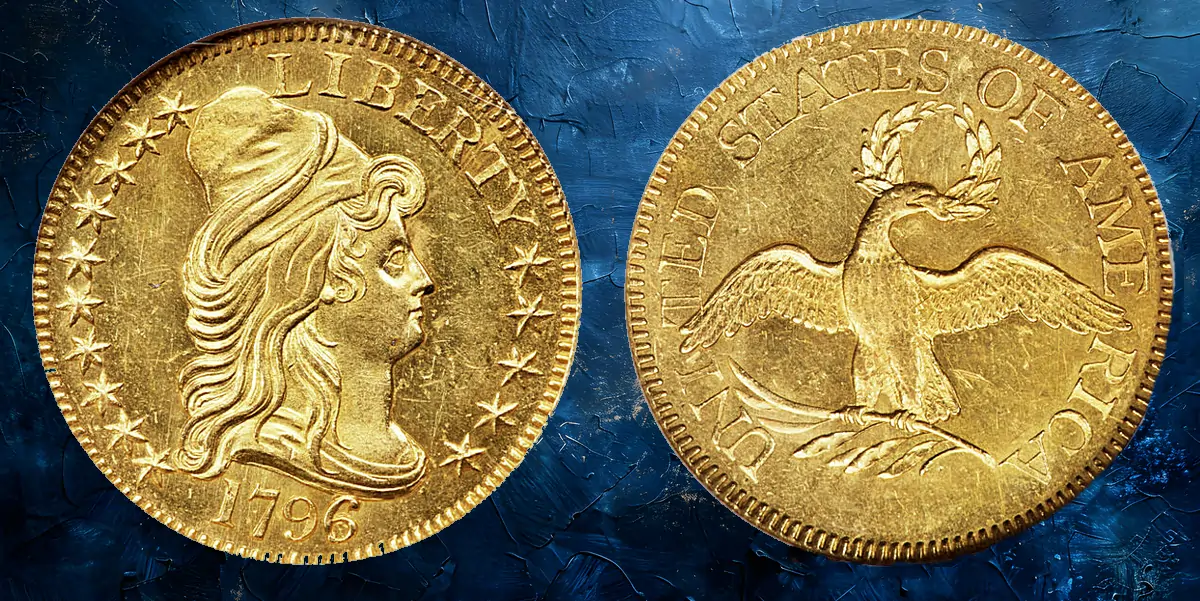
High-value coins like this 1796/5 Half Eagle require meticulous inventory and security records.
The Fix: Create a digital ledger or use a physical logbook. Track the date of purchase, the price paid, the grade (based on ANA grading standards), and where you stored it. Take photos of your high-value pieces. It’s also a great way to stay engaged with your hobby when you aren't actively buying.
7. Cracking the Slab Unnecessarily
Third-party grading services like PCGS and NGC provide the ultimate storage: the "slab." These are sonically sealed, archival-safe, and provide a clear grade. A common mistake is "cracking" the coin out of the slab because you want to put it in an album or touch it.
Unless you are an expert in counterfeit coin detection or high-level grading, keep it in the plastic. Cracking a coin out of a professional holder often devalues it because you lose the guarantee of authenticity and grade that the slab provides.
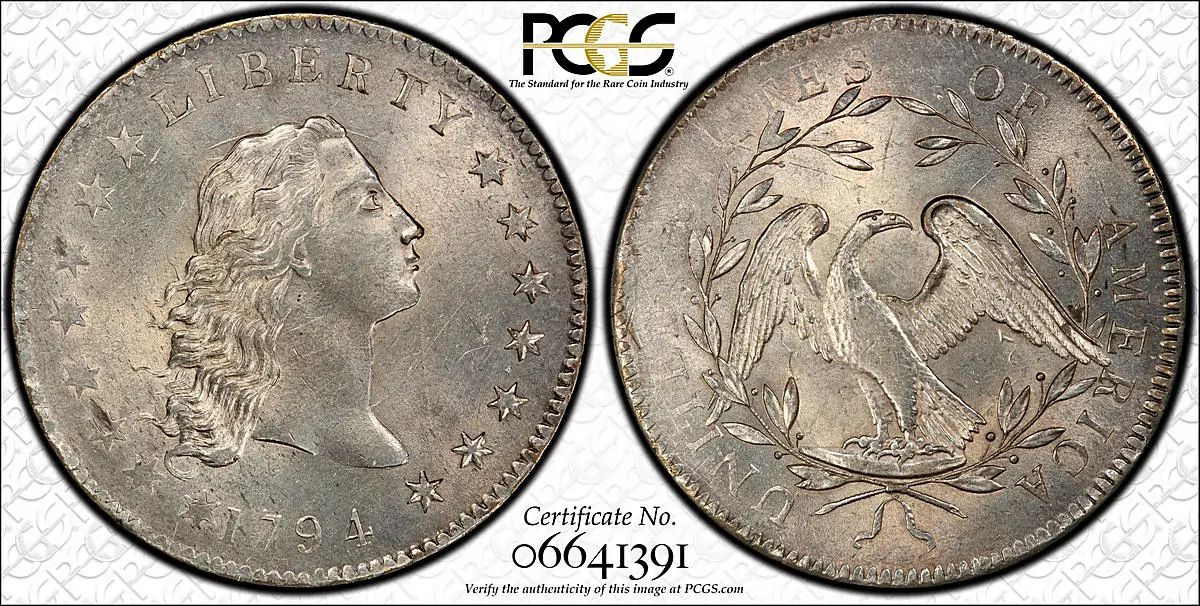
Imagine cracking this 1794 Flowing Hair Dollar out of its holder. You’d lose millions in "peace of mind" and market value instantly.
The Fix: If you love albums, look for "slab albums" that allow you to store the entire plastic holder in a binder. This gives you the visual satisfaction of a book while keeping the coin protected and graded.
Bonus Tip: Modern Coins Need Love Too
Don't assume that just because a coin is modern, it's indestructible. With the upcoming release of the 1776-2026 Emerging Liberty Dime, many collectors will be looking to store these for the next 50 years. Modern minting techniques often use different finishes that can be just as sensitive to fingerprints and humidity as classic coins.
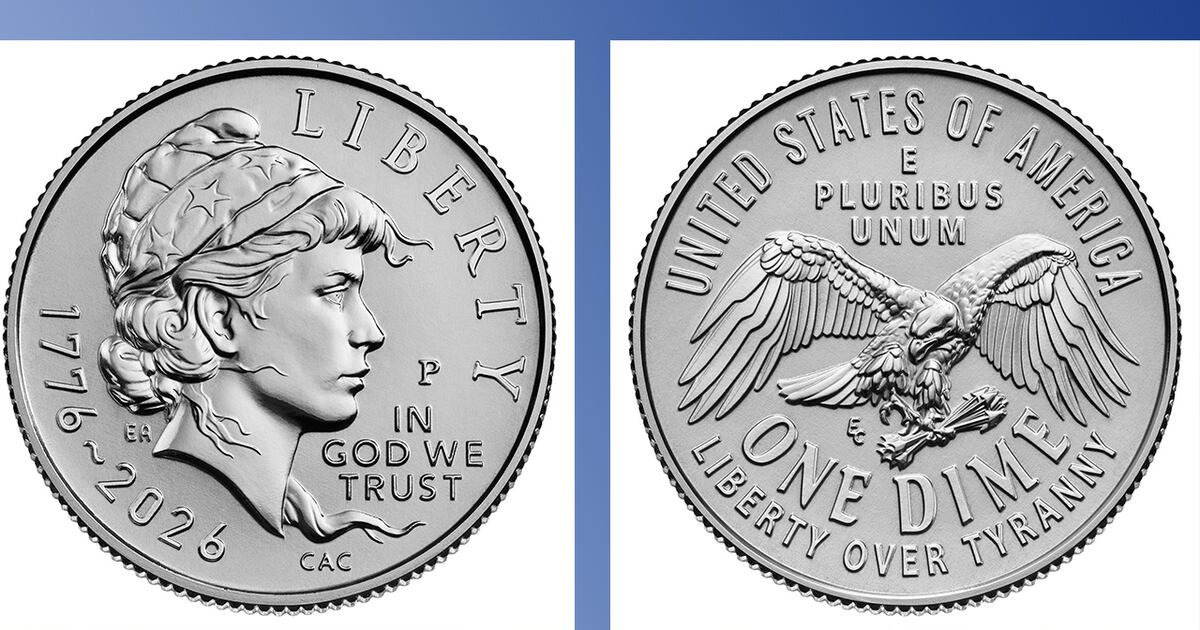
Modern beauties like the Emerging Liberty Dime should be placed in archival-safe holders the moment they arrive from the Mint.
Summary
Storing your collection doesn't have to be expensive, but it does have to be intentional. Avoid the PVC, keep your hands off the faces, and stay out of the attic. By following these how to store coin collection basics, you’re ensuring that your coins will look just as good twenty years from now as they do today.
If you want more deep dives into the world of numismatics, make sure to subscribe to our numismatic podcast here at The Coin Show. We talk about everything from market trends to the history of the standing liberty quarter 1916.
Until next time, keep your eyes on the coins and your hands on the edges! Happy collecting!