
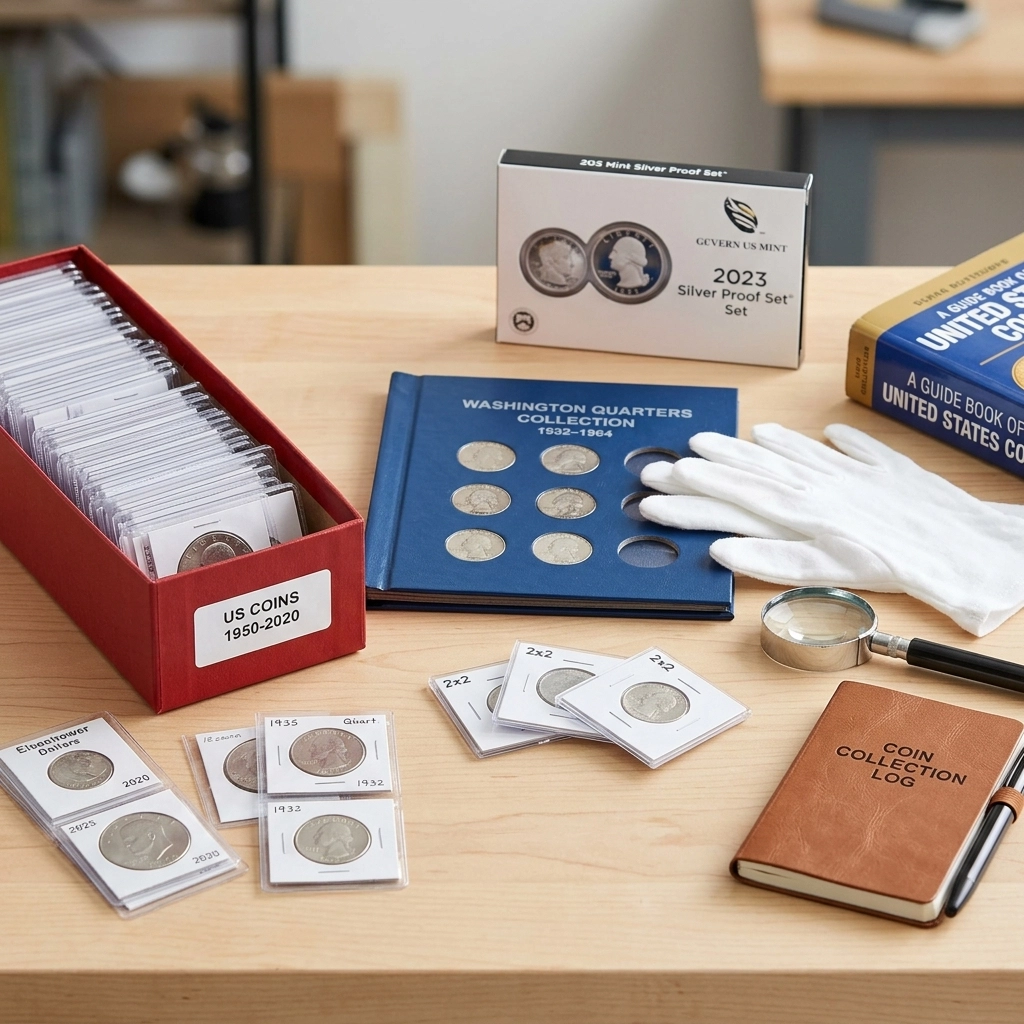
Coin Storage 101: A Beginner’s Guide to Mastering How to Store Your Coin Collection
Welcome back to "The Daily Mint," your daily home for everything numismatic. If you’ve been hanging out with us over at The Coin Show, you know that Matt, Ernesto, and Mike are always preaching the gospel of preservation. Whether you just inherited a jar of old wheat pennies or you just dropped a paycheck on a key date for your registry set, knowing how to store coin collection items properly is the difference between an investment and a bucket of tarnished metal.
As a numismatic podcast, we get emails every day asking about the "right" way to keep coins. The truth? There isn't just one way, but there are definitely several wrong ways. Today, we’re breaking down the basics of coin storage for collectors, from the chemistry of plastic to the physics of humidity.
The Arch-Nemesis: Coin PVC Damage
Before we talk about folders or safes, we have to talk about the boogeyman of the coin world: Polyvinyl Chloride, or PVC.
If you’ve ever opened an old coin album and found your silver quarters covered in a sticky, neon-green goo, you’ve met coin pvc damage firsthand. Back in the day, many plastic flips and album pages were made with PVC to make the plastic soft and pliable. Over time, the chemicals (plasticizers) in that plastic break down and release acidic gases. These gases react with the metal in your coins: especially copper and silver: creating that nasty green residue.
If left alone, PVC will eventually eat into the surface of the coin, causing permanent pitting. Here is a pro tip from the coin collecting podcast vault: if a plastic holder smells like a new shower curtain, get your coins out of there immediately. Always look for "PVC-Free" or "Mylar" when buying supplies.
Choosing Your Armor: Storage Supplies 101
Once you’ve cleared out the toxic plastic, it’s time to choose your storage method. Think of these as the layers of armor protecting your history.
1. Cardboard 2×2 Flips
These are the bread and butter of coin storage for collectors. They are cheap, easy to write on, and fit perfectly into standard binder pages or red boxes. They consist of a cardboard square with a Mylar window.
One major rule here: watch the staples. When you staple these shut, use a "flat-clinch" stapler or a pair of pliers to flatten the staples. If you don't, the pointy ends of the staples will scratch the face of the coin in the flip next to it. Nothing ruins a day like a "staple scratch" on a Mint State coin.
2. Mylar Flips (Non-PVC)
If you don't like staples, you can use un-plasticized "safe" flips. These are clear, rigid plastic pockets. They are great because you can slide a small paper insert into one side with all your notes. Just remember, because they are rigid, they can crack if you're too rough with them.
3. Coin Tubes
If you’re stacking "junk" silver or common-date Buffalo nickels, tubes are the way to go. They save space and keep the coins from rattling around too much. However, don't use these for high-grade or proof coins, as the coins still touch each other, which can lead to "bag marks" or light scuffs.
4. Hard Plastic Capsules
For your "babies": the coins you really care about: invest in round, hard plastic capsules (often called Air-Tites). These provide an airtight seal and excellent physical protection against drops.
5. Slabs
If you have a high-value coin, it’s probably already "slabbed" by a third-party grading service like PCGS or NGC. These are the gold standard for protection and are essential for counterfeit coin detection and liquid value. These holders are sonically sealed and designed to last decades.
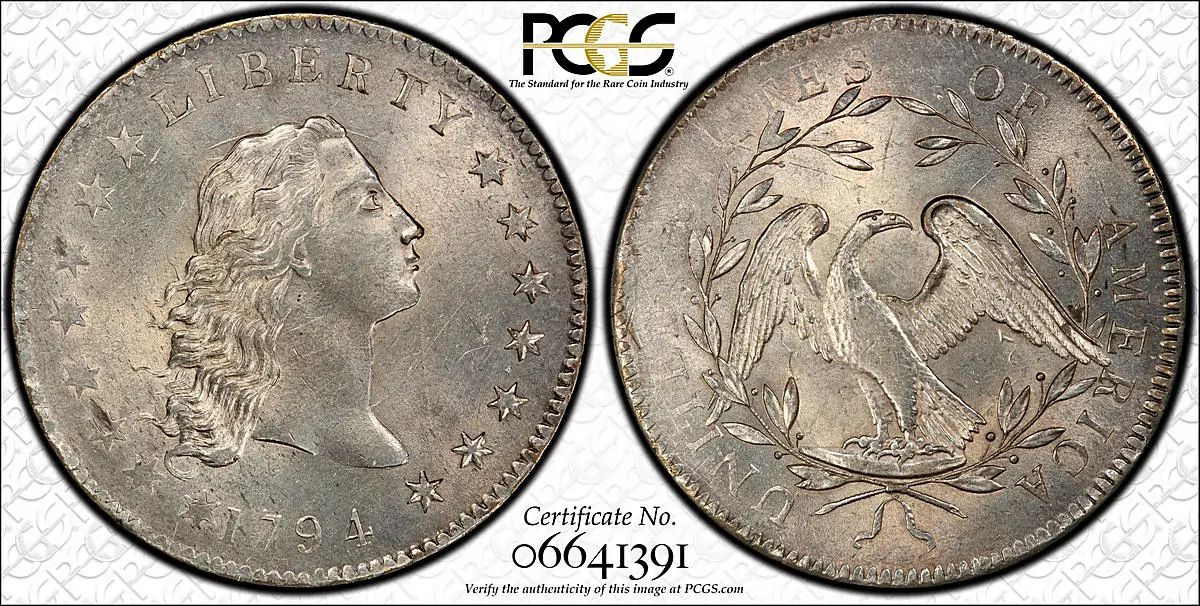
High-value treasures like this 1794 Flowing Hair Silver Dollar are always kept in protective slabs to maintain their multi-million dollar status.
The Environment: Temperature and Humidity
You’ve got the coins in holders. Now, where do you put the holders?
The biggest mistake beginners make is putting their collection in the attic or the basement. Attics are too hot; basements are too damp. High humidity leads to toning (which can be pretty) or corrosion (which is definitely not).
You want a "Goldilocks" environment:
- Constant Temperature: Avoid swings. Aim for 60-70°F.
- Low Humidity: Aim for less than 50% humidity.
- Darkness: Believe it or not, some chemicals in paper and cardboard can react under heavy light exposure over years.
If you use a safe (and you probably should for security), remember that safes often trap moisture. Always keep a large desiccant pack (silica gel) inside your safe and refresh it every few months.
Handling Your Collection
Even the best storage can't save a coin from "fingerprint damage." The oils and acids on your skin are surprisingly corrosive. If you touch the face of a Proof coin with your bare thumb, that fingerprint might become a permanent, ugly part of the coin's design within a year.
Coin collecting tips for handling:
- Wash your hands: Use plain soap and dry them thoroughly.
- Hold by the edges: Never touch the "fields" (the flat parts) or the "devices" (the raised parts). Hold it like a tiny steering wheel.
- Wear gloves: If you’re handling high-grade silver or gold, cotton or nitrile gloves are your best friend.
- Work over a soft surface: Put a velvet pad or a clean towel on the table. If you drop the coin, you want it to land on something soft, not a hardwood floor.
By following these handling steps, you ensure your coins stay within the ana grading standards you bought them at. A single fingerprint can turn an MS65 coin into an MS63 in the eyes of a grader.
Historical Spotlight: The 1916 Standing Liberty Quarter
When we talk about the importance of storage, we often think of the classics. Take the Standing Liberty Quarter 1916, for example.
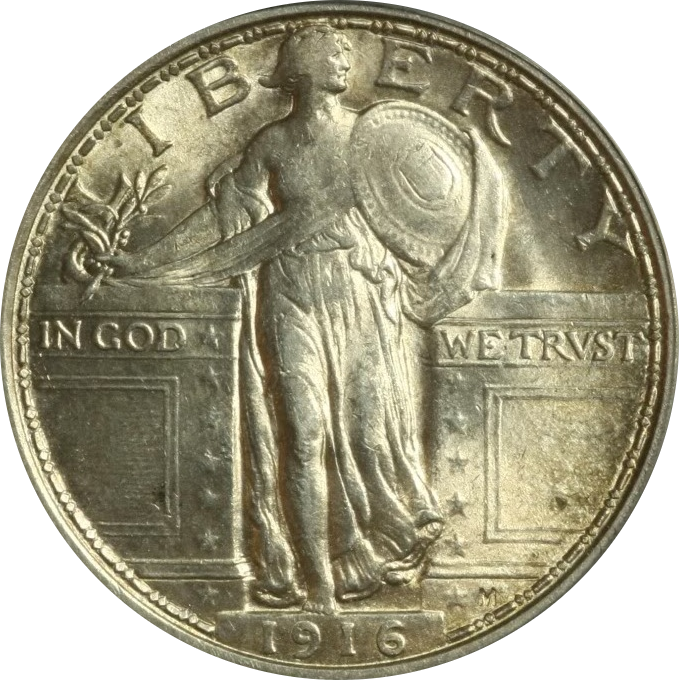
This is one of the most beautiful coins ever minted in the United States, but it was also a "design disaster" for longevity. The date on the 1916 and early 1917 models was raised, meaning it wore off almost immediately in circulation. Because so many were lost to wear or improper care, finding a well-preserved 1916 is a numismatic dream. If you are lucky enough to own one, improper storage isn't just a mistake: it's a tragedy for history.
Getting Out There: What is a Coin Show?
If all this talk about Mylar and PVC feels overwhelming, the best thing you can do is go see it in person. We often get asked on the podcast: what is a coin show?
Simply put, it’s a convention for coin geeks. You’ll find hundreds of dealers with tables full of coins, but more importantly, you’ll find aisles of supplies. It is the best place to feel the difference between a cheap plastic flip and a high-quality Mylar one. You can talk to experts about their storage setups and even see how they handle six-figure rarities.
Going to a show helps you develop an eye for "original" surfaces. When you see enough coins that have been stored properly for 50 years, you’ll immediately recognize the "off" look of a coin that’s been cleaned or damaged by PVC.
Inventory and Organization
Finally, a quick word on organization. A collection you can't find is a collection you can't enjoy. As you learn how to store coin collection items, develop an inventory system.
Whether it's a simple Excel spreadsheet or a dedicated app, track:
- What you bought
- When you bought it
- What you paid (for insurance purposes!)
- The grade and the grading service (if applicable)
Label your 2×2 flips clearly. Use a archival-safe pen that won't bleed through the cardboard. This makes it much easier when you're looking for that specific VAM variety or a specific mint mark.
Closing Thoughts
Storing your coins properly is like an insurance policy for your hobby. It takes a little more effort and a few more dollars upfront, but the payoff is seeing your collection stay just as beautiful as the day you acquired it.
If you enjoyed these tips, make sure to subscribe to The Coin Show numismatic podcast. Matt, Ernesto, and Mike are always diving deep into the technical side of the hobby to help you become a better collector.
Until next time, keep those staples flat and your humidity low!