
Are You Making These 5 Common Counterfeit Coin Mistakes? (The Daily Mint Guide)
Hey there, fellow collectors. Matt Dinger here from The Coin Show.
If you’ve been hanging out with us for a while, you know that we love the hunt. There is nothing quite like the feeling of finding that one elusive piece to fill a hole in your album or scoring a beautiful specimen at a local show. But as the market for rare coins grows, so does the sophistication of the people trying to sell you fakes.
Counterfeiters aren’t just making "play money" anymore. They are using advanced metallurgy, computer-aided design, and even simulated wear to trick even seasoned hobbyists. At The Daily Mint, we want to make sure your hard-earned money stays in your pocket: or at least goes toward real coins.
Today, we’re breaking down five common counterfeit coin mistakes that collectors make and how you can sharpen your counterfeit coin detection skills to stay safe.
1. Relying Solely on the "Eye Test"
The biggest mistake you can make is assuming you can spot a fake just by looking at it with the naked eye. Modern "super fakes" coming out of international workshops are designed to pass a casual glance. They get the luster right, the strike looks sharp, and the details seem crisp.
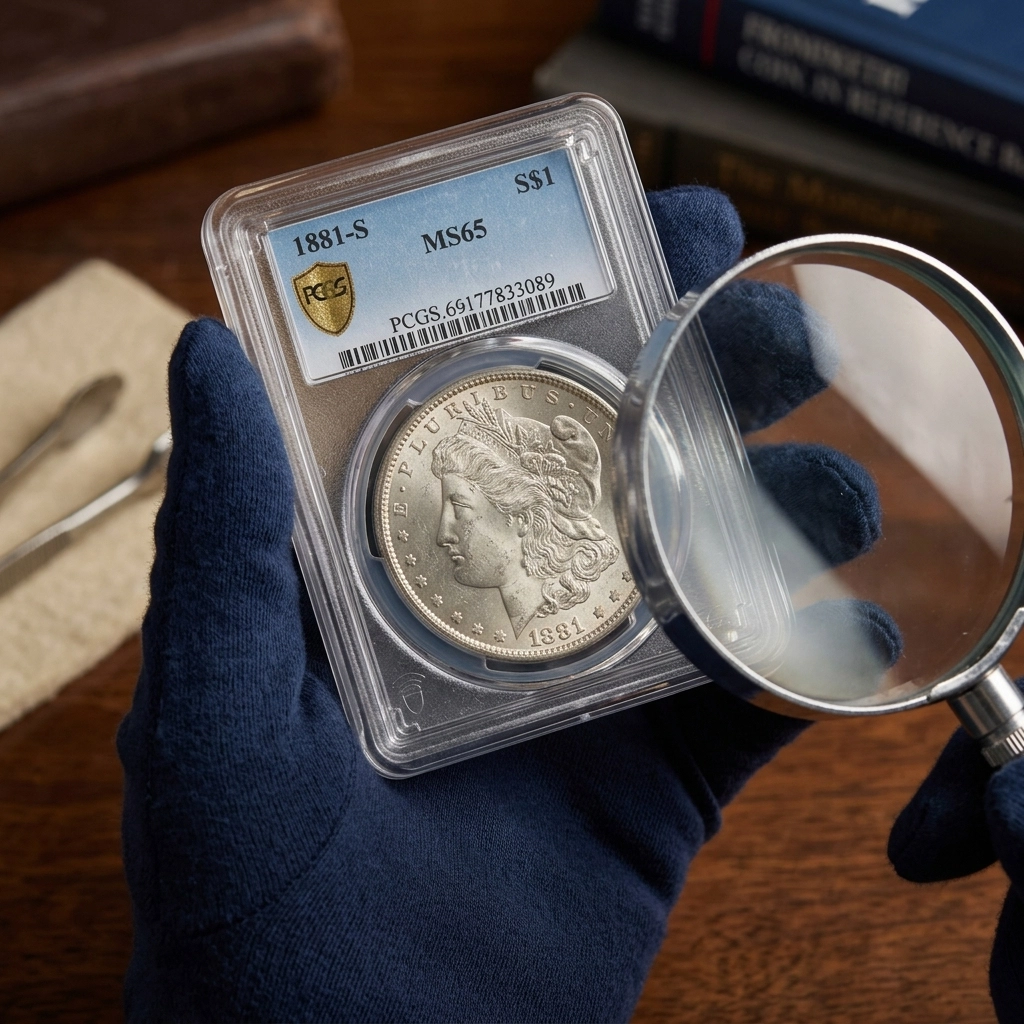
If you aren't using tools, you’re guessing. One of the best coin collecting tips I can give you is to invest in a high-quality 10x or 20x jeweler’s loupe. When you look closer, you might see "mushy" details, tiny bubbles from a casting process, or strange die polish lines that shouldn't be there.
Beyond the eyes, you need a scale. Every authentic U.S. coin has a specific weight. A Morgan Silver Dollar should weigh 26.73 grams. If the coin you're holding looks perfect but weighs 24 grams, it’s a fake. It's often made of a base metal like lead or zinc and plated in silver. Always carry a small digital scale and a set of calipers to check diameter and thickness. If the dimensions are off, the coin is a fraud.
2. Ignoring the ANA Grading Standards
Many collectors focus so much on the price that they forget to check the "diagnostics" of a coin. This is where the ANA grading standards (American Numismatic Association) come into play. These standards aren't just for determining if a coin is an MS63 or an AU58; they also describe what a genuine coin should look like in various states of wear.
When you know exactly where the high points of a design should wear down, you can spot fakes that have "artificial wear." Counterfeiters often tumble coins in gravel or use chemicals to make a new fake look like it’s been in circulation since 1920. However, the wear patterns on these fakes rarely match the authentic patterns described in the ANA manuals.
If you’re serious about the hobby, grab a copy of the Official ANA Grading Standards for United States Coins. It’s the "bible" for a reason. Knowing the difference between a genuine strike and a transfer-die fake could save you thousands.
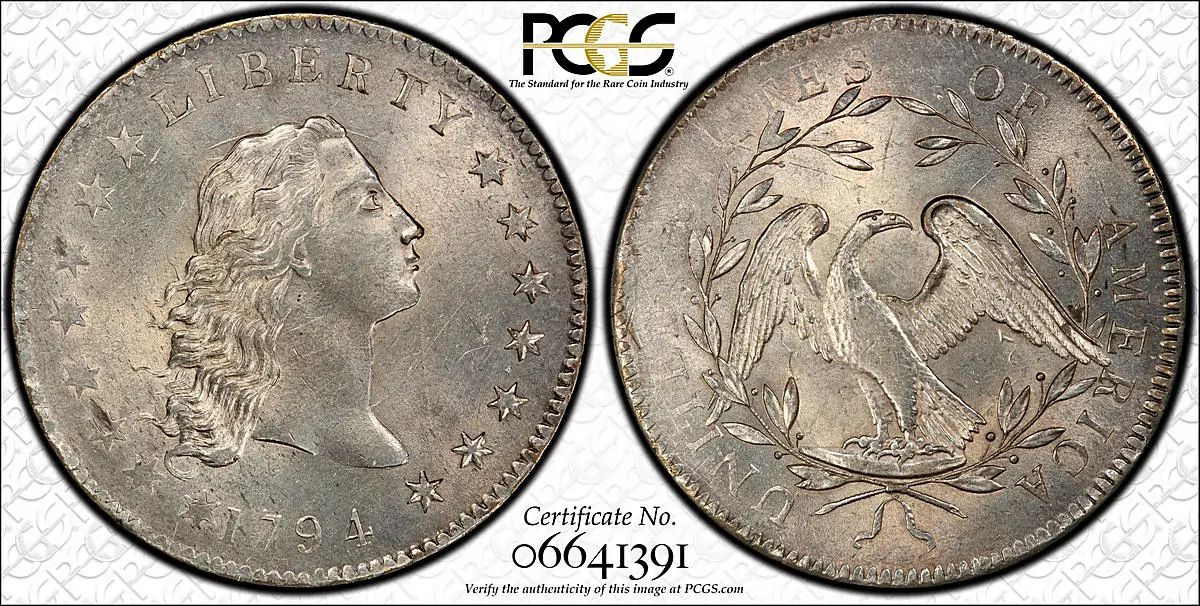
Authentic high-value coins like this 1794 Flowing Hair Silver Dollar have very specific diagnostic marks that counterfeiters struggle to replicate perfectly.
3. Falling for the 1916 Standing Liberty Quarter Trap
Certain coins are "faked" more than others because their value is so high. Take the Standing Liberty Quarter 1916 as an example. It is a legendary key date with a tiny mintage of only 52,000.
Because a genuine 1916 can fetch five or six figures, it’s a prime target for counterfeiters. The most common "mistake" here is buying an altered 1917. Some unscrupulous people will take a 1917 quarter and try to "move" the metal or shave the date to look like a 1916.
If you’re looking at a Standing Liberty Quarter 1916, you have to look at the hair details and the rivets on the shield. A genuine 1916 has distinct design differences from the 1917 Type 1. If you don't know those nuances, you're a prime target for a scam. This is why we always recommend buying high-value key dates that have been authenticated and slabbed by reputable third-party grading services like PCGS or NGC.
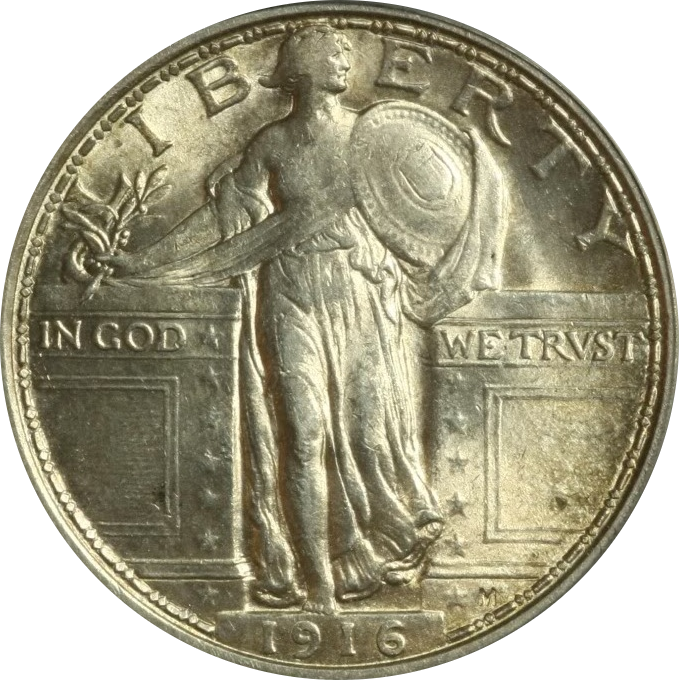
The 1916 Standing Liberty Quarter is a masterpiece, but its rarity makes it a frequent target for alteration.
4. Buying from "Too Good to Be True" Sources
We all love a bargain. But if you see a rare gold coin listed on a social media marketplace or a random discount website for 50% of its melt value, walk away.
One of the best ways to avoid fakes is to buy from reputable dealers at a local show. What is a coin show? It’s a gathering where dozens, or sometimes hundreds, of professional dealers set up tables to buy, sell, and trade. The beauty of a show is the accountability. Most dealers at these shows have reputations to uphold and are often members of professional organizations.
If you’re buying from a nameless seller on an auction site with no return policy, you are taking a massive risk. We talk about this all the time on our numismatic podcast. Education is your best defense. Listening to a coin collecting podcast like The Coin Show helps you stay updated on the latest scams and counterfeit alerts hitting the market.
5. Poor Storage That Masks Damage (The PVC Problem)
This mistake isn't about buying a fake: it's about making a real coin look suspicious or destroying its value entirely. A common error among new collectors is using cheap plastic flips or "pages" that contain PVC (polyvinyl chloride).
When we talk about coin PVC damage, we’re talking about a chemical reaction. Over time, the plasticizers in PVC break down and release an acidic gas. This creates a sticky, green slime on the surface of your coins. Not only does this eat into the metal and ruin the "eye appeal," but it can also make a genuine coin look like a cast counterfeit because the surface becomes pitted and dull.
If you are wondering how to store coin collection properly, the answer is simple: use PVC-free materials. Look for "non-PVC" flips or Mylar-lined 2×2 cardboard holders. Proper coin storage for collectors is the difference between a collection that appreciates in value and one that ends up in the "cull" bin.
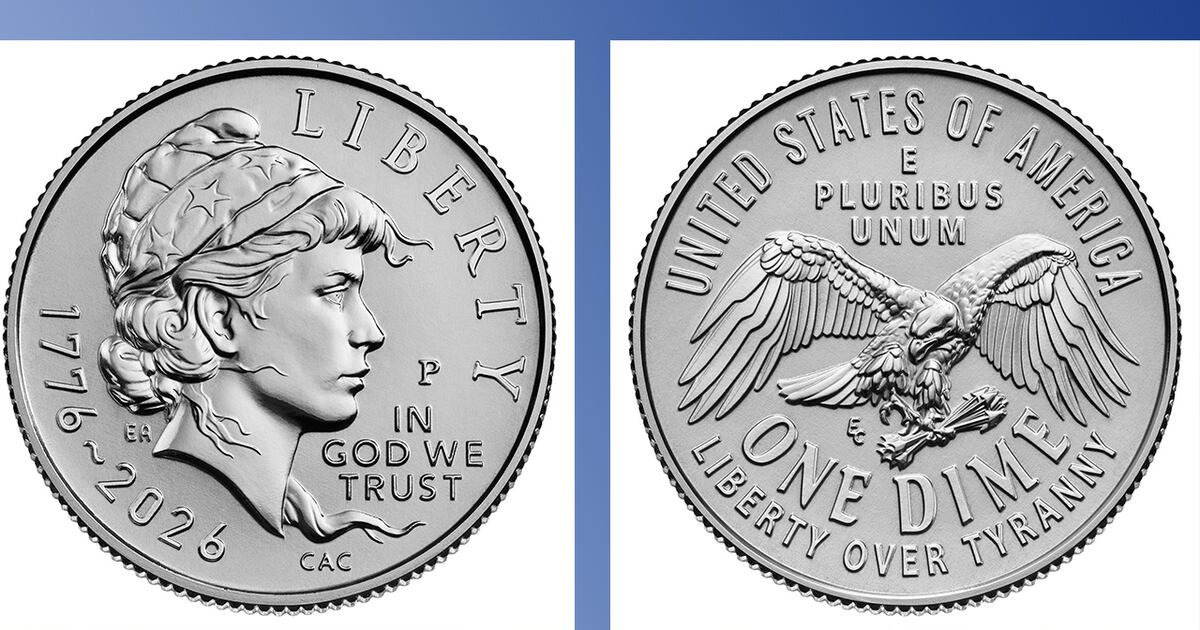
As we look toward new releases like the 1776-2026 Emerging Liberty Dime, keeping your modern treasures in non-PVC storage is just as important as protecting the vintage stuff.
How to Stay Ahead of the Fakes
Counterfeiting is an old game, but the tools are always changing. As we move into 2026, the technology used to create deceptive coins is only getting better. So, how do you stay protected?
- Educate Yourself: Knowledge is the one thing a scammer can't take from you. Read books, study authentic pieces, and join a local club.
- Use Your Ears: On our numismatic podcast, we often discuss the "ring test." While you should be careful not to drop or damage a coin, the sound of silver or gold hitting a surface is very different from the "thud" of a base-metal fake.
- Trust But Verify: Even if a coin is in a plastic holder, check the serial number on the grading service's website. Scammers are now counterfeiting the plastic slabs themselves!
- Join the Community: Tune in to The Coin Show episodes where Matt and the team break down the latest news in the coin world. We often interview experts who spend their whole lives identifying these fakes.
Final Thoughts
Collecting should be fun, not stressful. By avoiding these five mistakes: relying on the eye test, ignoring grading standards, falling for "deals," buying from shady sources, and using bad storage: you’re already ahead of 90% of the people out there.
Remember, the best way to get a "feel" for genuine coins is to handle as many as possible. Go to a show, talk to dealers, and keep your tools handy. If you ever have a doubt about a coin, feel free to reach out to us or bring it to a professional.
Stay savvy, keep hunting, and keep those collections PVC-free!
Until next time, keep your coins bright and your scales calibrated.
( Matt Dinger
The Coin Show)